Published on November 8, 2025 at 4:00 PMUpdated on November 8, 2025 at 4:00 PM
When you explore the global followers of the Hindu faith, you’ll uncover a vibrant tapestry of traditions, beliefs, and cultures that span continents. Hinduism is not just a religion; it is a way of life that encompasses philosophy, rituals, festivals, and social norms. While the largest population of Hindus is concentrated in India, Hindu communities thrive in countries across Asia, the Americas, Europe, and beyond, each maintaining unique expressions of the faith while connecting to a shared spiritual heritage.
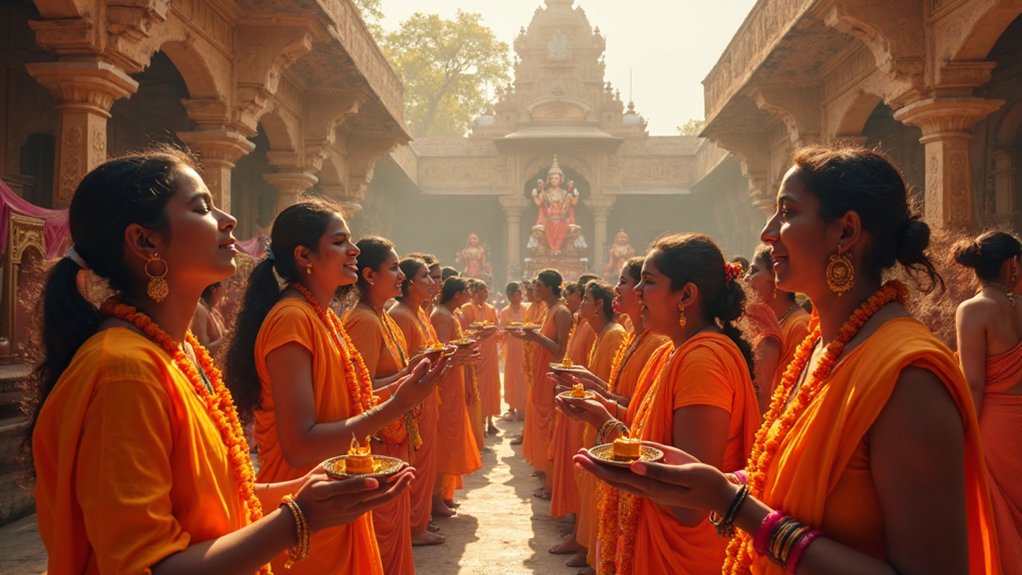
How many people practice Hinduism? (image: Abpray)
The global followers of the Hindu faith are known for their resilience and adaptability, preserving age-old traditions while engaging with modern society. This dynamic interplay between continuity and change makes Hinduism one of the most enduring and influential religions in the world.
If you are interested in the demographic distribution of Hindu followers, it’s important to note that India is home to the vast majority of Hindus. Approximately 80% of the world’s Hindu population resides in India, reflecting the religion’s deep cultural, historical, and spiritual roots. India serves as both the spiritual and cultural heartland of Hinduism, with temples, festivals, and rituals that have been maintained for centuries.
Beyond India, Hinduism has a significant presence in countries such as Nepal, which has a long history of Hindu kingship and temples; Bangladesh, with a Hindu minority that preserves vibrant festivals and rituals; and Indonesia, particularly on the island of Bali, where Hindu traditions have blended with local culture over centuries. Even in countries like the United States, Canada, the United Kingdom, and Australia, Hindu diaspora communities actively celebrate festivals such as Diwali and Holi, keeping their cultural heritage alive in a global context.
Key Regions With Significant Hindu Populations
When examining the key regions with significant Hindu populations, India clearly dominates. The states of Uttar Pradesh, Maharashtra, Tamil Nadu, Karnataka, and West Bengal collectively host tens of millions of Hindus, each with regional variations in worship, rituals, and festivals. For instance, Tamil Nadu is renowned for its Dravidian temple architecture and devotion to deities like Shiva and Murugan, while West Bengal celebrates Durga Puja with unparalleled grandeur.
Nepal is another major center for Hindu faith, with nearly 80% of the population identifying as Hindu. Here, the worship of deities such as Vishnu, Shiva, and Kali is deeply integrated into daily life, and festivals like Dashain and Tihar are widely celebrated.
Bangladesh, though predominantly Muslim, is home to a Hindu minority that actively observes traditional rituals, including Durga Puja and Kali Puja, preserving centuries-old practices. In Indonesia, the Balinese Hindu community represents a unique adaptation of Hinduism outside South Asia, blending ancient Vedic rituals with local customs, vibrant ceremonies, and temple arts.
Other countries with notable Hindu populations include Pakistan, Sri Lanka, Mauritius, Fiji, Guyana, Suriname, Trinidad and Tobago, and South Africa, often the result of migration during the colonial era. These communities have maintained Hindu temples, festivals, and cultural practices, illustrating the adaptability of Hindu faith in diverse contexts.
Trends in Hindu Population Growth Worldwide
The trends in Hindu population growth worldwide reflect both natural demographic expansion and migration patterns. In India and Nepal, traditional family structures and cultural values contribute to relatively stable birth rates, ensuring continued growth of Hindu communities.
In diaspora communities across North America, Europe, and Oceania, Hindu populations have grown due to immigration, often from India and neighboring countries. These communities often establish temples, cultural centers, and schools to teach younger generations about Hindu traditions, ensuring continuity of the faith in new environments.
Interestingly, the spread of Hinduism globally has also facilitated intercultural exchange. Festivals like Diwali, Holi, and Navaratri are increasingly celebrated in multicultural settings, often with participation from people of other faiths. This not only strengthens Hindu identity among diaspora populations but also raises awareness of Hindu culture worldwide.
Maintaining Tradition in a Global Context
Despite being dispersed across continents, the global followers of the Hindu faith maintain continuity in their practices. Many observe daily rituals such as puja (worship), meditation, and recitation of sacred texts like the Bhagavad Gita and the Vedas. Community temples often serve as hubs for cultural and spiritual education, helping families pass down knowledge and traditions to younger generations.
Festivals remain a key aspect of maintaining cultural identity. Diwali, the festival of lights, is celebrated with prayers, feasts, and community gatherings, symbolizing the victory of light over darkness. Holi, the festival of colors, combines joyous celebration with religious significance, emphasizing the triumph of good over evil. Even in countries far from India, these festivals offer global followers of the Hindu faith a way to express devotion while fostering community cohesion.
Hinduism’s Global Cultural Impact
The presence of Hindu communities worldwide has not only preserved traditions but also contributed to global cultural enrichment. Through yoga, meditation, vegetarianism, and Ayurveda, Hindu philosophy has influenced global wellness and spiritual practices. Hindu festivals and rituals often inspire art, music, dance, and literature in multicultural societies, highlighting the universal appeal of Hindu heritage.
Hindu diaspora communities also engage in social and charitable initiatives, reflecting core Hindu values such as dharma (duty) and seva (service). These efforts strengthen community bonds and promote intercultural understanding, ensuring that Hinduism remains both spiritually and socially relevant across borders.
Conclusion
The global followers of the Hindu faith form a diverse, resilient, and adaptable community that spans continents. While India remains the spiritual heartland, significant populations thrive in Nepal, Bangladesh, Indonesia, and the growing diaspora communities across North America, Europe, and Oceania.
These communities maintain their unique customs, rituals, and festivals while adapting to new cultural environments, demonstrating Hinduism’s ability to remain vibrant and meaningful in modern contexts. The global followers of the Hindu faith exemplify the enduring strength of tradition, the richness of cultural identity, and the capacity of religion to connect people across time and space.
By understanding the global followers of the Hindu faith, we gain insight not only into demographics but also into how ancient traditions continue to shape contemporary life, inspire spiritual growth, and foster a shared sense of identity among millions worldwide.