Published on October 25, 2025 at 4:00 PMUpdated on October 25, 2025 at 4:00 PM
Hinduism is often described as one of the oldest religions in the world, and this is no exaggeration. The age of Hinduism stretches back thousands of years, deeply rooted in the ancient Indus Valley civilization and evolving through countless cultural, philosophical, and historical phases. Understanding the age of Hinduism offers a fascinating look into how this ancient tradition grew, transformed, and continued to shape the spiritual lives of millions across the globe.
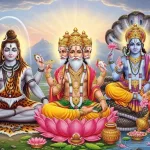
Did you know how old is Hinduism? (image: Abpray)
Although Hinduism has no single founder, no specific starting date, and no unified doctrine, its longevity is one of its defining strengths. The age of Hinduism reflects not just the passage of time but a continuous journey of adaptation, preservation, and spiritual discovery. From ancient rituals to modern interpretations, Hinduism’s evolution paints a vivid picture of how a belief system can remain relevant across millennia.
Below, explore the origins of Hinduism, the significance of the Vedic period, the role of sacred texts, the concept of time, the impact of historical dynasties, and how Hinduism continues to thrive in the modern world.
The origins of Hinduism trace back more than 4,000 years, beginning with the advanced societies of the Indus Valley civilization. Archaeologists and historians have uncovered evidence of early spiritual practices, ritual baths, symbolic artifacts, and nature-based worship that directly influenced what would later become Hindu religious culture.
Unlike many religions that begin with a single leader or event, the origins of Hinduism developed gradually. It grew from ancient traditions, cultural exchanges, oral teachings, and evolving philosophies. Over time, these practices formed a spiritual framework that connected humans with nature, the cosmos, and the deeper meaning of existence.
Exploring the origins of Hinduism reveals a rich blend of mythology, rituals, and teachings that emphasize harmony with nature, respect for cosmic order, and the pursuit of spiritual truth. Understanding these origins helps explain why Hinduism has endured for so many centuries and why its teachings continue to resonate with people seeking wisdom and self-knowledge.
The Vedic Period: The Foundation of Hindu Thought
One of the most important chapters in the age of Hinduism is the Vedic Period, which began around 1500 BCE. This era marks the composition of the Vedas, the oldest and most authoritative scriptures in Hinduism.
During the Vedic Period, priests known as rishis composed hymns, prayers, and philosophical poems that shaped rituals, spiritual understanding, and religious structure. The Vedas introduced concepts that remain central to Hindu belief today, including:
Dharma — the principle of moral duty and righteous living
Karma — the universal law of cause and effect
Yajna — ritual offerings to maintain cosmic order
Brahman — the supreme, eternal, all-encompassing reality
The Vedic Period also saw the emergence of early social frameworks and community structures that influenced how people practiced their faith.
For anyone studying the age of Hinduism, the Vedic Period represents the era where philosophical foundations were laid, rituals were formalized, and Hindu spiritual identity began to take shape.
The Influence of Ancient Hindu Texts
The influence of ancient texts on the age and evolution of Hinduism is profound. Beyond the Vedas, several other texts shaped Hindu philosophy, storytelling, moral principles, and cultural identity.
Key ancient Hindu scriptures include:
Upanishads – philosophical writings exploring the nature of the soul, consciousness, and ultimate reality
Mahabharata – one of the world’s longest epics, teaching moral values and the meaning of dharma
Bhagavad Gita – a spiritual guide offering wisdom on duty, devotion, and self-realization
Ramayana – a timeless epic that highlights honor, loyalty, and ethical living
These ancient Hindu texts continue to guide rituals, social values, festivals, and daily practices across India and the world. Their influence demonstrates why Hinduism has maintained cultural continuity despite centuries of change.
Studying these texts gives insight into the depth of Hindu philosophy and the reasons behind the religion’s enduring relevance.
The Concept of Time in Hinduism
A unique aspect of the age of Hinduism is its distinct concept of time. Unlike linear timelines commonly used in Western traditions, Hinduism views time as cyclical.
The Hindu concept of time includes:
Yugas — four repeating ages representing different stages of human virtue and decline
Kalpas — long cycles governed by creation, preservation, and destruction
Rebirth and renewal — central principles illustrating the eternal nature of the soul
This cyclical perspective aligns with Hindu beliefs in reincarnation, cosmic balance, and the continuous evolution of life. Understanding this concept of time helps explain why Hinduism remains flexible, open-ended, and adaptable across generations.
Historical Development Through the Ages
The historical development of Hinduism showcases its extraordinary ability to absorb, transform, and integrate diverse influences. As centuries passed, Hinduism encountered new cultures, spiritual movements, and philosophical ideas.
Key phases of historical development include:
Interaction with Jainism and Buddhism, which encouraged introspection, non-violence, and new meditation practices
Growth of devotional movements (Bhakti), emphasizing personal connection with deities
Expansion of temple culture, which reshaped rituals and community life
Compilation of additional texts, refining spiritual interpretations
This continuous historical development helped Hinduism remain vibrant and resilient, adapting to changing societies while preserving its ancient roots.
The Role of Major Dynasties in Hindu Expansion
Throughout Indian history, powerful dynasties played an essential role in strengthening and spreading Hindu traditions.
Notable dynasties include:
The Mauryas, who encouraged philosophical dialogue and supported the preservation of early religious texts
The Guptas, often called the “Golden Age of India,” who promoted Hindu art, literature, and temple architecture
The Cholas, who expanded Hindu culture across South India and Southeast Asia
The Rajputs, who helped protect and sustain Hindu practices during periods of political change
Thanks to these dynasties, Hinduism expanded geographically, grew in artistic expression, and evolved into a richly layered cultural and spiritual system.
Modern Interpretations and Practices of Hinduism
Even though the age of Hinduism spans thousands of years, the religion continues to grow and adapt in the modern world. Its teachings remain relevant through practices such as:
Yoga and meditation, widely used for wellness, mental clarity, and spiritual growth
Contemporary literature, films, and digital media, which introduce Hindu philosophy to global audiences
Festivals, celebrated with traditional rituals blended with modern cultural elements
Global communities and diaspora, bringing Hindu beliefs to new regions
These modern interpretations help preserve Hinduism’s ancient wisdom while making it accessible to new generations.
Conclusion
The age of Hinduism reflects a remarkable story of spiritual continuity, cultural resilience, and philosophical depth. From its early beginnings in the Indus Valley to the intellectual advancements of the Vedic Period, from the influence of ancient texts to the support of powerful dynasties, Hinduism has evolved into a vast, diverse, and enduring religious tradition.
By exploring the origins of Hinduism, understanding its concept of time, and examining its historical development through the ages, we gain a deeper appreciation for how this ancient religion continues to inspire millions around the world.
Spanning thousands of years yet constantly adapting, Hinduism remains a vibrant connection between past and present, an ever-evolving spiritual path that continues to illuminate the human experience.