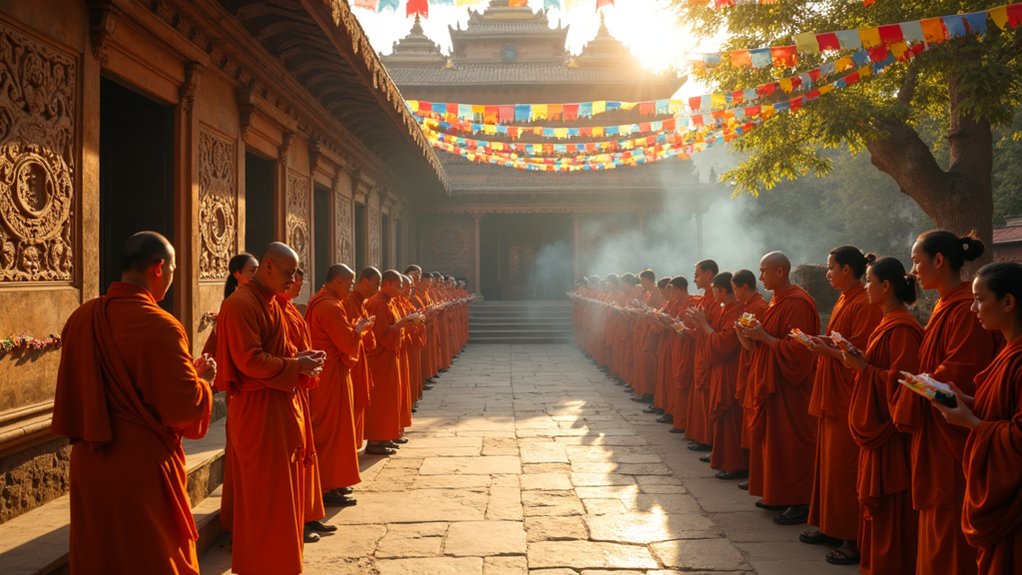
Buddhism is more than a set of teachings—it’s a living tradition shaped by culture wherever it takes root. From temples to rituals, each region has left its mark on how the Buddhist religion is practiced and understood.
But how has culture influenced Buddhism’s evolution, and what makes its traditions so diverse yet connected?
Let’s take a closer look.
Historical spread of Buddhism and cultural adaptation
Buddhism originated in ancient India, but migration helped it travel across Asia and grow in new ways.
As Buddhist teachers and communities moved, they shared Buddhist teachings through cultural exchange, adapting rituals and practices to fit local traditions.
In China, Japan, Tibet, and Southeast Asia, Buddhism blended with existing beliefs, showing how migration and interaction shaped Buddhist teachings and expanded their spiritual impact.
This journey highlights how religion evolves through movement, making Buddhism meaningful to diverse cultures while keeping its core teachings alive.
Influence of language on Buddhist texts and practices
Language has played a vital role in the evolution of Buddhist texts and practices. Subtle shifts in translation can change how readers understand core teachings, shaping the way religion and spirituality are lived in different cultures.
This influence appears in linguistic symbolism, ritual phrasing, and the way concepts like karma or emptiness are explained. Across regions, variations in language can adjust doctrinal emphasis, showing how cultural context guides Buddhist expression.
For students of religion and spirituality, recognizing the influence of language on Buddhist texts and practices helps preserve meaning, deepen insight, and support accurate transmission of Buddhist philosophy across diverse communities—demonstrating again the ongoing influence of language on Buddhist texts and practices.
Regional variations in Buddhist rituals and ceremonies
Regional variations in Buddhist rituals and ceremonies show how Buddhism adapts to different cultures while keeping its core teachings.
Across Asia, the way people practice Buddhist rituals and ceremonies reflects local customs, history, and community values. For example, Tibetan Buddhist rituals and ceremonies often include elaborate offerings, chanting, and vibrant prayer flags, while Theravada traditions in Southeast Asia focus more on meditation, almsgiving, and simplicity.
These differences highlight Buddhism’s flexibility and deep connection to spirituality, making Buddhist rituals and ceremonies meaningful in many cultural contexts.
The role of art and architecture in expressing Buddhist beliefs
Art and architecture play a vital role in expressing Buddhist beliefs across cultures and time. In many temples, stupas, and monasteries, sacred spaces are designed to reflect Buddhist beliefs through symbolic layouts, serene statues, and detailed murals.
These artistic forms tell visual stories about compassion, mindfulness, and the path to enlightenment, helping communities connect with core Buddhist beliefs in a clear and inspiring way. By blending spiritual meaning with cultural style, Buddhist art and architecture deepen devotion and make teachings accessible to people from diverse backgrounds.
Integration of local traditions and festivals in Buddhism
Buddhism adapts to different cultures by welcoming local traditions and festivals, while still honoring its core teachings. This cultural integration helps Buddhism connect with everyday life, making spiritual practice more relatable and meaningful.
Impact of cultural values on Buddhist ethical teachings
Cultural values play a powerful role in shaping how people understand right and wrong, which directly affects the interpretation of Buddhist ethical teachings. In many societies, local traditions and social norms blend with Buddhist moral ideas, creating different emphases on compassion, nonviolence, and duty.
This ongoing interaction shows how Buddhist ethical teachings can adapt to diverse contexts while preserving core principles, offering moral guidance that reflects the priorities of each culture. By recognizing this balance, students of religion and spirituality can better appreciate how Buddhist ethical teachings evolve without losing their essential purpose.
Meditation practices across different cultures
Meditation practices across different cultures show how spirituality evolves in unique and meaningful ways.
In Buddhism, meditation practices are central, but methods and goals can differ widely depending on local customs and beliefs. For example, Theravāda traditions often emphasize insight meditation to cultivate clarity and wisdom, while Zen focuses on seated meditation to foster stillness and direct experience.
These meditation practices across different cultures reveal how communities adapt techniques to meet their spiritual and communal needs, making meditation practices across different cultures both diverse and deeply rooted in tradition.
The interaction between Buddhism and indigenous religions
Buddhism and indigenous religions have a long history of meeting, mixing, and evolving together. When Buddhism spread to new regions, it often blended with local beliefs and customs, creating Buddhism syncretism that honored both traditions.
This cultural exchange helped Buddhism resonate with local communities, preserved spiritual identity, and enriched rituals through shared practices. By embracing indigenous spirits, sacred sites, and seasonal ceremonies, Buddhism syncretism offered a flexible path that felt familiar yet transformative.
Today, the interaction between Buddhism and indigenous religions continues to inspire meaningful spiritual practices rooted in both heritage and mindfulness.
Modern cultural influences on contemporary Buddhist communities
Modern cultural influences on contemporary Buddhist communities are reshaping how people practice and understand the tradition today. From mindfulness apps to secular meditation programs, modern cultural influences on contemporary Buddhist communities show how ancient teachings adapt to fast-paced lifestyles.
These changes also come through global dialogue, where practitioners reinterpret Buddhist ideas to align with ethics, wellness, and social responsibility.
At the same time, modern cultural influences on contemporary Buddhist communities encourage balance: preserving core teachings like compassion and wisdom while embracing innovation.
This creates space for inclusive practices, accessible learning, and community connection—without losing the heart of the tradition.
Conclusion
Culture plays a powerful role in the Buddhist religion, shaping how teachings are practiced, understood, and shared across the world. In the Buddhist religion, culture influences rituals, art, ethics, and meditation styles, allowing communities to express core principles in ways that reflect their local customs and languages. This cultural adaptation keeps the Buddhist religion alive and relevant, helping it connect deeply with people’s identities, values, and daily lives. By bridging timeless teachings with unique traditions, culture ensures Buddhism remains both universal and personal, accessible and meaningful in every region.

Linguist and Interfaith Dialogue Researcher: Amanda Torati is a linguist and postgraduate researcher dedicated to the study of interfaith dialogue and cultural expressions of faith. With a strong academic background in Languages and Linguistics, Amanda specializes in analyzing spiritual texts and universal values, seeking to build bridges between ancient traditions and modern reflection. At ABPray, Amanda applies her academic rigor and ethical sensitivity to ensure that every article fulfills our mission of promoting harmony and mutual respect. Her role is fundamental to our Human and Ethical Review process, where she uses her expertise to ensure doctrinal and historical fidelity while maintaining an inclusive and accessible tone. By combining her passion for research with a mindful approach, Amanda transforms complex themes into practical reflections for daily life, helping seekers from all backgrounds find meaning and inner peace. Her commitment to authenticity ensures that ABPray remains a reliable source of inspiration and knowledge within the global spiritual landscape.
Linguist and Interfaith Dialogue Researcher: Amanda Torati is a linguist and postgraduate researcher dedicated to the study of interfaith dialogue and cultural expressions of faith. With a strong academic background in Languages and Linguistics, Amanda specializes in analyzing spiritual texts and universal values, seeking to build bridges between ancient traditions and modern reflection. At ABPray, Amanda applies her academic rigor and ethical sensitivity to ensure that every article fulfills our mission of promoting harmony and mutual respect. Her role is fundamental to our Human and Ethical Review process, where she uses her expertise to ensure doctrinal and historical fidelity while maintaining an inclusive and accessible tone. By combining her passion for research with a mindful approach, Amanda transforms complex themes into practical reflections for daily life, helping seekers from all backgrounds find meaning and inner peace. Her commitment to authenticity ensures that ABPray remains a reliable source of inspiration and knowledge within the global spiritual landscape.
Culture
The Divine Algorithm: How Social Media is Hijacking Your Spiritual Experience
The Divine Algorithm has become the new invisible mediator between the believer and transcendence, filtering what you consume as “sacred” based on retention metrics rather than theological depth.If you feel that your prayer life or meditation practice is becoming increasingly fragmented, the fault may not lie in your lack of focus, but in the software […]
Culture
How did Byzantine culture and religion spread in Eastern Europe
Just how Byzantine culture and religion subtly transformed Eastern Europe reveals a fascinating blend of faith, politics, and innovation that shaped history.
Culture
What role did religion play in Olmec and Mayan culture
What mysteries did Olmec and Mayan religions unlock about life, power, and the cosmos? Their beliefs shaped civilizations in ways still felt today.
Culture
How was art connected to religion in African cultures
Bridging the seen and unseen, African art reveals deeper spiritual meanings—discover how creativity becomes a sacred dialogue in these cultures.
Culture
How were math and religion connected in the Maya culture
Linking sacred numbers to celestial events, the Maya intertwined math and religion in ways that still mystify scholars today. Discover their profound connection.
Culture
What role did religion and mythology play in Greek culture
Journey into how religion and mythology shaped every facet of Greek life, revealing secrets that still captivate and influence us today.