In Olmec culture, faith and power were inseparable. Rulers carried both political and spiritual authority, shaping rituals, ceremonies, and daily life.
But how exactly did religion and government work together—and what legacy did this leave for later Mesoamerican civilizations?
Let’s take a closer look.
Origins of Olmec religious beliefs
The origins of Olmec religious beliefs are not fully understood, but archaeology points to a blend of local spiritual traditions and early Mesoamerican cosmology.
At the heart of Olmec religious beliefs was ancestor worship, which honored family lineage and spiritual continuity.
These core ideas shaped Olmec religious beliefs through rituals, sacred symbols, and community identity, creating a powerful and lasting spiritual worldview.
Key deities in Olmec religion
Key deities in Olmec religion played a central role in shaping spiritual beliefs, rituals, and community life.
In Olmec religion, sacred beings like the Feathered Serpent and the Jaguar God represented natural forces such as fertility, rain, and the mysteries of the underworld.
These figures not only guided religious practices but also reinforced social order, revealing how Olmec religion was deeply connected to nature, cosmology, and the spiritual landscape of Mesoamerica.
Religious symbols and iconography
Religious symbols and iconography played a central role in Olmec religion, shaping how people understood spirituality and power.
In Olmec religion, sacred animals like jaguars appeared repeatedly in carvings and artifacts, serving as powerful icons of transformation, protection, and divine authority.
These symbols acted as a visual language, linking spirituality with leadership and community values.
Ritual practices and ceremonies
Olmec ritual practices and ceremonies played a vital role in shaping religion and spirituality in ancient Mesoamerica.
These sacred events often included offerings, dances, and symbolic acts meant to communicate with deities and honor ancestral forces.
Through these ceremonies, communities found spiritual unity while leaders gained legitimacy, showing how religion, spirituality, and governance worked together in Olmec culture.
The role of Shamans and Priests
Shamans and priests played vital roles in Olmec religion and spirituality, acting as trusted guides between the people and the divine.
In Olmec spirituality, shamanic practices helped leaders and healers communicate with spirits, seek visions, and protect the community.
Priests in Olmec religion organized ceremonies, safeguarded sacred knowledge, and directed seasonal rituals that aligned with cosmic order.
Together, shamans and priests ensured that Olmec spirituality shaped daily life, influenced governance, and preserved cultural traditions across generations.
Olmec cosmology and mythology
Olmec cosmology and mythology played a central role in the spiritual life of this ancient Mesoamerican culture. In Olmec cosmology, the world was shaped by sacred forces, divine origins, and the rhythm of cosmic cycles that explained birth, death, and renewal.
Olmec mythology also explored powerful themes of duality—light and dark, earth and sky—and taught how humans could live in balance with both nature and the supernatural.
Sacred sites and landscape features formed a kind of spiritual map, guiding rituals and celestial observation. Ancestral spirits were honored as guardians who connected the living with the past, reinforcing community identity and continuity.
Together, Olmec cosmology and mythology created a unified vision of existence, tying religion, ritual practice, and daily life into one meaningful whole.
Integration of religion and political authority
In this ancient society, religion and political authority were deeply connected. Leaders claimed spiritual authority to legitimize their rule, using religion to show they had divine approval.
This integration of religion and governance ensured that laws and decisions followed shared spiritual principles, uniting people under the same beliefs. By holding both sacred and political roles, rulers strengthened their control and kept social order.
This close link between religion, spirituality, and power shaped daily life, public rituals, and the way the community understood the cosmos.
Structure of Olmec government
The structure of Olmec government likely blended political power with deep spiritual authority. While direct evidence is limited, archaeologists believe Olmec rulers held sacred roles, guiding both civic life and religious ceremonies.
In this way, the structure of Olmec government centered on elite leaders who were seen as intermediaries between the people and the spiritual world.
This spiritual-political system probably featured defined roles for administrators and ritual specialists, reinforcing social order through temples, sacred sites, and ceremonial obligations.
The structure of Olmec government also helped coordinate major religious events, strengthen community identity, and maintain harmony with divine forces—all key elements in early Mesoamerican spirituality.
The divine right of Olmec rulers
The divine right of Olmec rulers shaped how power and spirituality worked together in ancient society.
In this belief system, the divine right of Olmec rulers gave leaders sacred authority, linking their rule to the will of the gods.
Seen as spiritual intermediaries, they guided rituals, upheld cosmic balance, and unified their communities.
Political power and social hierarchy
Olmec religion played a central role in shaping political power and social hierarchy in ancient Mesoamerica. The sacred status of Olmec rulers, often linked to divine ancestors and spiritual rituals, reinforced a structured political system where authority rested with elite classes.
This religious framework fostered clear social stratification, distinguishing rulers, priests, and artisans from commoners, and highlighting how Olmec religion guided societal roles. Through spiritual ceremonies and alliances between ruling families, leaders maintained control over resources and ensured stability.
Ultimately, Olmec religion helped create a centralized authority that influenced governance, community life, and the deeper spiritual identity of the civilization.
Religious influence on Olmec art and architecture
Religious beliefs profoundly shaped Olmec art and architecture, acting as clear expressions of faith and community values.
In Olmec art and architecture, ceremonial sculptures—such as colossal heads and jaguar motifs—symbolized divine power, mythology, and spiritual protection.
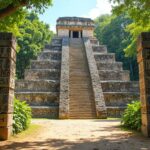
Temple complexes and plazas created sacred spaces for ritual activities, reinforcing religious authority and guiding communal life.
Through these designs, Olmec art and architecture revealed a deep connection between religion, spirituality, and governance, showing how faith informed both daily practice and ceremonial power.
Public rituals and community cohesion
Public rituals in Olmec society were central to religion and spirituality, bringing communities together through shared beliefs and traditions.
These sacred gatherings and community festivals acted as powerful expressions of religion, creating unity, reinforcing cultural identity, and strengthening social bonds.
Legacy of Olmec religion and governance in Mesoamerica
Olmec religion and governance left a lasting mark on Mesoamerica, shaping how later cultures understood spirituality and power.
Rooted in sacred symbols, ritual practices, and elite leadership, Olmec religion inspired traditions that the Maya and Aztec adapted in their temples, ceremonies, and cosmology.
This legacy shows how Olmec religion guided both spiritual life and centralized rule, influencing political structures, sacred spaces, and community rituals across ancient Mexico.
Conclusion
In Olmec culture, religion and government were deeply interconnected, shaping a powerful theocratic system where rulers served as divine intermediaries. This blend of religion and government reinforced social hierarchy through public rituals, ancestor worship, and sacred ceremonies that united communities. Political authority drew its legitimacy from spiritual beliefs, making religion and government central to governance, leadership, and daily life. This integration influenced later Mesoamerican civilizations, leaving a lasting legacy in spirituality, ritual practice, and cultural identity.
Amanda Torati is a linguist and postgraduate researcher dedicated to the study of interfaith dialogue and cultural expression. With an academic background in languages, she specializes in analyzing spiritual texts and universal values to bridge the gap between ancient traditions and modern reflection. At ABPray, Amanda combines her passion for research with a mindful approach, ensuring that every article promotes harmony, respect, and deep spiritual insight for seekers of all backgrounds.