Published on August 29, 2025 at 2:00 PMUpdated on August 29, 2025 at 2:00 PM
Interfaith marriages are more than personal unions; they shape cultural identity in meaningful, lasting ways. When two people from different faith backgrounds come together, interfaith marriages blend beliefs, traditions, and values, creating new expressions of family life and spirituality. This process influences cultural identity by reshaping rituals at home, encouraging dialogue across generations, and inspiring communities to rethink how faith and culture connect in a diverse world.
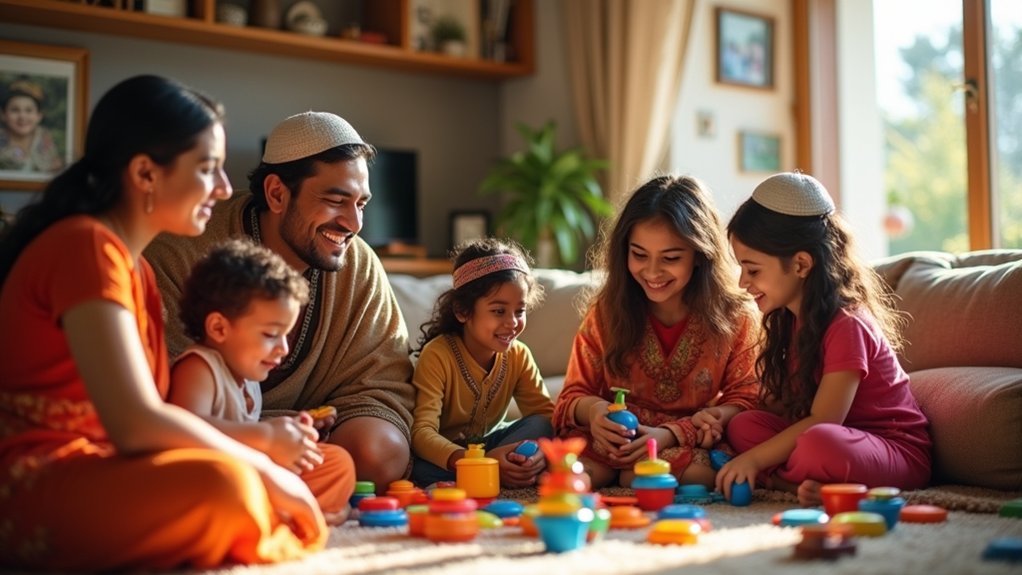
interfaith marriages transform cultural identity in unexpected ways that redefine. (Image: AbPray)
Far from simply merging customs, interfaith marriages create dynamic environments where learning, adaptation, and mutual respect become central to daily life. As a result, they redefine cultural identity not as something fixed, but as something living, flexible, and deeply shaped by love and understanding.
Blending traditions and rituals in an interfaith marriage offers a rich spiritual journey for both partners. When two people raised in different religions choose to share a life, they also share the responsibility of honoring each other’s spiritual backgrounds. Instead of discarding traditions, they often reinterpret them together, creating meaningful practices that reflect their union.
Couples may combine symbolic items during holidays, alternate between places of worship, or develop entirely new rituals that represent their blended values. Lighting candles from both traditions, reading passages from multiple sacred texts, or integrating cultural foods into celebrations are common examples. Over time, blending traditions and rituals becomes a narrative of love, compromise, and respect—allowing interfaith couples to build a spiritual environment that feels authentic and inclusive.
This thoughtful merging of customs strengthens the relationship, deepens shared spirituality, and shows that faith can be lived in varied yet harmonious ways.
Expanding religious tolerance and understanding
Interfaith marriages naturally increase religious tolerance and understanding within families. Because partners must learn about each other’s beliefs, these relationships encourage honest conversations about identity, values, and spiritual meaning. These discussions build emotional maturity, cultural empathy, and a deeper appreciation for diversity.
Through everyday interactions, attending a partner’s religious service, celebrating unfamiliar holidays, or simply listening to stories from childhood, couples challenge stereotypes and reduce misunderstandings. This increased religious tolerance often extends to extended family as well, encouraging broader acceptance within the community.
Over time, expanding religious tolerance and understanding doesn’t just strengthen the marriage; it contributes to a culture of respect, encouraging people to appreciate differences without fear or prejudice. Interfaith relationships, therefore, have the power to slowly reshape society by modeling cooperation and compassion across religious boundaries.
Creating unique family celebrations
Interfaith couples frequently craft unique family celebrations that honor both spiritual traditions. These blended holidays are often creative, joyful, and deeply meaningful. Instead of choosing one faith over the other, couples combine elements from both, showing that spiritual expression can be unified without losing authenticity.
Families may celebrate two sets of holidays, merge rituals into joint ceremonies, or create entirely original traditions. For example:
observing a moment of prayer from each religion before a shared meal,
combining symbolic foods from two cultures,
exchanging blessings from multiple traditions,
or rotating holiday leadership so each partner introduces elements of their faith.
These personalized celebrations help children feel connected to both sides of their heritage and foster an environment where diversity is embraced rather than questioned. Ultimately, unique family celebrations demonstrate how interfaith marriages enrich spiritual life with creativity, inclusion, and shared meaning.
Influencing language and communication styles
Interfaith marriages also influence language and communication styles within the household. When partners come from different cultures or religious traditions, they often bring unique phrases, expressions, and tones into daily conversations. Families may develop blended linguistic routines, such as bilingual greetings, shared religious terms, or adapted prayer language that reflects both backgrounds.
This process enhances mutual understanding and strengthens emotional connection. Children raised in these environments often grow up fluent not only in multiple languages, but in multiple symbolic systems, religious metaphors, storytelling styles, and communication patterns that teach them empathy and flexibility.
Influencing language and communication styles becomes a form of cultural preservation, allowing families to keep their ancestral voices alive while building a unified home identity grounded in openness and respect.
Shaping children’s multicultural worldviews
Children raised in interfaith households develop multicultural worldviews that set them apart in powerful ways. From a young age, they learn that multiple belief systems can coexist harmoniously, helping them cultivate empathy, curiosity, and open-mindedness.
This multicultural worldview provides children with:
a broader understanding of global traditions,
stronger social adaptability,
reduced religious prejudice,
and a more flexible sense of identity.
Rather than feeling divided between two faiths, many children eventually see themselves as bridge-builders, individuals uniquely positioned to inspire understanding between communities. As they grow older, this multicultural worldview supports emotional resilience and helps them navigate diverse social environments with maturity and confidence.
Challenging and redefining social norms
Interfaith marriages frequently challenge and redefine social norms related to religion, culture, and family life. Historically, many societies viewed interfaith unions with suspicion or disapproval, assuming that differences would create conflict. But as these marriages become more common and more visible, they challenge outdated assumptions.
Couples who choose interfaith unions model that love and respect can transcend institutional boundaries. Their relationships encourage people to reconsider rigid categories of identity and belonging. In doing so, interfaith marriages help create more inclusive cultural norms that embrace complexity rather than insisting on uniformity.
By living out their values in public, interfaith families expand society’s definition of what community, faith, and family can look like.
Promoting inclusive community connections
Interfaith marriages play a key role in promoting inclusive community connections. When families blend religious practices, they often create environments where friends, neighbors, and extended relatives feel invited to learn and participate. Joint celebrations, interfaith dialogues, and community service initiatives become opportunities for deeper spiritual cooperation.
In practice, promoting inclusive community connections means:
welcoming diverse guests to celebrations,
participating in multiple religious communities,
supporting shared values such as compassion and justice,
and opening space for conversations across traditions.
This inclusivity improves social cohesion, reduces cultural barriers, and nurtures a sense of belonging for people from various backgrounds.
Conclusion
Interfaith marriages play a transformative role in shaping cultural identity. By blending traditions, expanding religious understanding, crafting unique celebrations, and nurturing inclusive communication styles, these unions create families rooted in respect and mutual appreciation. Children raised in interfaith homes develop multicultural worldviews, while communities benefit from the bridges built across religious lines.
Ultimately, interfaith marriages show that cultural identity is not fixed—it is enriched through diversity. By honoring each partner’s faith and spirituality, interfaith families demonstrate that love, curiosity, and compassion can overcome boundaries, fostering a more understanding and inclusive society for generations to come.
Linguist and Interfaith Dialogue Researcher: Amanda Torati is a linguist and postgraduate researcher dedicated to the study of interfaith dialogue and cultural expressions of faith. With a strong academic background in Languages and Linguistics, Amanda specializes in analyzing spiritual texts and universal values, seeking to build bridges between ancient traditions and modern reflection. At ABPray, Amanda applies her academic rigor and ethical sensitivity to ensure that every article fulfills our mission of promoting harmony and mutual respect. Her role is fundamental to our Human and Ethical Review process, where she uses her expertise to ensure doctrinal and historical fidelity while maintaining an inclusive and accessible tone. By combining her passion for research with a mindful approach, Amanda transforms complex themes into practical reflections for daily life, helping seekers from all backgrounds find meaning and inner peace. Her commitment to authenticity ensures that ABPray remains a reliable source of inspiration and knowledge within the global spiritual landscape.
To provide the best experiences, we use technologies like cookies to store and/or access device information. Consenting to these technologies will allow us to process data such as browsing behavior or unique IDs on this site. Not consenting or withdrawing consent, may adversely affect certain features and functions.
Functional
Always active
The technical storage or access is strictly necessary for the legitimate purpose of enabling the use of a specific service explicitly requested by the subscriber or user, or for the sole purpose of carrying out the transmission of a communication over an electronic communications network.
Preferences
The technical storage or access is necessary for the legitimate purpose of storing preferences that are not requested by the subscriber or user.
Statistics
The technical storage or access that is used exclusively for statistical purposes.The technical storage or access that is used exclusively for anonymous statistical purposes. Without a subpoena, voluntary compliance on the part of your Internet Service Provider, or additional records from a third party, information stored or retrieved for this purpose alone cannot usually be used to identify you.
Marketing
The technical storage or access is required to create user profiles to send advertising, or to track the user on a website or across several websites for similar marketing purposes.