Published on November 17, 2025 at 2:00 PMUpdated on November 17, 2025 at 2:00 PM
I met Levi Goldstein on a Tuesday evening in November, eighteen months before his Bar Mitzvah, in the living room of his family’s modest suburban home in Livingston, New Jersey. He was twelve years old, still visibly uncomfortable with his changing body, and his mother Rebecca had just finished explaining to me why they’d decided to pursue an Orthodox conversion path, “Modern Orthodox,” she clarified quickly, sensing my confusion, despite their family’s Conservative-leaning practice over decades. His father David sat beside me with an expression I would come to recognize as the baseline emotional state of Bar Mitzvah parents: simultaneously proud and terrified.
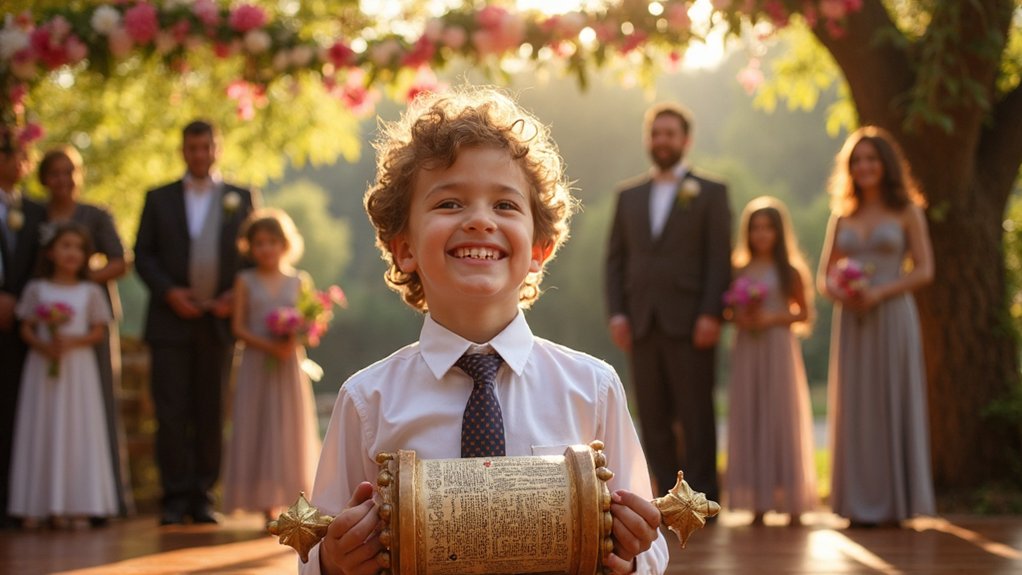
Why is Bar Mitzvah celebrated? (image: Abpray)
“We’re not really Orthodox,” David said, almost apologetically. “But we want it done right. The tutor Rabbi Brenner recommended is supposed to be incredible. Rigid, but incredible.”
This was my entry point into an eighteen-month ethnographic immersion into what has become, in contemporary American Jewish practice, one of the most expensive, emotionally fraught, culturally contradictory rituals in modern Judaism. A ritual that has almost nothing to do with what it originally meant, everything to do with what it has become, and perhaps nothing at all to do with what we tell ourselves it represents.
Let me be clear from the beginning: Bar Mitzvah is simultaneously a profound spiritual milestone, a commercial industry worth over $1.5 billion annually in the United States alone, a status display mechanism in competitive Jewish communities, a moment of genuine personal transformation for some children and a source of debilitating anxiety for others, and a historical accident that Talmudic sages would barely recognize in its contemporary form. The question is not whether Bar Mitzvah is celebrated, it is, with increasing extravagance each year. The real question is why we celebrate it the way we do, what that says about Jewish community in America, and whether we’re being honest about what we’re actually celebrating.
The question nobody asks: when did Bar Mitzvah become this?
To understand Levi’s story, I need to first dismantle the myth that Bar Mitzvah is an ancient, unchanging tradition. It isn’t. The Bar Mitzvah as we know it today, the public ceremony, the party, the catering, the expense, the social status implications, is almost entirely a twentieth-century American invention, with particularly aggressive expansion in the last fifty years.
In the Talmud, the age thirteen is mentioned as the moment when Jewish males become legally responsible for their own religious obligations. The specific phrase “bar mitzvah” literally means “son of commandment,” and it referred not to a ceremony but to a legal status. A boy who reached thirteen could be counted in a minyan (prayer quorum), could lead prayers, could engage in business transactions with legal standing. This was not celebrated. It was simply noted. There was no public reading, no party, no special clothing, no gifts, no extended family gathering in catered halls.
The transformation from legal status to ceremonial milestone happened in medieval Europe, but even then, it was minimal. Some Ashkenazi Jewish communities developed a custom where a boy would make a brief appearance in synagogue and perhaps recite a blessing or brief prayer. The rabbis didn’t encourage it. In fact, many communities deliberately kept it quiet. Too much public attention on individual achievement was considered spiritually dangerous, a form of vanity. Jewish tradition has always been suspicious of individual display.
Then Jewish communities fled Eastern Europe in the late 1800s and early 1900s. They arrived in America poor, desperate to assimilate while maintaining identity. And somewhere in that tension, something remarkable happened. Immigrants began adapting Bar Mitzvah from a barely-marked legal transition into a public, visible marker of Jewish identity. But it was subtle at first, a synagogue ceremony, maybe some family gathered in the sanctuary, perhaps a small kiddush (blessing over wine and food) afterward. The boy would read from the Torah, demonstrating literacy and continuity with Jewish tradition. It served multiple functions: it proved the family was maintaining Jewish practice, it marked the boy’s transition to adulthood in the community, it demonstrated the family’s commitment to Judaism in an American context where Jewish identity was increasingly optional.
What changed everything was the post-World War II American Jewish explosion. Jews began entering the middle class in unprecedented numbers. They moved to suburbs. They built large synagogues with catering facilities. And suddenly, Bar Mitzvah became the place where families could display their success, their arrival in America, their economic stability, their connection to community, their status among peers.
By the 1950s, the Bar Mitzvah party was becoming standard. By the 1970s, it was becoming large. By the 1990s, it was becoming ostentatious. And by the 2010s, it had become a status arms race where families were spending $25,000 to $100,000+ on single-day celebrations. The ritual that had been designed to be inconspicuous had become spectacularly conspicuous.
I watched this history compress into Levi’s eighteen-month preparation period. I watched an American Jewish family making choices that would have seemed incomprehensible to their great-grandparents. Choices that were economically rational but emotionally complex. Choices that revealed something true about contemporary Jewish identity in America.
The first meeting: when awareness becomes pressure
Levi’s first meeting with Rabbi Rothstein happened on a Tuesday afternoon in late November. Rabbi Rothstein is an Orthodox rabbi in his early sixties, raised in a Haredi (ultra-Orthodox) community in Brooklyn, but who deliberately positioned himself as a teacher to Modern Orthodox and Conservative families willing to pursue what he calls “serious learning.” He is not warm. His reputation among parents is clear: he will prepare your son thoroughly, he will not compromise on quality, and he will tolerate no excuses. Parents hire him because they want their child to actually know the material, not just perform it. This often means the child will hate him.
The rabbi’s office is in the basement of a small Orthodox synagogue in Montclair, lined with books in English and Hebrew, cold fluorescent lighting, no decorations. He asked Levi to read a short passage from the siddur (prayer book). Levi, who had attended Jewish day school and could read Hebrew conversationally, managed fine. The rabbi nodded once.
“Your son will read from Torah, which is different from siddur,” Rabbi Rothstein said to David and Rebecca. “The cantillation marks, the musical notation, are what most boys struggle with. The reading itself is manageable. The music is the challenge. I expect him here twice a week starting in January. That’s six hours of instruction per week for seventeen months. Your son will be expected to practice at home for forty-five minutes daily. If he misses more than two sessions, I will consider him unprepared. I do not offer remedial learning at the last minute.”
The cost was $3,500 total, paid in installments. Levi’s parents exchanged glances. This was more than they’d expected, but less than other families seemed to be spending. They agreed.
Levi said almost nothing during this conversation. He sat with his hands folded, listening to adults discuss his future. What I noticed, in his face and body language, was the moment that awareness shifted to pressure. This was no longer an abstract concept. This was real. This was coming. In eighteen months, he would stand before his community and do something difficult. Everyone was already watching, already evaluating, already expecting success.
“How are you feeling about this?” I asked Levi afterward, as we walked to the car.
He shrugged. “I don’t know. Nervous?”
“About what specifically?”
“I don’t know. Messing up in front of everyone?”
This anxiety, I would learn, is nearly universal among Bar Mitzvah-age boys. And almost nobody talks about it. The entire cultural narrative around Bar Mitzvah is positive: it’s a celebration, a milestone, a joyous transition. But for the thirteen-year-old who has to perform it, it often feels like exposure. Like being put on display. Like the entire community is waiting to judge whether he’s competent enough, mature enough, smart enough to be counted as a Jewish adult.
The infrastructure: how a ritual requires an industry
Over the next two months, the Goldstein family made decisions that would have been unthinkable a generation earlier. The decision was made to have the Bar Mitzvah on a Saturday morning in May, eighteen months away. This meant:
Finding the right suit. Rebecca spent weeks researching Bar Mitzvah suits. They wanted something that looked “traditional” but not stuffy, “mature” but not adult. After visiting seven stores, she found a navy suit with a subtle pinstripe at a department store. Cost: $450. This would be worn for approximately four hours and then rarely again.
Booking the venue. The ceremony would be at their synagogue, which was free for members. But the reception space, the synagogue’s catering hall, required deposit and security agreement. They booked it for May 15th, fifteen months away. Non-refundable deposit: $2,000 (applied against final catering bill).
Hiring a photographer. Rebecca researched photographers who specialized in Bar Mitzvahs. After interviews and portfolio review, they hired someone recommended by friends. Cost: $1,800 for eight hours of coverage.
Video/DJ considerations. These conversations happened later, but the framework was being set now. A DJ ran $1,200 to $1,800. A videographer could be separate from photographer, adding another $800-$1,500. They would ultimately skip the separate videographer but hire the photographer to do some video clips.
Menu planning. This didn’t happen for another ten months, but the catering company was already sending preliminary information about options: passed hors d’oeuvres, hot buffet, cold buffet, premium cocktail options, premium dessert stations. They were already budgeting $35-$65 per person. With 150 guests, this meant $5,250 to $9,750 just for food.
Invitations and logistics. Rebecca created a preliminary guest list by discussing with extended family. This list would grow and shrink multiple times. Printing invitations themselves would cost $200-$400. Website setup (for RSVPs): outsourced service, $50-$100.
In just two months, before Levi had even begun serious Torah study, his family had committed $6,000+ and was in planning conversations that would eventually total $20,000-$30,000. His mother was spending an average of five hours per week on logistics. His father was experiencing mild financial anxiety about whether they could “do it right” without debt. And Levi himself was increasingly aware that something massive was being constructed around him, that this Bar Mitzvah was becoming a family project, a social obligation, a public demonstration of something.
“Are you guys okay with the spending?” I asked Rebecca over coffee one afternoon in January, as Levi began his formal tutoring with Rabbi Rothstein.
She smiled, but there was tension in it. “Honestly? I have moments of panic. We’re comfortable, but this is… a lot. And everyone at synagogue keeps asking what we’re planning, which makes it feel even bigger. Some families go smaller, some go bigger. We’re trying to find a middle ground that feels authentic but also… appropriate? Which is a weird thing to optimize for.”
She was articulating something crucial: the performance of Bar Mitzvah exists on multiple registers simultaneously. There’s the internal, personal register (Levi’s own experience of growing up and becoming religiously responsible). There’s the family register (David and Rebecca’s own associations with Bar Mitzvah, their memories, their wants for their son). There’s the extended family register (grandparents’ expectations about tradition and propriety). And there’s the community register (what does spending this amount of money communicate about the family’s status, values, commitment, taste?). All of these registers are happening at once, creating a complexity that nobody really discusses openly. You can’t say, “We’re spending $25,000 on this party because we want to show off a little,” even if that’s partially true. Instead, you say, “We want to make sure Levi feels celebrated and that our community comes together.” Both can be true simultaneously.
January: when learning becomes real and anxiety begins its climb
Levi’s first session with Rabbi Rothstein happened on a cold Tuesday evening in January. I was not present (the rabbi does not permit observers), but Levi described it to me afterward with a mixture of frustration and respect.
“He showed me the actual Torah portion I’ll be reading. It’s in Deuteronomy. And he played a recording of someone reading it with all the musical stuff, and it sounded beautiful, but also… I have no idea how I’m going to memorize all that. He said that’s what practice is for, but it seems impossible.”
The Torah portion Levi would be reading is called Parashat Ki Tetze, in Deuteronomy 21:10-25:19. It’s a substantial portion, roughly 136 verses. The reading itself requires about twenty minutes of continuous cantillation. In traditional Ashkenazi practice, the musical system (called trop or ta’am) for chanting Torah uses a complex system of marks that indicate melodic direction, phrasing, and emphasis. These marks look like tiny symbols above and below the Hebrew letters, small curved lines, dots, accent marks. The system has been standardized for centuries and each symbol has a specific meaning. Learning to read them requires training the eye to recognize patterns, the mouth to produce sounds, the memory to retain week after week.
For a thirteen-year-old, this is genuinely difficult work. Not impossible. But genuinely difficult. And it’s work that happens in front of a man who does not offer praise or encouragement. Rabbi Rothstein’s teaching method, I learned, is relentlessly task-focused. He plays a recording. He has Levi listen. He has Levi attempt it. He corrects. He has Levi attempt again. No conversation about feelings. No discussion of why this matters spiritually. Just: here is what needs to be done, here is how to do it, keep practicing.
Levi hated the first two months of these sessions.
“Rabbi Rothstein is so strict,” he told me one afternoon, sitting in the Goldstein kitchen. “Like, I messed up a note yesterday and he made me do it like twenty times. And he just sits there with his arms crossed not saying anything when I do it right. It’s like… why am I even trying?”
This is the moment where something crucial happens. The Bar Mitzvah, which has been planned and discussed in abstract terms for months, becomes suddenly real. It’s no longer something happening in the future. It’s something happening now, requiring hours of work, producing frustration and fatigue.
Meanwhile, Levi’s peers were also beginning their own Bar Mitzvah preparations. In a Modern Orthodox community, Bar Mitzvah is essentially universal. Nearly every boy in his grade (and every girl in her grade, since Bat Mitzvah has become equal in Modern Orthodox communities) will have one. This creates both solidarity and competition. Boys would compare notes about their Torah portions, their rabbis, the size of their parties. Some boys’ families were planning destination celebrations (a weekend in Miami, an event venue, a DJ flying in from New York). The Goldsteins were planning something more modest—the synagogue hall, a band (not a DJ), catering from a reliable Jewish caterer.
Levi began to feel self-conscious about this comparison. Not because his family was poor or doing something shameful, but because he was becoming aware, at thirteen years old, that Bar Mitzvah was also a status marker. Some families were clearly spending more money, more attention, more cultural capital on their celebrations. This knowledge was, I believe, contributing to his anxiety. He was aware not just that he had to perform, but that his family’s performance (through the party they threw) communicated something about their place in the community hierarchy.
The parallel journey: what Bar Mitzvah looks like elsewhere
To understand why Levi’s experience is the way it is, I need to step back and examine what Bar Mitzvah looks like in different contexts. Because the Bar Mitzvah I was witnessing with Levi is not a universal Jewish experience, it’s a specifically American, specifically Modern Orthodox (or Conservative)-adjacent, specifically class-coded experience.
In Ultra-Orthodox communities, Bar Mitzvah is taken seriously as a halakhic milestone, the moment when a boy’s religious obligation shifts. But there is often minimal celebration. Some Haredi communities mark the day with a small gathering, perhaps some kiddush in the synagogue, maybe gifts of Jewish texts, but not the elaborate party structure. The focus is on the halakhic transition and the boy’s intellectual mastery, not on public celebration. I interviewed Rabbi Moshe Katz, who leads a Haredi community in Brooklyn, about this. “We celebrate the boy becoming responsible before God,” he said. “Not the boy being celebrated by the community. These are different things.”
In Israeli society, Bar Mitzvah exists but is less emphasized than it is in America. This is partly because Jewish identity is assumed rather than chosen (you’re born into a Jewish state), and partly because the transition to adulthood is marked more by military service (at eighteen) than by a synagogue ritual. Some Israeli families do celebrate Bar Mitzvah, often combining it with a trip to the Western Wall or some other cultural-religious site. But it’s less of a consuming industry.
In Sephardi and Mizrahi communities, Bar Mitzvah traditions differ from Ashkenazi patterns. Some Sephardi communities have different musical/cantillation traditions. Some have different community roles associated with Bar Mitzvah. In some Moroccan communities, for example, Bar Mitzvah is less about public Torah reading and more about family gathering. The ritual itself varies.
In Reform communities, the Bar Mitzvah experience has been radically reimagined. The emphasis is less on mastery of cantillation and more on the boy’s personal understanding of what becoming Bar Mitzvah means. Some Reform communities have minimal party expectations, instead emphasizing community service or personal statement. And most significantly, Bat Mitzvah (for girls) has been fully integrated as an equal parallel ritual, whereas in Orthodox and Conservative communities, this remains contested.
In secular Jewish communities, Bar Mitzvah often becomes a cultural rather than religious marker. Families may have a secular Bar Mitzvah, sometimes even with a “secular Bar Mitzvah rabbi” or community leader who is not ordained. The ceremony might include humanistic readings rather than Torah, might focus on the boy’s own writing or artistic expression rather than cantillation mastery. It’s Judaism as ethnic identity rather than religious practice.
What all of these variations reveal is that Bar Mitzvah is not a monolithic tradition. It’s a framework that gets filled with radically different content depending on context. The “authentic” Bar Mitzvah that the Goldstein family was pursuing, public Torah reading in Modern Orthodox tradition, is one possibility among many. It has become hegemonic in suburban American Jewish communities, particularly among educated, middle-class families like the Goldsterns. But it’s not the only way.
Spring and summer: learning deepens and family dynamics shift
By April, roughly four months into Levi’s learning, something shifted. He was no longer fighting the process. This is a typical psychological arc in Bar Mitzvah preparation: the first months are characterized by resistance and frustration, but around the four-month mark, most boys reach a point of competence where the work begins to feel manageable. The impossible becomes merely difficult, and that shift changes everything.
I was having coffee with Levi one afternoon in mid-April, and he was suddenly able to talk about the Torah portion with something approaching interest.
“Rabbi Rothstein played this recording of a really famous singer reading it,” he said. “And it was so beautiful. Like… the way the notes work, it’s not random. There’s patterns. And once you understand the pattern, it’s easier to remember. He showed me how this phrase sounds similar to another phrase I learned weeks ago, and I realized I already knew part of it. That was cool.”
This is when Bar Mitzvah shifts from external pressure to something more internal. When the work becomes the point, rather than the party or the community recognition. I’d see this moment replicate itself many times, in different families, different kids. There’s a threshold where mastery and competence kick in, and the entire emotional tone changes.
Meanwhile, the family dynamics were also shifting. Levi’s grandmother, Sylvia, David’s mother, had become deeply invested in the Bar Mitzvah. She left Poland as a teenager and immigrated to America. She had never had a proper family celebration of anything. For her, Levi’s Bar Mitzvah represented something: continuity, survival, the restoration of family rituals that had been violently interrupted. She was not wealthy, but she was insisting on giving Levi a gift, a beautiful tallit (prayer shawl) from Israel that her nephew had hand-woven.
“This is important,” she told me, in her thick Eastern European accent, showing me pictures of the tallit. “When I was his age, there was no Bar Mitzvah. There was war. The fact that he can have this, that his family can celebrate this… this is everything.”
This is something that gets lost in the critique of Bar Mitzvah as a commercial industry: for many families, it holds genuine meaning. It’s not just status display. It’s continuity. It’s memory. It’s the assertion that despite everything, despite immigration, despite trauma, despite assimilation, the ritual continues. Sylvia’s investment in Levi’s Bar Mitzvah was not about showing off. It was about bearing witness to something she thought she’d lost.
At the same time, other tensions were emerging. David’s brother Michael had decided not to attend the Bar Mitzvah. He and David had become estranged years earlier over financial issues, and Michael had not been part of the family’s life for several years. There was hurt around this, hurt that Levi’s milestone would be celebrated without his uncle present. Levi asked his father about this, confused about why Uncle Michael wasn’t coming.
“He’s dealing with some stuff,” David told him, in the vague language parents use when they don’t want to burden children with adult complications.
But Levi knew something was wrong. He knew there was family pain underneath the celebration. And this knowledge added another layer to his experience, the understanding that even milestone moments are complicated, that families contain hurt alongside joy, that nothing is purely celebratory.
July and August: the turning point and unexpected anxiety
By summer, Levi was roughly two-thirds of the way through his learning. He had moved past the first half of his Torah portion and was now working on increasingly difficult sections. The stress levels around the house had also increased significantly. Rebecca was in full party-planning mode, menu tastings, decoration decisions, gift bag considerations. The invitations had been sent out months earlier. RSVPs were coming back. They now had a rough count: approximately 140 guests.
One afternoon in early July, Levi had what I can only describe as an anxiety crisis. He called me in tears, having just finished a tutoring session with Rabbi Rothstein where the rabbi had pointed out that his cantillation was “sloppy” on a particular section that Levi thought he had mastered. The boy was spiraling, convinced he was going to fail, that he would forget everything when the moment came, that everyone would judge him as incompetent.
This is when I first realized something crucial: the psychological pressure of Bar Mitzvah, particularly in a community like the Modern Orthodox one, is genuinely significant. And it’s not something that gets talked about openly. There’s an expectation that boys will feel proud and excited. But the reality for many is that they feel terrified.
“Everyone’s going to see me mess up,” Levi said through tears. “And then they’ll remember me as the kid who couldn’t read his Torah right. And that’s my whole Bar Mitzvah. That’s what people will talk about.”
I asked him if he wanted to talk to his parents about how he was feeling.
“I can’t,” he said. “They’ve spent all this money. My mom has been planning for months. My grandma is so excited. I can’t tell them I’m freaking out. That would be selfish.”
This is the bind that many Bar Mitzvah-age boys find themselves in. They’re expected to feel honored and excited, but the pressure is real, the fear is valid, and expressing it feels like betrayal of the family’s investment. The ritual is supposed to be about the boy, but the boy’s actual emotional experience becomes secondary to the family’s emotional investment.
I finally convinced Levi to talk to his parents. That conversation was difficult. Rebecca’s initial response was to try to reassure him: “You’re doing great, you’re going to be amazing, Rabbi Rothstein wouldn’t say you were ready if you weren’t ready.” But David, after listening for a while, said something different: “You’re allowed to be scared. This is a big deal. And it’s okay to be scared about big deals.”
The permission to feel fear, even fear about something that’s supposed to be joyful, seemed to help Levi more than false reassurance. He didn’t suddenly become confident. But he became less isolated in his fear. His parents acknowledged that this was genuinely difficult, that his anxiety was legitimate, and that they would support him whether he nailed it or struggled.
The rabbit hole: why Bar Mitzvah anxiety is almost never discussed
I want to pause here and discuss something that surprised me during my research: the near-universal absence of honest discussion about Bar Mitzvah anxiety in Jewish community contexts. Parents discuss logistics endlessly. They compare party sizes and costs. They share recommendations for caterers and photographers. But the emotional experience of the child, the fear, the pressure, the feeling of exposure, is almost never openly discussed.
I think there are several reasons for this:
First, there’s a cultural narrative that Bar Mitzvah is a joyous celebration. To admit that your child is anxious is, in some way, to admit that you’ve created an unjoyous situation. It’s to question whether the whole enterprise is worth it. And that questioning is dangerous to a ritual that has become so culturally embedded.
Second, the Bar Mitzvah industry, the tutors, the caterers, the photographers, the venues, the party planners, all have an interest in maintaining positive messaging. Nobody wants to hear, “Actually, this ritual creates significant psychological pressure on thirteen-year-old children.” That’s bad for business.
Third, parents themselves are often working through their own Bar Mitzvah memories and anxieties. For some parents, their Bar Mitzvah was traumatic. For others, it was one of the best days of their lives. Either way, it’s loaded with emotion. Bringing that into conversation about their child’s Bar Mitzvah is complicated and vulnerable.
And fourth, there’s a gender dynamic. Bar Mitzvah anxiety is present in both boys and girls, but the expression of that anxiety differs. Boys are often discouraged from expressing fear or vulnerability, so they internalize. Girls, in communities where Bat Mitzvah is new, sometimes struggle with the fact that they’re being held to the same standard as boys, and may feel unprepared or unsupported.
I interviewed several other families during this period. One mother, Karen, told me about her son’s Bar Mitzvah three years earlier: “He had a meltdown three days before. Complete panic attack. We had to contact the rabbi and ask if there was any possibility of postponing. He was convinced his Torah reading was going to be a disaster. And you know what? He read beautifully. Nailed it. But those three days before were awful. And I’m still frustrated that nobody had prepared us for the emotional component of this.”
Another father, Steve, said: “I think the Bar Mitzvah industry is kind of out of control. But also… I don’t know. There’s something about it that matters. My father didn’t have a Bar Mitzvah. His father barely had one. And I had a small one. But I wanted to give my kid something big, something he could remember. I don’t know if that’s good parenting or just buying into something commercial. Probably both.”
This ambivalence, the simultaneous recognition that Bar Mitzvah is partly commercialized and partly meaningful, is something that most Jewish families navigate. They’re not blind to the status display dimension. But they’re also not willing to simply dismiss the ritual as empty. Instead, they try to find some middle ground where the ritual can be genuine and the party can be appropriate and nobody spends themselves into debt.
The Goldstein family was navigating this balance point. They were spending a significant amount of money, but they were conscious of not going overboard. They cared about Levi’s actual learning and growth, but they were also planning a party. They wanted community to gather and celebrate, but they didn’t want it to be about showing off. This is almost impossible to perfectly balance. And the tension of trying creates stress that radiates through the family.
Autumn: the home stretch and identity shifts
By September, we were in the final stage of preparation. Levi was now roughly 80% confident with his Torah portion. He had begun to practice on his own, without being forced to, because mastery was close enough to taste. There was about seven months left before the ceremony.
What was striking to me during this period was the subtle identity shift happening in Levi. He was beginning to be recognized in his community as “the Bar Mitzvah boy.” People at synagogue would ask him how his learning was going. Relatives would make comments about how grown up he looked. Teachers at school asked about the upcoming Bar Mitzvah, having learned about it from parents who’d been talking about the event for over a year.
There’s a strange social position that Bar Mitzvah-age kids occupy. They’re no longer quite children, but not yet adolescents. Or rather, they’re being invited into adolescence through a ritual, but they don’t necessarily feel ready for that transition. Levi, in particular, seemed simultaneously pleased by the attention and uncomfortable with the exposure.
“I don’t like when people ask me about it,” he told me one afternoon. “Like, I appreciate that they care, but it feels weird to have everyone focused on me. I’m still the same person I was six months ago. I haven’t changed just because I’m learning Torah.”
And yet, he had changed. Not in some mystical, spiritual way (though the religious tradition claims that Bar Mitzvah creates that kind of change). But in a social and psychological way. He was being treated differently. He was being recognized differently. The community was preparing to ceremonially acknowledge that he was transitioning into a new role, the role of a Jewish adult with responsibilities.
What struck me most was that Levi wasn’t entirely sure he wanted this transition. He was thirteen. He liked video games and basketball. He was developing crushes on girls in his grade. He didn’t particularly want to be “grown up.” And yet, the Bar Mitzvah machinery was pulling him toward that identity.
At the same time, Levi’s family was getting more involved. Sylvia, his grandmother, had decided to offer a blessing. She wanted to say something from the bimah (the raised platform where the Torah is read) after Levi finished. This was unusual, not traditional in modern practice, but Rabbi Rothstein agreed to permit it. She was writing something about family, continuity, and survival.
David and Rebecca had invited extended family from out of town. Some relatives who hadn’t seen Levi in years were making plans to attend. What had started as a family event was becoming a gathering point, a reason for family to come together.
And the party was becoming real. The catering company had sent menu finalized details. They had done a tasting two months earlier. They had decided on: passed hors d’oeuvres during cocktail hour, a hot buffet of roasted chicken, brisket, and vegetarian pasta, a dessert station with chocolate covered strawberries and cake from a local bakery, a candy bar with Levi’s name on it, matching napkins and yarmulkes printed with the date.
These details are significant because they’re the material expression of the family’s financial investment and emotional labor. They’re saying: “We are gathering resources to celebrate this child. We are spending money and attention to make this moment visible and memorable.”
December: four months out and the emotional weight settles in
As we moved into December, Levi had been studying for nearly a year. He was now at a point of refinement—not learning new material, but polishing what he had already mastered. The anxiety that had peaked in July had mostly subsided, replaced by a kind of focused calm. He could read the entire Torah portion from beginning to end without stopping. He had recorded it and could listen to his own progress.
But something else had settled in: the weight of what was coming. I noticed it in small ways. He would sometimes space out in conversations, his mind elsewhere. He talked less about the Bar Mitzvah itself and more about worrying whether he’d done it right. He had started having occasional nightmares about forgetting his words.
And the family was feeling the weight too. Rebecca was in final months of all the planning logistics. There were still decisions to be made: flowers for the bimah, the specific wording of the program, whether to do favors or not, what kind of thank you gifts to send to people who gave gifts.
David was occasionally irritable, the kind of low-level stress that comes from having a big financial commitment hanging over you and no way to reduce it at this point. Sylvia was dealing with health issues (nothing serious, but age-related complications) and was sometimes anxious about whether she’d be able to make it to May feeling well enough to give her blessing.
What I observed was that Bar Mitzvah, even though it’s framed as “the child’s day,” actually impacts the entire family system. The emotional and logistical weight distributes across parents, grandparents, extended family. And the cultural expectation is that all of this stress and investment should be worth it because it’s for the child’s milestone.
I spent an afternoon with Rebecca organizing papers, the contract with the caterer, the photographer, the synagogue facility agreement, the program notes, the invitation responses. She had created a spreadsheet tracking RSVPs, dietary restrictions, children attending without parents, parking arrangements.
“This is a lot,” I said.
“It is,” she agreed. “And I know that part of me is doing this because I want Levi to have something beautiful and memorable. But another part of me is doing this because… I don’t know, because it’s expected? Because my mother-in-law would be disappointed if we did something small? Because everyone at synagogue is watching what we do? I can’t entirely untangle my own motivations.”
This honesty is rare in discussions of Bar Mitzvah. Most parents, if asked, will frame it in child-centered terms: “We’re doing this for Levi. We want him to feel celebrated.” And that’s true. But it’s not the entire truth. The Bar Mitzvah is also for the parents, for the extended family, for the community.
The second protagonist: when Bar Mitzvah becomes trauma
Somewhere around this same time, I was contacted by another family, Daniel and Sarah Cohen, whose son Zachary was having his Bar Mitzvah three weeks before Levi’s. They had reached out to me through a mutual friend, wanting to talk about their experience. And their story is the counterpoint to Levi’s, the story of when Bar Mitzvah becomes not a positive milestone but a source of genuine anxiety and damage.
Zachary is an anxious kid. He was always anxious, according to his parents. As a young child, he had separation anxiety. As he got older, he developed social anxiety. He was brilliant academically, but socially he was withdrawn. He had a small group of close friends and didn’t like being the center of attention.
When Zachary turned eleven, the conversation about Bar Mitzvah began. And immediately, it triggered something in him. The idea of standing in front of 150 people and publicly performing was deeply terrifying to him. Not mildly uncomfortable. Deeply, catastrophically terrifying.
“He started having panic attacks,” Sarah told me. “Real panic attacks. Not like, ‘Oh, I’m nervous about something.’ But where he couldn’t breathe and was convinced he was dying. And this was two years before the Bar Mitzvah would even happen.”
Daniel and Sarah tried to be supportive. They considered getting him a tutor who was particularly good with anxious kids. They talked to the rabbi about whether there were alternative ways to do the ceremony. They consulted with Zachary’s therapist. But the institutional machinery of Bar Mitzvah, the expectations, the community’s assumptions that he would have a Bar Mitzvah, kept pushing forward.
“The rabbi said, ‘All kids are nervous. Once he starts learning, it will feel more manageable,'” Daniel explained. “And that’s sometimes true. But for Zachary, the learning just made it worse. Every lesson was a reminder that this public performance was approaching. Every tutoring session triggered his anxiety.”
By the time Zachary was thirteen and his Bar Mitzvah was six months away, he was in genuine crisis. His anxiety had escalated. He was having trouble sleeping. His grades had dropped. He was withdrawn even from his close friends. The Bar Mitzvah, which was supposed to be a celebration of his becoming a Jewish adult, had become a source of psychological distress.
“We wanted to call it off,” Sarah said. “We said to him, ‘Zachary, your mental health is more important than this. We can have a private ceremony with just family. We can do something different. We can skip it entirely.’ And he actually wanted to do that. He was willing to do something smaller.”
But when they approached the rabbi about this, they encountered some resistance. The rabbi acknowledged that anxiety was an issue, but suggested that “working through it” was part of becoming an adult. That Bar Mitzvah could be an opportunity for Zachary to build resilience, to overcome his anxieties.
“The rabbi framed it as, ‘This is hard, and that’s the point,'” Daniel said. “Like, suffering builds character or something. And I get that there’s some truth to that. But we also know our kid. And we knew this was going to be genuinely harmful to him.”
In the end, the Cohens pushed back on the institution. They found a different rabbi, a Conservative rabbi, compared to their Modern Orthodox community, who was willing to do a smaller ceremony in the rabbi’s office, with just immediate family and close relatives. Zachary still had to learn the Torah portion, still had to read it, still became Bar Mitzvah. But it was done in a smaller, less public, less pressure-laden context.
“He was still nervous,” Sarah said. “But he could do it. And afterward, he actually felt good about it. He had accomplished something hard. But he hadn’t been retraumatized by the experience.”
The Cohens’ story reveals something crucial that’s often hidden in the Bar Mitzvah narrative: the ritual can be genuinely harmful for some kids. Not because there’s something wrong with them, but because the ritual’s structure, the public performance, the community evaluation, the months-long build-up, can activate real psychological vulnerabilities.
And here’s the hard part: the community’s response to anxiety around Bar Mitzvah is often to insist that anxiety is normal, that the child will “get through it,” that this is “character building.” But for some kids, that’s genuinely harmful. The ritual becomes something endured rather than something experienced.
February: two months away and the real preparation intensifies
By February, with about three months left before the ceremony, Levi had moved into the final stage of preparation. He was now rehearsing in the actual synagogue, during actual services, in front of the actual community. This was a significant shift psychologically.
The first time Levi led a complete service (including reading a different Torah portion, not his Bar Mitzvah portion, but similar), he experienced something he hadn’t expected: it was easier than it felt when he was alone or with the rabbi. The community’s presence, rather than making it harder, somehow made it flow more naturally. There’s something about the silence of a congregation listening that focuses attention.
“It felt weird,” he told me afterward. “Like everyone was paying attention. Like, really paying attention. But also, I was less aware of myself? Like, I was just reading, and I wasn’t thinking about how I was reading?”
This is the flow state that athletes and musicians talk about, the paradoxical moment where self-consciousness disappears because attention is fully absorbed by the task. Not everyone reaches this state, but Levi had.
The family had also entered a kind of controlled chaos. The invitations had been out for months. RSVPs were coming back. Out-of-town family was making travel plans. The caterer was finalizing quantities. The photographer was making site visits to the synagogue to figure out lighting. The florist was being selected. Every decision that had been abstract was becoming concrete.
And Levi’s awareness of the approaching date was everywhere. Relatives called to congratulate him in advance. Older kids at synagogue who had had Bar Mitzvahs shared advice and supportive commentary. Even the school, having learned about the upcoming Bar Mitzvah from parents, made an announcement about it in the school newsletter.
What had been, at the beginning of the process, a family event, had become a public event. The community had been invited to participate in marking Levi’s transition. And that community was beginning to mobilize, buying clothes, arranging travel, preparing gifts.
April: the moment approaches
The week before the Bar Mitzvah, Levi was running on adrenaline and nerves in equal measure. He had stopped learning anything new months ago. He was at a point of mastery. But there was a kind of pre-performance jittery anxiety. He couldn’t sleep well. He would randomly run through sections of his Torah reading in his head. He was distracted in school.
The family had entered the logistical crunch. The caterer needed final counts. The photographer needed parking information. The program was being printed. Seating charts were being finalized. David’s side of the family was arriving on Thursday. Rebecca’s parents were coming on Friday. Sylvia was managing anxiety about her health holding up through the weekend.
And Levi was being treated like he was about to do something momentous. Which, in a sense, he was. But he was still a thirteen-year-old boy. He just wanted it to be over.
“I don’t think it’s going to feel real until I’m actually up there reading,” he told me the evening before.
That night, I attended a pre-Shabbat dinner at the Goldstein house. Extended family was gathering. The energy was celebratory but also tinged with emotion. There were old stories being told, about David’s Bar Mitzvah, about David’s grandfather’s Bar Mitzvah, about what Bar Mitzvah meant in different eras of the family’s history. Sylvia was quiet, watching her grandson with an expression of profound peace and satisfaction.
At one point, David pulled me aside. “I just realized,” he said, “that my father never really talked to me about my Bar Mitzvah. It happened when I was thirteen. There was a party. But I don’t remember him acknowledging what it meant to him. And I’ve been thinking about what to say to Levi tomorrow, after it’s done. I want to tell him something that matters. But I’m not sure what.”
This is the gap that often exists between the ritual and its meaning. The ritual happens, the ceremony occurs, but the articulation of what it means, the sense-making that families are supposed to do, is often absent or unclear.
The day: saturday morning in May
I arrived at the Goldstein home at 7 a.m. on Saturday. Levi was already awake, having barely slept. He was wearing the navy suit and a white shirt. His hair had been carefully combed. His grandmother was helping him tie his tie, her hands slightly trembling.
“You look like a man,” she said to him in Yiddish-inflected English. And he smiled, embarrassed but pleased.
The family drove to the synagogue in two cars. As they arrived, I could see the parking lot was already filling up. Friends and relatives were streaming in. The social workers part of my brain recognized that we were now in the ceremonial space, where the everyday rules were suspended and ritual time had begun.
The synagogue sanctuary was full, roughly 180 people. I noticed the mix: immediate family in the first few rows, extended family scattered throughout, members of the synagogue community filling the rest, a few non-Jewish friends and relatives of the family, people Levi’s parents worked with, teachers from his school.
The service began at 9:30 a.m. For the first hour and a half, the regular Saturday morning service proceeded. Levi participated, sitting next to his father, singing along with familiar prayers. His hands were shaking slightly, I noticed. But he seemed grounded.
And then, at around 11 a.m., the moment arrived. The Torah was removed from the ark. The community stood. The Torah scroll was carried to the bimah. And Levi was called up.
“Baruch she’am lo shalom,” the cantor sang, announcing the call-up. “Blessed is the one whose son is bound to the commandments.”
Levi walked to the bimah. He looked small, standing next to the rabbi and cantor. His voice, when he began to recite the blessing before the reading, wavered slightly. But then he steadied.
And then he began to read.
What happened next was something I can only describe as extraordinary, though I’m hesitant to use spiritual language because what occurred was as much psychological and communal as it was spiritual. Levi began to read the Torah portion with a fluidity and confidence that seemed to surprise even him. The months of practice crystallized into a moment of genuine competence. He wasn’t thinking about the mechanics anymore. He was simply reading, his voice carrying through the sanctuary, the community silent and focused.
For roughly twenty minutes, Levi read. Parashat Ki Tetze. Verses from Deuteronomy about laws of war, laws of inheritance, laws of family obligation, laws of human dignity. The Torah doesn’t present these as pleasant abstractions. It presents them as concrete requirements for living in community. And Levi, with his thirteen-year-old voice, was carrying that ancient legal text into the present moment.
And here’s what I noticed: the community was not evaluating whether he was doing it right. The community was witnessing. They were present with him in the act of claiming his place in a tradition that stretches back thousands of years. There was something almost palpable in the room—the sense that this child was becoming an adult, was being formally incorporated into the tradition, was being recognized by the community as one of them.
When Levi finished reading and recited the blessing after the reading, the community responded with a loud “Amen.” And I heard sniffles, people were crying. Not mockingly, not because he had failed or succeeded, but because something meaningful had occurred.
He walked back to his seat next to his father. And David pulled him into an embrace that lasted longer than a typical hug. And I saw tears on David’s face.
Sylvia then went to the bimah and gave her blessing, a short, powerful statement about family, survival, and continuity. She spoke about her own mother, who had not lived to see her son grow up. She spoke about how this moment represented the continuation of family that had been interrupted by history. She blessed Levi to carry the tradition forward. And there was not a dry eye in the synagogue.
The reception: when the ritual ends and the party begins
After the service ended, the community dispersed to the synagogue’s catering hall. There was a cocktail hour with passed hors d’oeuvres, a string of events that had been carefully choreographed by Rebecca.
The speeches began. David spoke, his voice wavering with emotion, about how proud he was of his son, and how Levi had worked incredibly hard to get to this moment. He thanked the rabbi, thanked the tutors, thanked the family for coming. He made a joke about his own Bar Mitzvah that got a laugh.
Rebecca spoke about how surreal it was that her little boy had become a man in the Jewish tradition. She thanked the community for supporting Levi’s learning. And then she did something unexpected, she called Levi up to speak.
Levi had prepared a brief thank you statement, but I hadn’t expected him to actually give it. He stood at the microphone, still in his suit, looking both proud and uncomfortable.
“I want to thank my rabbi and my tutors for teaching me,” he said. “And I want to thank my family for being here. This has been hard work, and I couldn’t have done it without them. And I’m glad it’s over.” This last line got a laugh, the honest statement that, while it had been meaningful, it had also been grueling.
The dinner proceeded. Levi was circulated around the room by his parents, “Go talk to your great-aunt Sarah,” “Uncle Dave wants to congratulate you.” There was a strange formality to it all. Levi, who had been nervous about being on display, was now being displayed. And he handled it with a kind of gracious tolerance that seemed beyond his years.
Then the DJ started music (they had chosen a DJ over a live band, ultimately). And Levi was called to do the traditional dances, the chair dance where the community dances in a circle and lifts the Bar Mitzvah boy up on a chair.
As Levi was lifted into the air, his body tense with the vulnerability of being held aloft by strangers, I saw his grandmother watching from her table, tears streaming down her face. I saw his parents clapping. I saw the community celebrating.
And I thought: this is genuinely meaningful, and this is also genuinely about display. Both things are true simultaneously. The community is recognizing this child’s transition into adulthood. And the family is demonstrating their status and their connection to community. The ritual is authentic and it is commercial. The emotion is genuine and it is performed.
The aftermath: what happens after the moment
Over the days and weeks that followed, I checked in with various people involved in Levi’s Bar Mitzvah.
Levi himself, in the immediate aftermath, felt a strange mix of relief and anticlimax. “I was so nervous about it happening,” he said to me a few days later, “but now that it’s done, it’s kind of… I don’t know. It’s done? Like, I don’t feel different. I feel relieved, but I’m not suddenly a man or anything. I’m still the same person I was before.”
This is a common experience for Bar Mitzvah kids, the expectation is that the ritual will create a transformation, but the actual lived experience is that you’re still yourself, just with the knowledge that you’ve accomplished something difficult.
David reported feeling the strongest emotion in the days immediately after. “I found myself crying at random moments for like a week,” he said. “Not sad crying. Just… I don’t know, the recognition that my little boy is growing up. The Bar Mitzvah somehow made that abstract fact concrete.”
Rebecca expressed relief that the planning was over. “I was exhausted,” she said. “Now I’m sleeping through the night. And I’m not checking my phone constantly waiting for RSVPs or caterer confirmations. It’s weird to have that mental space back.”
Sylvia had a different response. In an email to me, she wrote: “This bar mitzvah saved my life, you know? I know that sounds dramatic, but in a way it’s true. I carried so much grief and loss for so many years. And this moment, watching my grandson read Torah, seeing my family together and alive, knowing that we survived, it gave me peace. I’m going to die at peace now, because I know the tradition continues.”
Rabbi Rothstein had returned to his normal tutoring schedule, working with other students preparing for their Bar Mitzvahs. When I asked him about Levi’s progress, he was characteristically minimal in his praise: “He did the work. He read respectably. That’s the point, the work is the point, not the performance.”
And Zachary Cohen, whose smaller Bar Mitzvah had happened three weeks earlier, had actually recovered significantly from his anxiety. The smaller, less public ceremony had allowed him to have a positive experience. His parents reported that he was talking about his Bar Mitzvah with pride, not dread.
The larger question: is Bar Mitzvah about the child or about the community?
Now I want to circle back and address the central tension I’ve been tracking throughout this narrative: the question of what Bar Mitzvah actually is and who it’s actually for.
The official answer is: it’s about the child becoming an adult in the Jewish tradition and assuming adult responsibilities. This is the halakhic (legal) answer. And it’s true. In the traditional Jewish framework, Bar Mitzvah marks the moment when a young person becomes responsible for their own religious obligations, for living according to halakha, for being counted as a full member of the community.
But the lived reality of Bar Mitzvah in contemporary America is far more complex. It is simultaneously:
A genuine coming-of-age ritual that many children experience as transformative, even if they don’t recognize it immediately. Levi’s work over eighteen months did change him, not because he became magically “adult,” but because he mastered something difficult, received community recognition for that mastery, and moved through a structured process of identity transformation.
A family event that brings together multiple generations and allows families to celebrate continuity and resilience. For the Goldstein family, particularly with Sylvia’s involvement, the Bar Mitzvah was genuinely about family continuity and the persistence of Jewish practice despite historical trauma.
A community ritual that affirms social bonds and reincorporates individuals into collective identity. The community witnessed Levi’s reading, which created a mutual recognition: they saw him as adult, and he experienced being seen.
An industry-driven consumer event that functions partly as status display. The expenses, the party planning, the photo opportunities, the gifts, these are all real and they do communicate something about the family’s place in the community.
A potential source of genuine psychological distress for some children, particularly those with anxiety disorders. The Zachary Cohen case demonstrates that the ritual’s structure, the public performance, the months-long buildup, the community evaluation, can activate real psychological vulnerabilities.
A moment of profound spiritual or philosophical significance for some families and individuals, and a basically secular cultural practice for others. The meaning is not inherent in the ritual; it’s constructed by the people participating.
So the question “Is Bar Mitzvah about the child or about the community?” is a false binary. It’s about both. And the two are often in tension.
The ethical complexity emerges when we recognize that Bar Mitzvah has become essentially mandatory in many Jewish communities, particularly Modern Orthodox and Conservative communities. There’s institutional pressure, from rabbis, from community norms, from family expectations, to have a Bar Mitzvah. And that mandatory quality means that it can’t be purely about the individual’s choice or readiness. Some children don’t want a Bar Mitzvah. Some children are traumatized by it. But the community pressure makes opting out very difficult.
The historical transformation: how we got here
To fully understand what Bar Mitzvah has become, I need to trace how we arrived at this point.
As I mentioned earlier, Bar Mitzvah was not historically a ceremony. It was a legal status that emerged when a boy turned thirteen. The Talmud discusses the age thirteen as significant, but not because of a ritual. It’s mentioned because certain commandments apply differently at different ages.
In medieval Ashkenazi Jewish communities (the Jews of Central and Eastern Europe), the concept of Bar Mitzvah was gradually formalized. Some sources suggest that by the 1300s-1400s, there were communities where a boy would appear in synagogue at age thirteen and might recite a blessing or brief prayer. But this was not universal. Many communities had no Bar Mitzvah custom at all.
The Sephardic tradition (the Jews of the Mediterranean, Spain, and the Islamic world) developed different customs. In some Sephardic communities, there was a more elaborate coming-of-age ritual, but it looked different from Ashkenazi practice.
What’s crucial is that for most of Jewish history, Bar Mitzvah, if it existed at all, was a minor, private, family affair. A boy became Bar Mitzvah, and that was noted, but it was not necessarily celebrated.
Then came the great Jewish emigration to America in the late 1800s and early 1900s. Eastern European Jews arrived in America poor, desperate to maintain religious identity in a society that offered no structural support for Jewish life. In Europe, Jewish community was mandatory, you lived in a neighborhood with other Jews, you belonged to a congregation, Jewish life was woven into the fabric of existence. In America, Jewish identity became optional. You could choose to participate or not. You had to create institutions to sustain the community.
And somewhere in that process of immigration and adaptation, Bar Mitzvah was reimagined. Jewish immigrants began to Americanize the ritual, making it more public and more ceremonial. The Bar Mitzvah became an opportunity to publicly demonstrate that the family was maintaining Jewish practice, that the next generation was being raised Jewish, that despite the challenges of immigration and assimilation, the tradition persisted.
By the early twentieth century, Bar Mitzvah was becoming more common in American synagogues. By mid-century, particularly after World War II, it had become essentially universal in suburban Jewish communities.
And here’s where the transformation accelerates: as Jews entered the middle class in the post-war period, Bar Mitzvah became a place to display that newly-achieved status. A modest Bar Mitzvah in the 1950s might have included a small reception in the synagogue. By the 1980s, Bar Mitzvah parties were becoming increasingly elaborate. By the 2000s, they had become what we see now, major events with professional catering, photography, DJ services, significant cost.
The Jewish Bar Mitzvah industry emerged because there was demand. Parents wanted their children to have something memorable. Vendors responded by providing increasingly elaborate options. And a feedback loop developed where the “expected” Bar Mitzvah became more and more expensive because everyone’s Bar Mitzvah was expensive.
This is not a Jewish-specific phenomenon. Similar things have happened with Sweet 16 parties, quinceañeras, and other coming-of-age rituals. The commercialization is partly about Jewish culture, but it’s also about broader American consumer capitalism.
The philosophical question: why do we need this ritual?
This brings me to a deeper philosophical question that kept surfacing throughout my time with the Goldstein family and others I interviewed: why do we need Bar Mitzvah at all? What does it do that couldn’t be done some other way?
The traditional answer, from the rabbinic perspective, is: Bar Mitzvah marks a halakhic transition. It’s not optional, it simply marks when a person becomes responsible. In that framework, you don’t celebrate Bar Mitzvah because it’s meaningful. You have it because that’s when responsibility begins.
But in contemporary liberal Jewish communities (Conservative, Reform, Reconstructionist), Bar Mitzvah is not mandatory in the traditional sense. These movements have reworked what Bar Mitzvah means, often emphasizing personal spiritual growth or community commitment rather than halakhic obligation. In that context, Bar Mitzvah becomes optional, and the choice to have one becomes a choice to participate in a ritual.
And here’s what I found interesting: even in communities where Bar Mitzvah is not halakhically mandatory, it’s still socially expected. The community norm is so strong that opting out is difficult. Kids feel pressure from peers. Parents feel pressure from other parents. The community implicitly sanctions the ritual as important.
I spoke with a Reform rabbi about this. She said: “People ask me, ‘Do I have to have a Bar Mitzvah?’ And technically, no. But the social pressure is real. We’re trying to create space for alternative coming-of-age rituals, but Bar Mitzvah is so entrenched that it’s almost impossible to compete with.”
Rituals serve multiple functions. They mark time and create meaning. They bring communities together. They create continuity across generations. They help individuals process major transitions. And they can signal status and demonstrate resources. The problem with Bar Mitzvah is not that it does these things. It’s that the pressure to have the “right” kind of Bar Mitzvah has become so intense that the ritual can become distorted.
The real costs: what we don’t talk about
I want to address the financial reality of Bar Mitzvah because it’s the part of the ritual that most communities discuss least openly.
The average Bar Mitzvah in America costs between $15,000 and $25,000. For many families, this is a significant financial commitment. Some families spend more, significantly more. I interviewed one family that spent $85,000 on their son’s Bar Mitzvah. They owned a business, they were financially comfortable, but that number still represented a choice, money that could have gone to college savings, retirement, charity, investments.
Other families spend less. I knew one family that spent $3,000 on their son’s Bar Mitzvah, a modest affair with a small catering, no DJ, minimal decorations. The son was happy. The family felt good about the experience. But they were definitely in the minority.
What’s interesting about Bar Mitzvah spending is that it’s somewhat relative. In a wealthy community, a $20,000 Bar Mitzvah might be considered modest. In a lower-income community, a $5,000 Bar Mitzvah might be considered expensive. The ritual adapts to the economic context of the community.
But here’s what troubles me: some families spend money on Bar Mitzvah that they can’t afford. I spoke with families who were still paying off Bar Mitzvah expenses years later. Who had taken loans. Who had delayed other financial goals.
And when I asked these families if they regretted it, the answers were complex. Most said no, they didn’t regret it, that their kid’s Bar Mitzvah was worth the investment. But there was usually a note of ambivalence. A sense that they’d been somewhat swept up in expectations, that they’d spent more than they’d originally planned, that the growth of the party had happened somewhat against their conscious intentions.
This speaks to a larger dynamic of Bar Mitzvah: it’s easy to spend more than you plan because there are so many vendors ready to help you, so many ways to “elevate” the experience. A friend’s recommendation leads to a photographer who costs more but is supposedly better. A relative suggests a more elaborate menu. A vendor mentions a way to do flowers that would look amazing. And suddenly you’re spending significantly more than you’d originally budgeted.
The Bar Mitzvah industry relies on parental anxiety and community pressure. If you know everyone at synagogue is spending $25,000, spending $15,000 might feel like you’re doing less for your kid. That’s not a rational economic decision. It’s a social one.
Conclusion: the question that remains open
I began this investigation with a question: Why is Bar Mitzvah celebrated? And I’ve found that the answer is far more complex than any single narrative allows.
Bar Mitzvah is celebrated because it marks a genuine transition. Because communities need rituals to mark important moments. Because families want to gather and celebrate. Because tradition has power. Because we need visible markers of our children’s growth. Because it creates meaning in a world that often lacks inherent meaning.
Bar Mitzvah is also celebrated because it has become a status display mechanism. Because a commercial industry exists around it. Because communities expect it. Because parental anxiety drives it. Because some families use it to show off.
All of these things are true simultaneously. The ritual is not only one thing. It contains multiple meanings, multiple functions, multiple purposes.
What I observed over eighteen months with Levi, and in interviews with dozens of other families, is that Bar Mitzvah works best when it’s authentic, when the ritual matches the child’s actual readiness and interests, when the community gathers to genuinely celebrate the young person, when the family is conscious about their choices rather than just swept along by expectations.
And Bar Mitzvah becomes problematic when it’s forced, when it’s disconnected from actual growth, when the party overshadows the person, when anxiety and pressure dominate the experience.
The Goldstein family landed in a good place. Levi did the learning. He experienced growth. The community gathered. The ritual marked a real transition. The party was celebratory but not obscene. The family was stretched financially, but not broken. A grandmother found healing. A boy found competence. A family found continuity.
But not every Bar Mitzvah lands in that good place. Some families spend themselves into debt. Some children are traumatized. Some communities miss the actual person amidst the performance.
The real question is not whether Bar Mitzvah should exist. The tradition has power and it serves genuine functions. The real question is whether we can be honest about what Bar Mitzvah actually is, both the beautiful parts and the complicated parts, so that families can make conscious choices about how to participate.
We need to name the status display dimension openly. We need to create genuine alternatives for children for whom the public performance model doesn’t work. We need to loosen the social expectations so that opting out is actually possible. We need to talk about anxiety and pressure as normal rather than shameful. We need to slow down the inflation of Bar Mitzvah expenses by being conscious about what we’re actually celebrating.
Most of all, we need to remember that the ritual belongs to the child, not the industry, not the community, not the family’s desire to show off. When we get that right, Bar Mitzvah can be what it’s supposed to be: a moment where we see a young person transition into adulthood, where community gathers to witness and affirm, where tradition persists.
When we forget that, Bar Mitzvah becomes something else entirely—a performance, a display, a moment of anxiety, a financial burden.
Levi, three months after his Bar Mitzvah, had largely moved on. He still attended synagogue regularly. He still considered himself Jewish. But the Bar Mitzvah itself had receded into the past, into memory. He wore the suit once more for a family photo. He received gifts that he was now enjoying. He was still the same person he’d always been, but with the knowledge that he’d accomplished something difficult and that his community had witnessed it.
And maybe that’s all Bar Mitzvah really is: a moment where we pause collectively to acknowledge that someone is growing up. A ritual that marks time. A gathering where we’re present with each other. A celebration of continuity and belonging.
The rest, the industry, the expense, the anxiety, the status display, that’s us. That’s what we’ve made of the ritual. And perhaps the real work is to reclaim the authentic parts while releasing the parts that no longer serve anyone.