Published on November 16, 2025 at 2:00 PMUpdated on November 16, 2025 at 2:00 PM
Are you curious about why Jewish people don’t celebrate Christmas? Understanding this question requires exploring the religious, historical, and cultural contexts that shape Jewish identity. While Christmas is a major holiday for Christians, it does not hold religious significance in Judaism, and observing it could conflict with the beliefs and traditions central to Jewish life.
Why don't Jewish people celebrate Christmas? (image: Abpray)
Several key reasons explain why Jewish people don’t observe Christmas. First, Christmas celebrates the birth of Jesus, who is not recognized as the Messiah in Judaism. Second, Jewish people are deeply committed to their own religious holidays, such as Hanukkah and Passover, which commemorate unique historical and spiritual events. Finally, celebrating Christmas can sometimes feel inconsistent with maintaining a distinct Jewish cultural and religious identity. By exploring these factors, you can gain a deeper understanding and appreciation of Jewish traditions.
One of the main reasons Jewish people do not celebrate Christmas is that it is inherently a Christian holiday, centered on the birth of Jesus Christ. In Christianity, Jesus is regarded as the Messiah and the Son of God. Judaism, however, does not recognize Jesus as the Messiah or divine.
The Jewish faith teaches that the Messiah has not yet come and that the fulfillment of God’s promises to the Jewish people is still awaited. Consequently, celebrating Jesus’ birth would contradict fundamental Jewish beliefs about the Messiah and the nature of God.
Judaism emphasizes a direct relationship with God through Torah study, prayer, and adherence to commandments, rather than through the life and teachings of Jesus. For Jewish people, their religious calendar focuses on holidays that reinforce their unique covenant with God, rather than Christian theological narratives.
Historical Context of Jewish Holidays
Exploring the historical context of Judaism provides further insight into why Jewish people don’t observe Christmas. Judaism is one of the world’s oldest monotheistic religions, with roots stretching back over 3,000 years. Its customs and rituals are shaped by centuries of tradition, including the experiences of the Jewish people in ancient Israel, the Babylonian Exile, and later diasporic communities.
Holidays like Hanukkah, for example, commemorate the rededication of the Second Temple in Jerusalem after the Maccabean revolt in the 2nd century BCE. Hanukkah celebrates religious freedom, perseverance, and the triumph of faith over oppression—values central to Jewish identity.
By contrast, Christmas originated hundreds of years later in a predominantly Christian context and celebrates events specific to Christian theology. The historical trajectory of Judaism and its holidays emphasizes a distinct narrative that does not intersect with the birth of Jesus. Therefore, Jewish people naturally focus on their own religious and historical commemorations rather than Christian celebrations.
Cultural Identity and Tradition
Jewish people do not observe Christmas in part because it is not part of their cultural or religious identity. Jewish cultural identity is closely tied to specific rituals, practices, and historical experiences. Celebrating Christmas could blur the lines between Jewish and Christian traditions, potentially diluting the unique heritage that Jewish people seek to maintain.
For example, Jewish customs often emphasize family gatherings, synagogue attendance, and ritual observances tied to specific holidays. Passover celebrates liberation from slavery in Egypt, while Yom Kippur focuses on repentance and spiritual reflection. These holidays carry centuries of cultural and religious significance that shape Jewish identity in ways that Christmas does not.
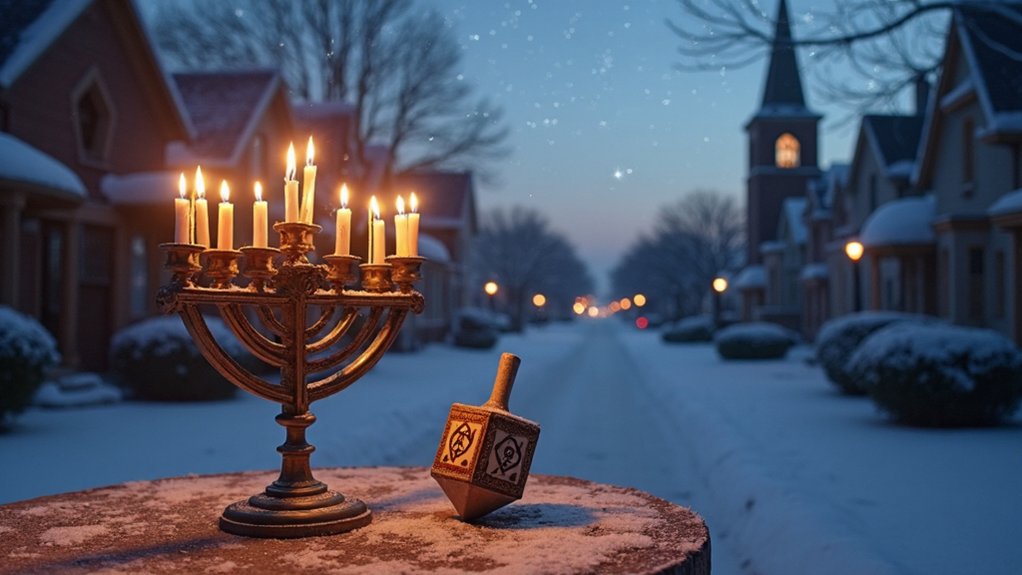
Even Hanukkah, often compared to Christmas due to its proximity on the calendar, serves a different purpose: it commemorates historical events, celebrates religious freedom, and includes rituals like lighting the menorah, playing dreidel, and giving small gifts. While gift-giving is a modern cultural adaptation, the holiday remains deeply rooted in Jewish history and spirituality.
Maintaining Distinct Religious Practices
Jewish people also refrain from celebrating Christmas to preserve distinct religious practices and observances. Judaism involves a structured yearly cycle of holidays, prayers, and rituals that connect followers to God, family, and community. Each holiday has specific commandments, historical significance, and spiritual meaning.
Celebrating Christmas could conflict with these practices. For instance, Christmas often involves Christian-themed decorations, church services, and songs celebrating the birth of Jesus. Participating in these customs could contradict the teachings of the Torah and disrupt the rhythm of Jewish religious life.
Maintaining a separate calendar and set of observances allows Jewish people to fully embrace their faith without mixing traditions from other religions. It strengthens a sense of continuity, community, and devotion to Jewish teachings.
Modern Cultural Considerations
In modern society, some Jewish families may engage with Christmas in secular or cultural ways, such as enjoying holiday music, exchanging gifts, or participating in social events with non-Jewish friends. However, even in these cases, the religious significance of Christmas is generally not observed.
This approach allows Jewish people to participate in broader cultural celebrations without compromising their religious integrity or identity. It highlights the flexibility of cultural adaptation while preserving the core values and traditions of Judaism.
Respecting Diversity of Beliefs
Understanding why Jewish people don’t celebrate Christmas also fosters respect for religious diversity. Just as Christian holidays like Christmas are meaningful for those who observe them, Jewish holidays hold profound spiritual, historical, and cultural significance for Jewish communities.
By acknowledging these differences, individuals can appreciate the rich tapestry of global religious practices and recognize the importance of preserving cultural and religious identity. It encourages interfaith understanding, mutual respect, and awareness of the values that guide different communities.
Conclusion
Jewish people do not celebrate Christmas for several interrelated reasons that reflect their religious, historical, and cultural identity.
Religious beliefs: Christmas centers on Jesus, who is not recognized as the Messiah in Judaism.
Historical context: Jewish holidays commemorate distinct events in Jewish history, such as Hanukkah, Passover, and Yom Kippur.
Cultural identity: Observing Christmas could blur the lines between Jewish and Christian traditions, weakening the sense of distinct heritage.
Maintaining practice: Jewish religious observances are specific and structured, making Christmas incompatible with traditional rituals.
Understanding why Jewish people don’t celebrate Christmas helps us appreciate the uniqueness and richness of Jewish traditions, while also fostering respect for diverse religious practices. By recognizing these distinctions, we gain insight into the values, history, and cultural heritage that define Jewish life, encouraging a deeper awareness of the world’s diverse spiritual landscape.
In essence, Jewish people honor their own holidays and traditions, celebrating faith, history, and identity in ways that reflect thousands of years of spiritual and cultural continuity. Recognizing and respecting these practices allows for a more meaningful understanding of Judaism and the importance of preserving religious and cultural distinctiveness.