

Muslim
What is the meaning of Hijab in Islam
Uncover the profound meanings behind the hijab in Islam and discover why it holds such significance in a Muslim's life.


When Ramadan arrives, Muslim families celebrate at home by reshaping everyday life around intention, discipline, restraint, and spiritual awareness. The holy month does not announce itself with spectacle or disruption, but through a subtle reorientation of priorities. Time begins to behave differently. Evenings stretch, mornings arrive earlier, and the ordinary rhythms of eating, sleeping, working, and resting are reorganized around a shared moral and spiritual center.
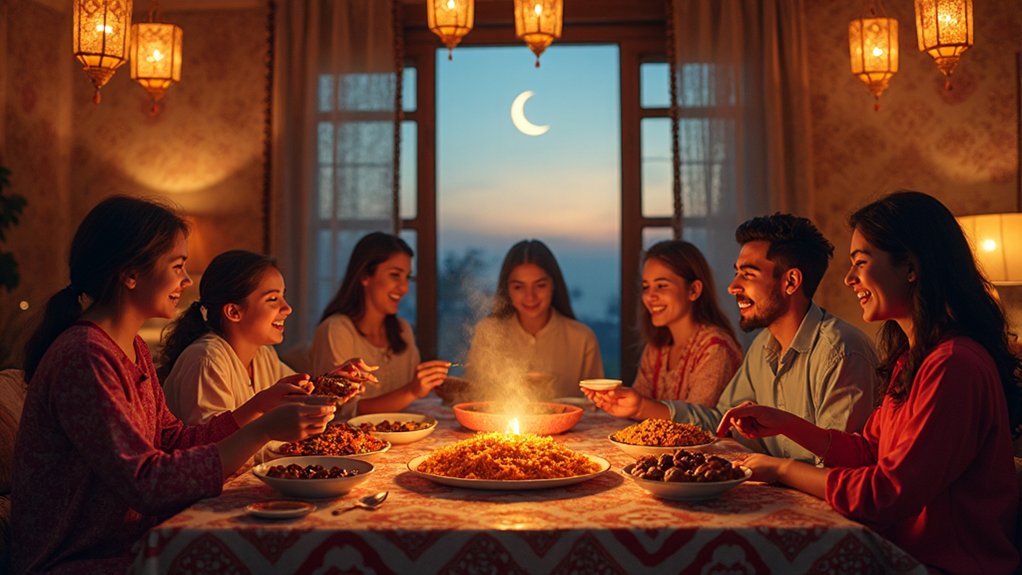
For Muslims, Ramadan is not an event added to life, nor a religious performance confined to specific hours. It is a framework that temporarily becomes life itself. Fasting, prayer, charity, and reflection are not treated as isolated rituals, but as interdependent practices that shape behavior, emotional regulation, interpersonal conduct, and inner attention. The fast, in particular, functions simultaneously as a physical discipline and a moral calibration device, influencing not only what one consumes, but how one speaks, reacts, and relates to others throughout the day.
Outside the Islamic tradition, however, Ramadan often remains an abstract idea. It is widely acknowledged and frequently respected, yet rarely understood beyond its most visible rule: abstaining from food and drink from dawn until sunset. This limited understanding reduces a complex lived practice into a single behavioral constraint, stripping it of its psychological, communal, and ethical dimensions.
Ramadan is often explained through rules, schedules, and exemptions. Yet rules alone cannot convey meaning. What defines a spiritual practice is not merely what is prohibited, but what emerges in the space created by restraint. To understand Ramadan fasting as a lived reality, one must move beyond explanation and toward proximity. Meaning reveals itself not through description, but through participation.
With that conviction, I chose to step out of observation and into experience. Rather than remaining in the safe distance of analysis, commentary, or secondhand interpretation, I made a deliberate decision to place my own body within the structure of the practice I wished to understand. As a Christian writer, I committed to observing one full day of Ramadan fasting, following the rules as closely and respectfully as possible, not as a symbolic gesture, but as an act of disciplined attention. From dawn until sunset, I consumed no food, no water, and no coffee. There were no symbolic adaptations, no wellness-based reinterpretations, and no allowances made for comfort, convenience, or productivity. I did not attempt to optimize the experience or soften its demands. The intention was neither endurance nor spiritual comparison. The intention was attentiveness, to sensation, to limitation, and to meaning as it emerges through restraint.
This was not a story of conversion, nor an attempt to appropriate a religious discipline that is not mine. I entered the fast with clear boundaries, aware that participation does not confer ownership, and experience does not equate to belief. Instead, the fast functioned as an exercise in ethical listening through the body. It was a sincere effort to understand what fasting becomes when it is not framed as a personal experiment or self-improvement tool, but as a shared moral discipline practiced by millions of people simultaneously, day after day, across cultures, climates, occupations, and social classes. That collective dimension fundamentally alters the nature of the practice.
Ramadan, I would come to understand, is not sustained by individual willpower alone. Willpower fluctuates, falters, and fatigues. Ramadan is sustained by structure, rhythm, repetition, and collective meaning. It is upheld by synchronized routines, communal expectation, and a moral framework that extends beyond personal preference. That distinction matters, because it shifts fasting from a test of strength into an act of participation within something larger than the self.
Before fasting, I spent time observing how Muslim families celebrate Ramadan at home, paying attention not only to rituals, but to atmosphere. What became immediately apparent was that Ramadan does not feel like a religious “event” in the conventional sense. There are no dramatic visual transformations, no ceremonial excess, no overt displays designed to signal spiritual seriousness to outsiders. Instead, there is a quiet but decisive shift in tone, subtle, yet unmistakable.
Homes become calmer, not through silence imposed, but through attentiveness practiced. Television use decreases, not by prohibition, but by diminished relevance. Conversations soften, slowing in pace and intention. Meals are prepared with care rather than urgency, framed by anticipation instead of appetite. The pace of life decelerates, not because responsibilities disappear, but because priorities realign. Ramadan introduces a different hierarchy of attention, where what matters most subtly rises to the surface.
Morning routines change first. Suhoor, the pre-dawn meal, requires waking early, often at the cost of sleep and comfort. This sacrifice precedes the fast itself, embedding discipline into the structure of the day before hunger even arrives. Evenings, too, acquire a different texture. Iftar, the breaking of the fast at sunset, becomes the emotional and relational center of the day. It is not merely a meal, but a moment of convergence, gratitude, and shared relief. Nights extend longer, often filled with prayer, reading, conversation, or quiet reflection, altering the temporal rhythm of the household.
What stood out most was that spirituality was not treated as something layered on top of daily life, added after obligations were met. Instead, it functioned as the organizing principle around which work schedules, social expectations, family interactions, and even emotional pacing adjusted. Ramadan did not interrupt life; it restructured it. Daily existence bent gently but firmly around the fast.
Equally significant was how fasting was discussed within the household. No one framed it as a heroic challenge or an act of suffering. Hunger was not dramatized, and thirst was not romanticized. Instead, fasting was described as an opportunity for awareness, gratitude, discipline, and empathy. Again and again, I heard the same idea expressed in different words: hunger is not the goal; awareness is. Deprivation was never the destination. Attention was.
The morning of my fast began at 4:30 a.m. I ate suhoor quietly, without distraction. The meal was simple, intentionally modest, and free of indulgence. Bread, eggs, fruit, and water. Nothing excessive, nothing performative. There was no attempt to maximize pleasure or preload comfort. I drank more water than usual, aware that it would need to sustain me until sunset, yet careful not to treat hydration as a strategy to outsmart the fast.
What surprised me was the seriousness of the moment. Knowing that this would be the last sip of water for many hours transformed an ordinary action into a deliberate one. Eating slowed. Swallowing became intentional. Each bite carried a sense of finality. There was no multitasking, no background noise, no scrolling. The simplicity of the moment sharpened awareness rather than dulling it.
When dawn arrived and the fast officially began, something subtle but profound shifted. The day was no longer open to negotiation. There would be no adjustments based on mood, fatigue, or productivity. The rules were fixed. Choice gave way to commitment.
No food.
No water.
No coffee.
What remained was time, sensation, and attention, stripped of buffers and distractions.
Prior to this experience, my understanding of fasting had been shaped almost entirely by contemporary intermittent fasting culture. In wellness discourse, fasting is framed as a strategic choice. It is discussed in terms of metabolic efficiency, insulin sensitivity, cognitive sharpness, and productivity optimization. The body is treated as a system to be tuned, calibrated, and optimized according to personal goals.
Within that model, fasting is flexible and negotiable. Water is encouraged. Coffee is allowed. Supplements are debated. The fast can be shortened, extended, modified, or broken depending on comfort, schedule, or perceived benefit. Control remains firmly in the hands of the individual, and the self remains at the center of the experience.
Ramadan fasting operates according to a fundamentally different logic.
Physiologically, the absence of water is the most immediate and destabilizing difference. By mid-morning, my mouth felt dry. By early afternoon, my head felt heavy, and concentration began to waver. A dull headache emerged and lingered. This was not discomfort engineered for improvement. It was deprivation accepted for meaning.
Mentally, the contrast was even more pronounced. Intermittent fasting centers the self: How do I feel? How productive am I? How can I optimize this experience? Ramadan fasting decentralizes the self: How am I responding? What does this reveal about my dependence, my impatience, my habits of reaction? The fast became a mirror rather than a tool.
Without caffeine, irritability surfaced quickly. Small frustrations felt larger. Noise became intrusive. Time slowed. I became acutely aware of how often comfort functions as a buffer between impulse and response. When that buffer disappears, the self becomes exposed.
Ramadan fasting does not conceal weakness. It reveals it.
To clarify this distinction, the following table reflects the experiential contrast between intermittent fasting and Ramadan fasting as lived practices:
| Aspect | Intermittent Fasting | Ramadan Fasting |
|---|---|---|
| Primary motivation | Optimization and health | Spiritual discipline and obedience |
| Water consumption | Allowed and encouraged | Prohibited during fasting hours |
| Individual control | High and flexible | Fixed and non-negotiable |
| Social structure | Individualized | Collective and synchronized |
| Ethical dimension | Optional | Central and required |
| Response to discomfort | Adjust or stop | Observe and restrain |
This contrast helped me understand why comparisons between the two practices often miss the point. They share a surface similarity, but operate on opposite ethical foundations.
At 4:30 a.m., suhoor unfolded in silence. Eating felt solemn rather than routine. Water was consumed slowly, with an awareness of its finite availability. The simplicity of the moment felt appropriate, almost instructional, as though the meal itself were preparing the mind as much as the body.
By 6:00 a.m., the fast had begun. Physically, little had changed, but psychologically the day acquired a new moral structure. Time now belonged to the fast. Each hour felt accounted for, shaped by an invisible boundary.
At 9:00 a.m., confidence set in. Hunger had not yet arrived. Focus remained intact. This phase felt deceptively easy, creating the illusion that the difficulty had been exaggerated. Comfort bred a quiet complacency.
By noon, hunger made its presence known, not as pain, but as persistent awareness. Thoughts of food returned repeatedly. Smells lingered longer. Productivity slowed. Focus became fragmented. Hunger shifted from background sensation to foreground companion.
At 3:00 p.m., thirst overtook hunger entirely. My mouth felt dry. My patience thinned. I became quieter, more inward. This hour proved to be the most revealing of the day. I caught myself wanting the fast to end not out of reverence, but relief. That realization was humbling.
As sunset approached around 6:30 p.m., anticipation intensified. Hunger sharpened, but so did focus. Time slowed again, now infused with intention rather than fatigue. The waiting itself felt meaningful.
At 7:00 p.m., iftar arrived. Water, dates, silence. The first sip of water brought immediate relief, followed by gratitude before fullness. I had never been so aware of how little it takes to feel restored.
One of the most overlooked dimensions of Ramadan fasting is its ethical scope. Muslims repeatedly emphasize that fasting is incomplete if it does not include restraint of speech, temper, and behavior. Physical abstention is only the most visible layer of a deeper moral demand.
Experiencing hunger made this ethical architecture tangible. When energy drops and irritation rises, behavior becomes more revealing. Tone of voice matters more. Silence becomes intentional. Minor lapses feel amplified.
I became aware of how often discomfort is used to justify poor behavior in ordinary life. Hunger, stress, fatigue, and inconvenience are frequently offered as excuses for impatience, rudeness, or withdrawal. Ramadan fasting removes that justification. It asks participants to respond to difficulty with dignity rather than impulse.
In this way, fasting transforms from a physical challenge into a moral practice.
One day of fasting does not explain Islam. But it makes dismissal impossible.
I came to understand that Ramadan fasting is not endurance as performance. It is restraint practiced quietly. Discipline carried without announcement. Patience repeated daily.
Empathy, I learned, does not require agreement. It requires proximity.
After breaking the fast, observing Ramadan at home took on deeper meaning. Meals were shared slowly. Gratitude was spoken aloud. Children learned through repetition rather than instruction. Elders were honored through routine.
Faith became visible not through rhetoric, but through rhythm.
Ramadan transforms households into moral ecosystems. Hunger becomes shared meaning. Discipline becomes collective support. Structure replaces individual negotiation.
As a Christian, I did not experience contradiction. I experienced resonance. Different beliefs, certainly, but shared human questions. How do we restrain desire? How do we cultivate gratitude? How do we live with intention rather than impulse?
Fasting answers these questions through the body.
One of the most enduring insights from this experience was the distinction between discomfort with meaning and discomfort without it. Modern life is saturated with unstructured discomfort. Stress, burnout, and exhaustion are often endured without narrative or purpose.
Ramadan fasting demonstrates how hardship, when framed within meaning, becomes formative rather than depleting. Hunger becomes language. Thirst becomes reminder. Fatigue becomes teacher.
It is essential to acknowledge limits. One day does not equal a month. Participation does not equal understanding.
Respect deepened precisely because ownership was never the goal. By following the practice without reinterpretation, I encountered Ramadan on its own terms. That posture mattered.
Long after the fast ended, its effects persisted. Water tasted different. Meals slowed. Minor discomforts became easier to tolerate.
More importantly, Ramadan was no longer abstract. It became lived.
I fasted for one day. Muslims fast for a month. That difference matters.
But even one day revealed something essential. Religious practices are not theoretical systems. They are lived disciplines that shape character through repetition, restraint, and meaning.
In a divided world, shared discomfort can become an unexpected bridge. It teaches humility without argument, empathy without agreement, and respect without dilution.
Sometimes, the most powerful form of understanding is not explanation, but participation, approached with care, limits, and sincerity.


José Lucas is a researcher of history and spirituality, driven by a lifelong fascination with how faith shapes the human experience. He specializes in exploring the historical contexts of diverse traditions, translating ancient wisdom into practical insights for the modern seeker. At ABPray, José’s mission is to guide readers through the world’s vast spiritual heritage with curiosity and reverence, fostering a deeper understanding of the universal values that unite us all.
Uncover the profound meanings behind the hijab in Islam and discover why it holds such significance in a Muslim's life.

In understanding why Eid Al-Fitr is important in Islam, one uncovers a tapestry of traditions, gratitude, and community that beckons deeper exploration.

Motivations behind Muslim women wearing hijab vary widely, blending faith, culture, and empowerment; discover what truly drives these profound choices.

Muslim women must navigate modesty in fashion; discover five clothing types that could compromise your values and confidence. Will your wardrobe make the cut?

Knowing the historical roots of Ramadan reveals profound transformations in the Muslim community—what events ignited this sacred month?

Prepare to uncover the 5 best ways to explain hijab to girls and discover how these insights can transform their understanding.