For the Amish, marriage is a lifelong commitment. Divorce is not permitted, and remarriage is only allowed after the death of a spouse. This high stakes approach means that every step of the process—from meeting a partner to setting up a home—is handled with careful deliberation and community oversight.
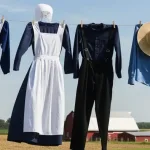
How Amish marriages work (image: Abpray)
1. The Courtship Process: “The Singing” and Secrecy
Amish courtship typically begins in the late teens. Unlike modern dating, which often involves one-on-one dates in public places, Amish courtship is centered around community social events.
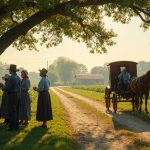
Sunday Night Singings: The most common place for young people to meet is at the bi-weekly “singing.” After the formal church service, the youth gather to sing hymns and socialize. It is here that a young man might ask to drive a young woman home in his buggy.
The Element of Secrecy: Interestingly, Amish courtship is often kept very quiet. A couple may date for a year or more without the wider community knowing. Even siblings might play along with the secret until the official “publishing” of the marriage.
Character over Chemistry: The focus is on finding a partner who is a baptized member of the church and who possesses a strong work ethic and a humble spirit.
2. The Role of Family and “Publishing” the Marriage
Family approval is vital. While parents do not “arrange” marriages, a young man will typically ask the young woman’s father for permission before the relationship becomes official.
Publishing: Once the couple decides to marry, they inform the Deacon. During a church service (usually in October), the Deacon announces the upcoming nuptials to the congregation. This is known as being “published.”
Preparation: After the announcement, the bride-to-be and her mother begin a whirlwind of preparation. Amish weddings are traditionally held in November and December, after the autumn harvest is complete and before the deep winter sets in.
3. Traditional Amish Wedding Customs
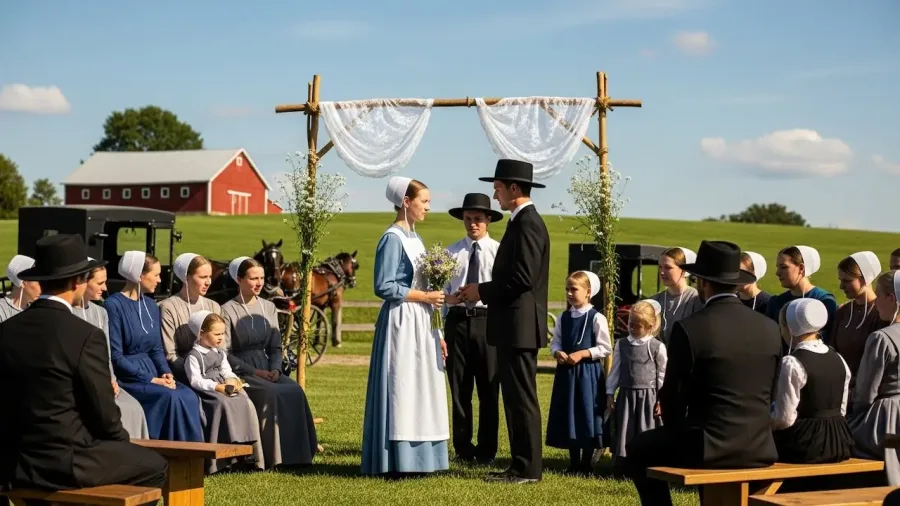
An Amish wedding is a marathon of faith and hospitality. It is almost always held on a Tuesday or Thursday (the busiest days for the community) at the home of the bride.
The Ceremony: There are no rings, no flowers, and no elaborate white dresses with trains. The bride typically wears a new dress in a solid color (often blue, purple, or wine) that she will continue to wear to church services for years to come. The ceremony lasts about three hours and consists of long sermons, prayers, and the exchange of vows.
The Wedding Feast: The “Noon Meal” is a legendary aspect of Amish weddings. The “roast”—a mixture of stuffing and chicken—is a staple, alongside mashed potatoes, creamed celery, and dozens of pies.
Attendance: Because the entire church district is invited, as well as friends from other districts, an Amish wedding can easily host between 200 and 600 guests.
4. Life After Marriage: Home and Family Dynamics
Once married, the couple usually spends the first few months “visiting” relatives on weekends, receiving wedding gifts (usually practical items like tools, linens, or kitchenware).
Establishing the Farm: The goal for most newlywed couples is to eventually run their own farm or small business (like carpentry or a harness shop). The community often helps the new couple get started through “frolics” (work bees) to build barns or outbuildings.
Shared Labor: Roles are clearly defined but viewed as equally important. The husband generally manages the fields and external business, while the wife manages the household, the massive vegetable gardens, and the “production” of the home (canning, sewing, and budgeting).
5. The Impact of Faith and Community
Faith is the glue that holds Amish marriages together. Because the couple is baptized into the church before marrying, they have both vowed to uphold the Ordnung.
Team Parenting: Children are viewed as a “heritage of the Lord.” Families are typically large, and children are integrated into the work-life of the farm at a very young age.
Mutual Support: In times of illness or financial hardship, the couple does not look to insurance or the government; they look to their church district. This safety net reduces the external stresses that often lead to marital strain in the outside world.
Comparison: Amish vs. Modern Marriage Dynamics
Feature
Amish Marriage
Modern “English” Marriage
Primary Goal
Faithfulness to God and Community
Individual Happiness and Compatibility
Wedding Style
Simple, Home-based, Religious
Lavish, Venue-based, Celebratory
Divorce
Forbidden
Legally and Socially Accepted
Social Support
Entire Church District
Nuclear Family / Paid Services
Conclusion
Amish marriages are built on a foundation of submission—not just to each other, but to the community and to God. By stripping away the distractions of modern dating and the pressures of consumerist wedding culture, the Amish focus on the functional and spiritual success of the union. It is a system designed for endurance, ensuring that as the couple grows, the community grows with them, passing down a legacy of stability and faith to the next generation.