Published on August 30, 2025 at 2:00 PMUpdated on August 30, 2025 at 2:00 PM
Vedic rituals provide one of the most illuminating pathways for understanding ancient Indian spirituality. These practices reveal a sophisticated system in which symbolism, ritual procedure, cosmic order, and theological meaning are tightly intertwined. When we perform a comparative analysis of Vedic rituals across the Rigveda, Yajurveda, and Atharvaveda, we uncover how early religious practices evolved over time, responding to cultural changes, priestly specialization, and shifting spiritual priorities.
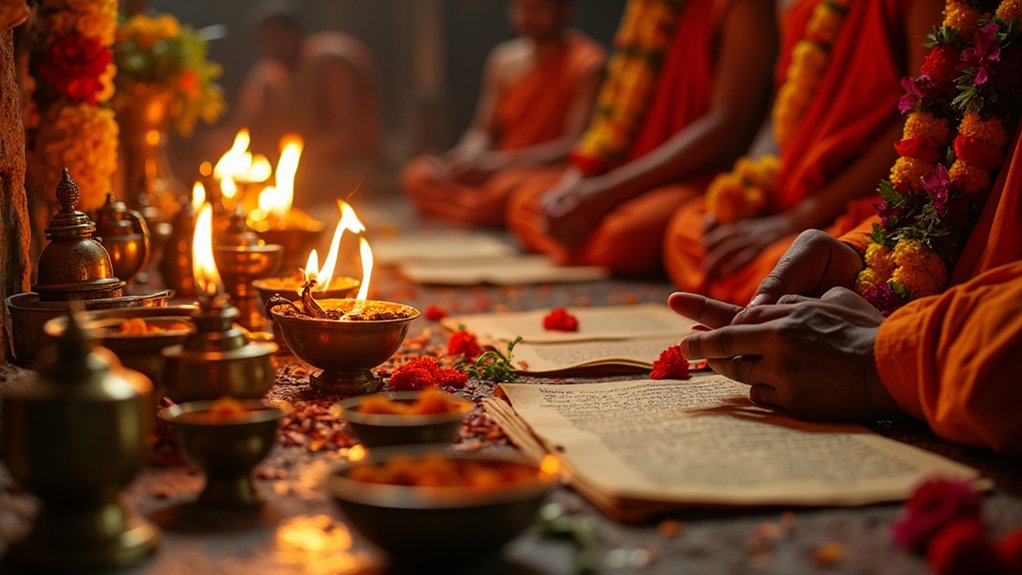
Vedic rituals offer a fascinating window into ancient spirituality. (Image: AbPray)
From the exalted hymns of the Rigveda to the procedural precision of the Yajurveda and the practical, protective rituals of the Atharvaveda, each Vedic text contributes a distinct dimension to ancient ceremonial life. Through these comparisons, we gain insight into how Vedic rituals shaped ideas about devotion, divine communication, and the transformative power of sacred speech. Although scholars continue to debate symbolic interpretations and historical development, studying Vedic rituals through a comparative lens highlights enduring themes such as cosmic order (ṛta), the importance of sacrifice, and the sanctity of ritual precision.
Comparative Study of Soma Rituals Across Vedic Texts
The Soma rituals are among the most iconic and spiritually charged elements of Vedic religion. These rituals, centered on the preparation, offering, and consumption of Soma, appear throughout the Rigveda, Yajurveda, and Atharvaveda, yet each text presents a unique perspective.
Soma in the Rigveda
In the Rigveda, Soma is portrayed as a divine plant, a god, and an energizing sacrificial drink. The Soma rituals in the Rigveda emphasize divine praise, vitality, and direct communion with the gods. Hymns describe Soma as illuminating consciousness, granting poetic inspiration, and strengthening the connection between humans and divine powers. Ritual focus often centers on invoking Soma as a cosmic force that sustains both gods and humans.
Soma in the Yajurveda
In the Yajurveda, the focus shifts toward liturgical precision. Detailed instructions guide priests on how to press, filter, and offer Soma, showing how ritual procedure became increasingly formalized. Here, the ritual acts, measuring, chanting, pouring, are carefully prescribed to maintain the sacred order. Soma becomes a symbol of ritual expertise and cosmic regulation.
Soma in the Atharvaveda
The Atharvaveda introduces yet another dimension: Soma as a protective and healing force. Rather than focusing solely on cosmic communion, Atharvavedic Soma rituals relate to health, safety, and everyday well-being. This reflects how Vedic spirituality diversified to address practical concerns in addition to ecstatic or cosmic ones.
Across all three texts, Soma rituals maintain a unifying thread of divine power, cosmic linkage, and ritual transformation, while revealing how Vedic spirituality adapted over time and across different priestly contexts.
Analysis of Fire Sacrifice (Agni) Practices in Early and Later Vedic Periods
The fire sacrifice (Agni) stands at the heart of Vedic religion. Throughout the early and later Vedic periods, fire acted as a sacred intermediary, carrying offerings to the gods and maintaining cosmic order.
Agni in the Early Vedic Period
In early Vedic times, fire sacrifices were relatively simple. Priests used basic fire altars and invoked Agni as the messenger of the gods. Agni played a vital role in transporting offerings and prayers upward, especially during Soma rituals where the flames symbolized purification and divine communication.
Early Vedic Agni practices focused more on spontaneous devotion and the symbolic presence of fire as a living deity.
Agni in the Later Vedic Period
Over time, fire rituals became increasingly complex. Later Vedic texts detail:
elaborate altar constructions
precise geometrical layouts
specialized tools and instruments
carefully measured offerings
This transformation illustrates the growing emphasis on ritual expertise, mathematical precision, and priestly specialization. Agni now served not only as the divine messenger, but also as the center of highly structured ceremonies reflecting deep cosmological symbolism.
The evolution of Agni practices thus reveals how Vedic ritual gradually expanded from simple fire offerings into intricate ceremonies reinforcing the connection between humans, the cosmos, and divine order.
Cross-Examination of Mantra Recitations in the Rigveda and Yajurveda
Mantra recitation is fundamental to all Vedic rituals, yet the Rigveda and Yajurveda use mantras in distinct ways that reflect their ritual priorities.
Rigvedic Mantra Recitations
The Rigveda is renowned for its poetic, melodic, and devotional hymns. Rigvedic mantras, often addressed to deities such as Agni, Indra, or Soma, emphasize spiritual resonance and emotional depth. Their purpose is to inspire devotion, elevate consciousness, and invoke divine presence through sound and poetic beauty.
Yajurvedic Mantra Recitations
By contrast, the Yajurveda features more formulaic, precise, and instructional chants. These mantras guide the detailed steps of sacrificial rituals, ensuring proper execution. The tone is authoritative and procedural, emphasizing accuracy over poetic imagery.
Together, the Rigveda and Yajurveda demonstrate how Vedic tradition balanced spiritual expression and ritual discipline, showing that sacred speech can be both an act of devotion and a technical instrument of cosmic order.
Ritual Roles of Priests: Differences Between Hotri and Adhvaryu Functions
Vedic rituals rely on a structured priesthood, with each priest assuming a specific role to maintain the integrity of ceremonies. Two of the most important roles are those of the Hotri and the Adhvaryu.
The Hotri Priest
The Hotri is responsible for reciting Rigvedic hymns. This priest preserves the spiritual and poetic dimension of the ceremony by:
invoking deities
reciting sacred verses
maintaining the ritual atmosphere
The Hotri embodies the vocal, devotional, and spiritual aspects of Vedic ritual.
The Adhvaryu Priest
The Adhvaryu, by contrast, oversees the physical and procedural elements. Guided by the Yajurveda, this priest:
constructs the altar
measures ritual space
prepares offerings
manages tools and materials
The Adhvaryu represents precision, action, and ritual execution.
Together, the Hotri and Adhvaryu illustrate how Vedic rituals integrated prayerful devotion with technical mastery, ensuring both spiritual intention and perfect ritual performance.
Symbolism and Significance of Offerings in Vedic Sacrificial Ceremonies
Offerings in Vedic sacrificial ceremonies carry profound symbolic meaning. They are not merely material gifts; they function as bridges between the human and divine realms.
Each substance, ghee, grains, water, Soma, milk, or incense, embodies a cosmic principle. Offerings often symbolize:
fire (purification, transformation)
water (life, continuity)
life energy (vitality, prosperity)
cosmic order (ṛta)
By offering these elements into Agni, practitioners symbolically align themselves with the larger universe. The spiritual significance lies in restoring harmony, seeking protection, and cultivating devotion.
These carefully chosen offerings reflect a worldview in which ritual acts help maintain balance between earthly life and cosmic forces.
Conclusion
A comparative analysis of Vedic rituals reveals the richness and complexity of ancient Indian religious life. By examining Soma rituals, Agni ceremonies, mantra recitations, priestly roles, and symbolic offerings across the Rigveda, Yajurveda, and Atharvaveda, we uncover both shared foundations and subtle distinctions that shaped early spirituality.
These Vedic rituals reflect evolving theological ideas, increasing ritual specialization, and a deep commitment to cosmic order and sacred communication. Most importantly, they demonstrate how ceremony functioned as a powerful bridge between humans and the divine, sustaining a profound spiritual framework that influenced Indian tradition for millennia.