Published on August 28, 2025 at 2:00 PMUpdated on August 28, 2025 at 2:00 PM
Planning a Catholic Nuptial Mass order of service is one of the most meaningful parts of preparing for a Catholic wedding. This ceremony is not just a celebration of love, it is a sacred liturgy centered on the Sacrament of Matrimony. Because the Nuptial Mass follows a structured and highly symbolic format, creating an order of service that is both traditional and personal requires thoughtful preparation.
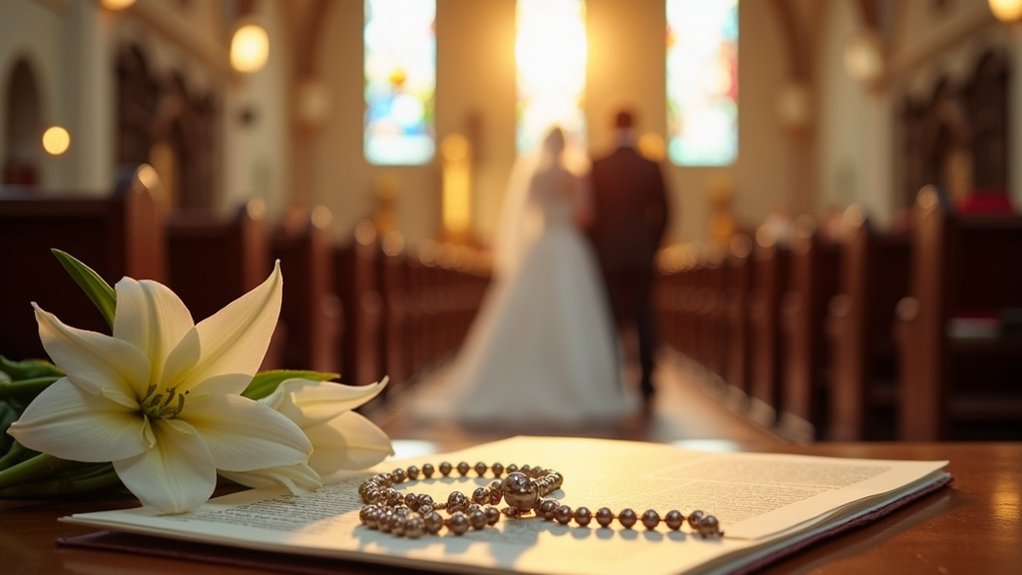
Finding the perfect flow for your Catholic Nuptial Mass order of service can transform your wedding day. (Image:AbPray)
A well-designed Catholic wedding Mass order of service helps guide guests through the liturgy, highlights the couple’s unique faith journey, and ensures that every component, from music to Scripture readings, flows smoothly. Understanding each element of the Nuptial Mass allows couples to organize a ceremony that honors Church tradition while also expressing their personal devotion and story.
The Catholic Nuptial Mass is built upon the familiar structure of the standard Mass but incorporates additional rites specific to the Sacrament of Matrimony. These elements highlight God’s grace, the couple’s lifelong commitment, and the spiritual significance of their union.
A typical Catholic Nuptial Mass structure includes:
Introductory Rites
Processional
Greeting
Penitential Act
Gloria
Opening Prayer
Liturgy of the Word
First Reading
Responsorial Psalm
Second Reading
Gospel Acclamation
Gospel
Homily
Rite of Marriage
Declaration of Intent
Exchange of vows
Blessing and exchange of rings
Prayers of the Faithful
Liturgy of the Eucharist
Offertory
Eucharistic Prayer
The Lord’s Prayer
Sign of Peace
Communion
Concluding Rites
Nuptial Blessing
Final Blessing
Recessional
This structure ensures that the Nuptial Mass remains a deeply spiritual, sacramental celebration, rooted in worship and focused on the couple’s covenant before God.
Choosing Appropriate Scripture Readings
Selecting Scripture readings for a Catholic wedding is one of the most personal decisions a couple can make. These readings set the tone of the ceremony and reflect the couple’s values, relationship, and shared faith.
Popular readings for a Catholic Nuptial Mass include:
Genesis 2:18–24 — “The two become one flesh.”
Tobit 8:4–8 — A prayerful foundation for marriage.
1 Corinthians 13:4–13 — “Love is patient, love is kind.”
Ephesians 5:2, 25–32 — The sacred symbolism of marriage.
John 15:9–12 — “Remain in my love.”
When couples choose scripture readings that speak to their spiritual journey, they enrich the Mass with deeper meaning and help guests connect to the sacred message of the celebration. These readings also guide the priest’s homily, shaping the overall tone of the ceremony.
Incorporating Traditional Catholic Prayers
Traditional prayers reinforce the sacredness of the Nuptial Mass. These prayers highlight God’s presence in the marriage and call the Church community to support the couple.
Key prayers typically included in the Catholic wedding Mass order of service are:
The Opening Prayer (Collect)
The Prayer of the Faithful, customized to include intentions for the couple
The Nuptial Blessing, one of the most profound prayers in the ceremony
The Lord’s Prayer, connecting the couple to the universal Church
By weaving traditional Catholic prayers throughout the liturgy, the ceremony becomes deeply rooted in faith and aligned with centuries of sacramental tradition.
Selecting Hymns and Music for the Ceremony
Choosing music for a Catholic Nuptial Mass requires balancing personal taste with liturgical appropriateness. Music is not entertainment, it is prayer. The hymns and instrumental pieces should elevate the sacred atmosphere and invite the congregation into a spirit of worship.
Common music moments in a Catholic wedding include:
Processional music
Responsorial Psalm (sung when possible)
Offertory hymn
Communion hymn
Recessional music
Traditional choices such as Ave Maria, Panis Angelicus, or Jesu, Joy of Man’s Desiring can add timeless beauty to the liturgy. Couples should coordinate with the parish music director to ensure all selections align with liturgical norms and parish guidelines.
Planning the Exchange of Vows and Rings
The exchange of vows and rings is the emotional and theological center of the Catholic wedding Mass. Although the rite is relatively brief, it carries deep spiritual weight.
During this moment, the couple:
Publicly profess their lifelong commitment
Make a covenant before God and the Church
Receive God’s grace to live out their vocation
The rings serve as visible symbols of fidelity and permanent love. Couples may choose from approved vow formulas or, with the priest’s permission, include small personalized additions that maintain the integrity of the sacrament.
Thoughtful preparation ensures this moment remains reverent and memorable.
Roles and Participation of the Wedding Party
The wedding party helps support the couple and maintain the prayerful flow of the Mass. Though their roles differ from those in secular ceremonies, they still carry significant responsibility.
Bridesmaids
Assist the bride during the procession
Maintain a reverent and prayerful environment
Participate in the liturgy with the congregation
Groomsmen
Escort guests to their seats
Assist with logistics before the Mass
Stand with the groom and model respectful participation
Lectors, ushers, and musicians
These individuals play key roles in proclaiming Scripture, guiding guests, and enhancing the worship experience.
Coordinating with the Celebrant and Liturgical Ministers
A smooth and well-organized Catholic Nuptial Mass requires clear communication with the celebrant, sacristan, and all liturgical ministers.
Couples should:
Meet with the priest to confirm the order of service
Review readings, music, and prayers
Discuss procession details
Ensure all participants know their roles
Attend a rehearsal if available
Proper coordination helps maintain the sacred rhythm of the liturgy and ensures the celebration is both beautiful and prayerfully focused.
Conclusion
A carefully planned Catholic Nuptial Mass order of service brings together tradition, faith, and personal meaning. By selecting thoughtful Scripture readings, incorporating sacred music, preparing for the exchange of vows and rings, and coordinating closely with the celebrant, couples can create a ceremony that feels both reverent and uniquely their own.
With prayerful planning and attention to detail, the Catholic Nuptial Mass becomes not only a wedding ceremony but a profound expression of God’s grace and the couple’s lifelong commitment—setting the foundation for a marriage rooted in faith, love, and devotion.