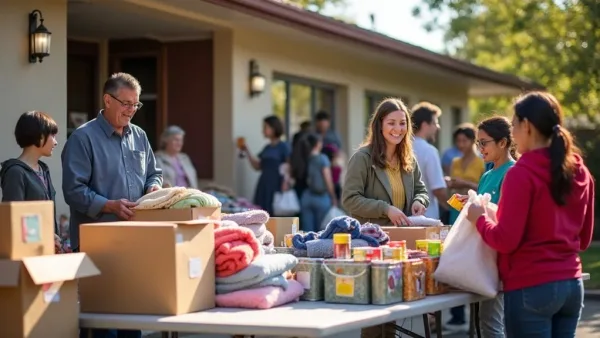
Donating items to those in need is more than an act of kindness, it’s a reflection of faith in action. Each gift, given with intention, carries compassion, purpose, and spiritual meaning.
Donating items to local organizations is a meaningful way to live out your faith and support people in need. (Image: ABPray)
But how do you decide where your donations can truly make a difference? Exploring where to donate items can reveal deeper ways to live your values and serve others with heart.
Local homeless shelters play a vital role in serving our communities with compassion, dignity, and purpose. For people of faith, supporting local homeless shelters can be a meaningful act of service that aligns with spiritual values like charity, kindness, and social justice.
Many shelters host donation drives for essential items, such as warm clothing, toiletries, and nonperishable food, which makes it easy to give in a practical, heartfelt way. Faith-based groups and spiritual communities often partner with these organizations to ensure resources reach vulnerable neighbors quickly and respectfully.
Food banks and pantries
Food banks and pantries play a meaningful role in many faith communities, reflecting core values of compassion, service, and spiritual care.
Guided by religion and spirituality, food banks and pantries distribute nutritious items while offering a welcoming space where dignity and hope are nourished alongside the body.
Many food banks and pantries also share uplifting resources, such as prayers, community support, and simple nutrition education, to encourage healthy habits and a deeper sense of connection.
Thrift stores supporting charities
Thrift stores supporting charities do more than recycle goods, they help communities live out their faith in action.
Many faith-based thrift stores supporting charities donate proceeds to church ministries, outreach programs, and spiritual counseling services. By giving gently used items, donors support compassionate missions, fund local service projects, and practice stewardship.
Shopping at thrift stores supporting charities also promotes mindful living, reduces waste, and turns everyday purchases into acts of service rooted in spirituality and love for neighbor.
Women’s and children’s shelters
Women’s and children’s shelters are sacred spaces of refuge, offering safety and hope to vulnerable families in times of crisis. Donating essential items to women’s and children’s shelters can be a compassionate act of faith, reflecting spiritual values like kindness, generosity, and dignity.
To make the most meaningful impact, review each shelter’s donation guidelines and needs—this mindful approach ensures your gift is both practical and respectful.
Commonly requested items include hygiene products, modest clothing, baby supplies, and season-appropriate essentials. Consider adding a note of encouragement or a prayer card if the shelter permits, honoring the spiritual journey of those receiving support.
Community centers and churches
Community centers and churches are vital places for faith, fellowship, and practical help in every neighborhood.
These community centers and churches often host donation drives, collect essential items, and offer spiritual guidance to people facing hardships.
Schools and after-school programs
When supporting schools and after-school programs, donors help create learning spaces that nurture both minds and spirits. In many communities, faith-based schools and ministries provide safe environments where children explore education alongside religion and spirituality.
Donations of school supplies strengthen academic growth, while gifts to after-school programs fund mentorship, character-building activities, and opportunities for spiritual reflection.
By supporting these programs, you help ensure students have the tools they need and caring spaces that honor values rooted in religion and spirituality.
Your contribution empowers educators, mentors, and youth leaders to guide children beyond classroom hours, promoting resilience, compassion, and a strong sense of purpose grounded in faith.
Veterans’ organizations
Veterans’ organizations play a vital role in supporting those who served, offering resources that care for both practical needs and the spirit.
Many faith-based veterans’ organizations provide community, prayer support, and spiritual counseling alongside assistance like clothing, household items, and care packages.
Animal shelters and rescue groups
Animal shelters and rescue groups are powerful places of compassion, reflecting the heart of spirituality in action.
These animal shelters and rescue groups offer refuge, healing, and care to abandoned and abused animals, reminding us of our sacred responsibility to protect all living beings.
By donating pet food or volunteering your time, you can practice faith-driven service and help ensure these animal shelters and rescue groups have the resources they need.
Your contribution nourishes bodies and souls, fostering kindness, stewardship, and a more loving world for pets in need.
Hospitals and health clinics
Hospitals and health clinics play a vital role in caring for body and spirit, offering places of hope and healing for every community.
In many faith traditions, supporting hospitals and health clinics is an act of compassion and service, reflecting spiritual values like charity, kindness, and mercy.
Donations of medical supplies, such as gloves, masks, and wound care items, help caregivers serve with dignity, while faith-inspired gifts like prayer cards, comforting blankets, and hygiene kits can uplift patients and families during difficult times.
Disaster relief organizations
Disaster relief organizations often work hand in hand with faith-based groups and spiritual communities to bring hope and healing after crises.
These disaster relief organizations not only distribute preparedness kits and offer emergency response training, but they also provide emotional and spiritual support, helping people find strength through prayer, reflection, and community care.
Environmental and recycling programs
Beyond immediate disaster relief, faith-based environmental and recycling programs play a powerful role in healing communities and honoring creation.
Rooted in spiritual values of stewardship, these environmental and recycling programs invite donors to support recycling initiatives that reduce waste, conserve resources, and care for the earth, God has entrusted to us.
Conclusion
Donating items to local organizations is a meaningful way to live out your faith and support people in need. When you donate to homeless shelters, food banks, thrift stores, and specialized centers like women’s shelters and hospitals, you offer tangible help and spiritual encouragement. Acts of generosity reflect core spiritual values, and they strengthen community bonds. Thoughtful donations, aligned with each group’s needs, can uplift both body and spirit, creating lasting change. If you’re seeking ways to deepen your spirituality, donating items can become a regular practice of service, a simple form of religion in action, and a daily reminder to live your beliefs with purpose.
Linguist and Interfaith Dialogue Researcher: Amanda Torati is a linguist and postgraduate researcher dedicated to the study of interfaith dialogue and cultural expressions of faith. With a strong academic background in Languages and Linguistics, Amanda specializes in analyzing spiritual texts and universal values, seeking to build bridges between ancient traditions and modern reflection. At ABPray, Amanda applies her academic rigor and ethical sensitivity to ensure that every article fulfills our mission of promoting harmony and mutual respect. Her role is fundamental to our Human and Ethical Review process, where she uses her expertise to ensure doctrinal and historical fidelity while maintaining an inclusive and accessible tone. By combining her passion for research with a mindful approach, Amanda transforms complex themes into practical reflections for daily life, helping seekers from all backgrounds find meaning and inner peace. Her commitment to authenticity ensures that ABPray remains a reliable source of inspiration and knowledge within the global spiritual landscape.
To provide the best experiences, we use technologies like cookies to store and/or access device information. Consenting to these technologies will allow us to process data such as browsing behavior or unique IDs on this site. Not consenting or withdrawing consent, may adversely affect certain features and functions.
Functional
Always active
The technical storage or access is strictly necessary for the legitimate purpose of enabling the use of a specific service explicitly requested by the subscriber or user, or for the sole purpose of carrying out the transmission of a communication over an electronic communications network.
Preferences
The technical storage or access is necessary for the legitimate purpose of storing preferences that are not requested by the subscriber or user.
Statistics
The technical storage or access that is used exclusively for statistical purposes.The technical storage or access that is used exclusively for anonymous statistical purposes. Without a subpoena, voluntary compliance on the part of your Internet Service Provider, or additional records from a third party, information stored or retrieved for this purpose alone cannot usually be used to identify you.
Marketing
The technical storage or access is required to create user profiles to send advertising, or to track the user on a website or across several websites for similar marketing purposes.