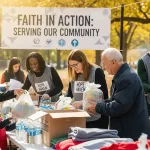
Making a difference without donating money goes beyond material giving, it’s about living your faith through compassion, service, and presence. There are countless ways to share your light and uplift others, even without financial resources.
Making a difference without donating money is deeply aligned with many spiritual and religious teachings about compassion, service, and community. (Image: ABPray)
But what does that look like in practice, and how can small, intentional acts create lasting spiritual impact?
Let’s explore how to serve meaningfully, live generously, and make a difference from the heart.
Volunteering time and skills is a powerful way to practice your faith in action. In many spiritual traditions, service is seen as a path to compassion and growth, and volunteering time and skills allows you to live those values daily.
You can share your gifts by leading community workshops, such as meditation sessions, scripture study groups, or mindfulness classes, empowering others while nurturing your own spiritual journey.
This kind of service strengthens community bonds, deepens a sense of purpose, and meets real needs without financial cost. By choosing volunteering time and skills, you create meaningful change, honor your beliefs, and help build a more compassionate, spiritually connected community.
Organize community clean-up events
Organize community clean-up events to turn service into a spiritual practice that uplifts both people and place. In many faith traditions, caring for creation is a sacred duty, and community clean-up events offer a simple way to live that calling.
These events foster connection, encourage mindful stewardship, and invite neighbors to serve together with purpose. By coordinating community clean-up events, you promote collective responsibility, strengthen bonds, and inspire gratitude for the earth.
Gather volunteers, decide a meaningful location, and open with a short prayer or moment of reflection to set an intention of service. As litter is removed and spaces are renewed, participants often feel a deeper sense of spiritual alignment, an act of compassion made visible.
This approach shows how organized efforts can create tangible change without financial donations, turning everyday actions into expressions of faith.
Advocate for causes you believe in
Advocate for causes you believe in to make a meaningful impact through faith and purpose. In religion and spirituality, advocacy can be a powerful way to live your values and serve your community, even without financial contributions.
By partnering with local spiritual communities, interfaith groups, and faith-based organizations, you can amplify your voice, promote awareness, and shape change rooted in compassion. This kind of spiritual advocacy helps build community, fosters collective action, and aligns your daily life with your beliefs.
When you advocate for causes you believe in, you embody your spiritual path, strengthen connections, and inspire others to take mindful, faith-driven action.
Share knowledge through teaching or mentoring
Sharing knowledge through teaching or mentoring is a powerful way to support spiritual growth and build a stronger faith community. When you take part in mentoring programs, you create space for meaningful conversations about religion, spirituality, and personal purpose. This kind of guidance helps people develop confidence, deepen their spiritual practices, and strengthen their connection to God.
By sharing knowledge through teaching or mentoring, you also help form lasting relationships rooted in trust and compassion. Faith-based mentoring can nurture values like service, humility, and prayer, supporting both personal and communal transformation.
Best of all, this impact does not require financial contributions, only time, presence, and a willingness to walk with others on their spiritual journey.
If you feel called to share knowledge through teaching or mentoring, consider joining a local faith group, leading a study circle, or offering one-on-one spiritual support. Your commitment can inspire growth, healing, and hope in your community.
Use social media to raise awareness
Teaching and mentoring create personal connections that nurture spiritual growth, and social media to raise awareness expands that impact to a global audience.
Through social media to raise awareness, faith communities can run simple campaigns, share digital testimonies, and post meaningful reflections that spark conversation and prayer.
Support local businesses and artisans
Supporting local businesses and artisans can be a spiritual practice that nurtures community and connection. When we support local businesses and artisans, we honor the sacred gifts of creativity, craftsmanship, and tradition.
This mindful choice helps preserve cultural heritage, strengthens community bonds, and encourages ethical, sustainable living. By attending markets, sharing local events, and choosing handmade goods, we promote collective well-being and practice gratitude in action.
Supporting local businesses and artisans aligns with spiritual values of stewardship, compassion, and service, creating a more vibrant, resilient, and soulful community.
Participate in fundraising events
Engaging in fundraising events is a meaningful way to support faith-based causes and spiritual communities without giving money directly. When you join charity runs, bake sales, or church fairs, you help raise awareness for ministries and spiritual outreach, strengthening the bonds of fellowship.
These fundraising events inspire service, encourage compassion, and allow you to offer your time and energy as an act of devotion, making a real impact through generosity of spirit rather than financial contributions.
Donate blood or register as an organ donor
Donating blood or registering as an organ donor is a powerful way to serve others and live out spiritual values of compassion and generosity. Many faith traditions encourage acts of mercy and healing, and when you donate blood or register as an organ donor, you become a channel of hope for those in crisis.
These selfless choices can reflect a life of purpose, prayerful intention, and love for your community.
When you donate blood or register as an organ donor, you help save lives during emergencies, surgeries, and long-term treatments. A single blood donation can support multiple patients, and organ donation can transform the futures of several people.
For those guided by faith or spiritual practice, this is a meaningful way to align action with belief, offering life, dignity, and care to others without financial cost.
Consider making a commitment today: donate blood or register as an organ donor. Share your decision with your faith community, encourage others to join, and view the process as a sacred act of service.
Your choice can be a blessing to many and a tangible expression of spiritual love and compassion.
Offer emotional support and active listening
In times of spiritual struggle, many people find strength through emotional support and active listening. These simple acts reflect compassion, faith, and community, core values in many religious and spiritual traditions.
Reduce waste and promote sustainability
In many faith traditions, caring for the Earth is a spiritual practice. Embracing zero waste principles and adopting simple composting methods can be an expression of religion and spirituality, honoring creation while reducing landfill contributions.
By minimizing single-use items, reusing materials, and composting organic waste at home, people lower their environmental impact effectively. These practical actions foster ecological responsibility and align with spirituality by encouraging gratitude, mindfulness, and stewardship, values celebrated across many religions.
When we link sustainability with religion and spirituality, everyday eco-friendly choices become meaningful acts of service and compassion.
Help neighbors with everyday tasks
Helping neighbors with everyday tasks is a meaningful way to live out your faith and embody spiritual values in daily life. Many religious traditions teach love, service, and compassion, and helping neighbors with everyday tasks like grocery runs, yard work, or checking in on someone who lives alone is a simple way to practice those teachings.
These small, consistent acts build trust, strengthen community bonds, and reflect the heart of spirituality: caring for others with humility and kindness.
You don’t need money to make a difference. By helping neighbors with everyday tasks, you create a more connected, supportive environment where everyone feels seen and valued.
This practical, hands-on service becomes a form of prayer in action, turning everyday life into a sacred opportunity to serve.
Join or start a community garden initiative
A community garden initiative can become a mindful space for reflection, gratitude, and stewardship of creation, where neighbors gather with shared purpose.
Plan a simple garden layout, choose plants suited to your local climate, and invite volunteers to tend the soil with intention, perhaps opening each session with a short prayer, moment of silence, or inspirational reading.
This community garden initiative nurtures collaboration, deepens environmental awareness, and offers fresh produce for those in need, all while strengthening spiritual bonds and a sense of service without requiring financial contributions.
Conclusion
Making a difference without donating money is deeply aligned with many spiritual and religious teachings about compassion, service, and community. You can make a difference without donating money by offering your time, sharing your gifts, and living out your faith or spiritual values in practical ways. Volunteer at local shelters or houses of worship, lead a prayer or meditation circle, or mentor youth, each act becomes a form of service. When guided by religion or spirituality, these choices nurture both the soul and the community, proving that generosity is more than financial, it’s a way of life.
Linguist and Interfaith Dialogue Researcher: Amanda Torati is a linguist and postgraduate researcher dedicated to the study of interfaith dialogue and cultural expressions of faith. With a strong academic background in Languages and Linguistics, Amanda specializes in analyzing spiritual texts and universal values, seeking to build bridges between ancient traditions and modern reflection. At ABPray, Amanda applies her academic rigor and ethical sensitivity to ensure that every article fulfills our mission of promoting harmony and mutual respect. Her role is fundamental to our Human and Ethical Review process, where she uses her expertise to ensure doctrinal and historical fidelity while maintaining an inclusive and accessible tone. By combining her passion for research with a mindful approach, Amanda transforms complex themes into practical reflections for daily life, helping seekers from all backgrounds find meaning and inner peace. Her commitment to authenticity ensures that ABPray remains a reliable source of inspiration and knowledge within the global spiritual landscape.
To provide the best experiences, we use technologies like cookies to store and/or access device information. Consenting to these technologies will allow us to process data such as browsing behavior or unique IDs on this site. Not consenting or withdrawing consent, may adversely affect certain features and functions.
Functional
Always active
The technical storage or access is strictly necessary for the legitimate purpose of enabling the use of a specific service explicitly requested by the subscriber or user, or for the sole purpose of carrying out the transmission of a communication over an electronic communications network.
Preferences
The technical storage or access is necessary for the legitimate purpose of storing preferences that are not requested by the subscriber or user.
Statistics
The technical storage or access that is used exclusively for statistical purposes.The technical storage or access that is used exclusively for anonymous statistical purposes. Without a subpoena, voluntary compliance on the part of your Internet Service Provider, or additional records from a third party, information stored or retrieved for this purpose alone cannot usually be used to identify you.
Marketing
The technical storage or access is required to create user profiles to send advertising, or to track the user on a website or across several websites for similar marketing purposes.