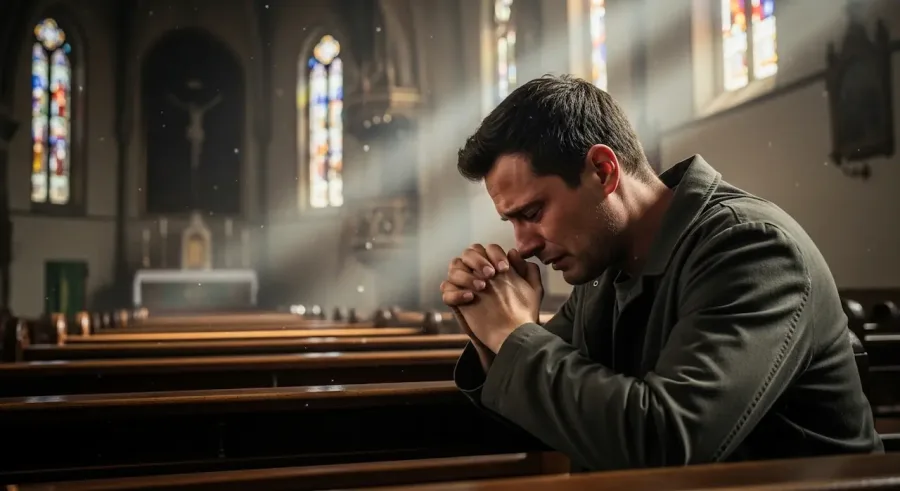
Mortal sins in Catholicism are serious offenses that deeply impact your spiritual life and relationship with God. Understanding what qualifies as mortal sins in Catholicism is essential for anyone exploring their faith. These are not just small mistakes—they are grave actions that can break your connection to God’s grace.
What are mortal sins in Catholicism? (image: Abpray)
To be considered mortal sins in Catholicism, the act must involve serious matter, be committed with full knowledge, and done with deliberate consent. Knowing the gravity of mortal sins in Catholicism helps believers recognize the importance of confession and repentance in restoring their bond with God.
In Catholicism, mortal sins are considered extremely serious offenses that can separate a person from God’s grace and endanger their salvation.
For a sin to be classified as a mortal sin, it must meet three specific conditions: it must be a grave matter, the person must have full knowledge that it’s wrong, and they must give full consent to committing the act.
Understanding what qualifies as mortal sins is crucial for anyone interested in deepening their spiritual life. By recognizing and avoiding mortal sins, Catholics can maintain a closer relationship with God and ensure they remain on the path to salvation.
The nature of sin in Catholicism
In Catholicism, the nature of sin goes beyond simply making mistakes or experiencing moral failures. The nature of sin is about disrupting the deep relationship between humanity and God.
According to Catholic teaching, the nature of sin involves turning away from God’s love and choosing actions that distance us from Him. Whether a sin is venial or mortal, the nature of sin means it can impact your spiritual journey and your connection with the wider faith community.
Understanding the nature of sin in Catholicism helps believers recognize the importance of staying close to God and seeking forgiveness.
Conditions for a sin to be mortal
Understanding the conditions for a sin to be mortal is crucial for anyone exploring Catholic beliefs. According to Catholic teaching, there are three key conditions for a sin to be mortal.
First, the sin must involve a grave matter—this means the act seriously goes against God’s commandments or moral laws.
Second, you must have full knowledge that what you’re doing is wrong, recognizing the seriousness of the sin.
Third, there must be deliberate consent, meaning you freely and intentionally choose to commit the act.
If all three conditions for a sin to be mortal are met, the sin separates a person from God’s grace until they seek forgiveness through confession.
Knowing the conditions for a sin to be mortal helps Catholics understand the importance of their choices and the path to spiritual growth.
Examples of mortal sins
Recognizing the conditions that make a sin mortal is essential for every Catholic. Mortal sins are serious actions that separate a person from God’s grace. Common examples of mortal sins include murder, adultery, and theft. These acts are considered mortal sins because they involve grave matter, full knowledge, and deliberate consent.
Other examples of mortal sins are blasphemy and intentionally missing Mass on Sundays, both of which break important commandments and moral principles. Knowing these examples of mortal sins can help you avoid actions that damage your relationship with God and guide you toward making better choices in your spiritual life.
The impact of mortal sins on the soul
Understanding the impact of mortal sins on the soul is essential for anyone on a spiritual path.
The impact of mortal sins on the soul is profound, as these serious offenses break the deep connection between an individual and God’s grace.
When the impact of mortal sins on the soul occurs, it can lead to spiritual struggles, a sense of emptiness, and a loss of purpose.
People may feel guilt and despair, which can influence their relationships and overall well-being.
Recognizing the impact of mortal sins on the soul is a crucial step toward healing, forgiveness, and restoring spiritual balance.
The importance of confession
Confession is a vital practice in the Catholic faith, offering believers a powerful way to reconnect with God. By participating in confession, you openly admit your mistakes, ask for forgiveness, and receive God’s grace.
Confession helps cleanse your soul, allowing you to start fresh and strengthen your relationship with God. Embracing confession regularly not only renews your spirit but also supports your journey to live according to God’s teachings.
Discover the importance of confession and experience spiritual growth through this meaningful sacrament.
The role of repentance
Repentance is a vital step in the journey of faith. Understanding the role of repentance means recognizing that it’s more than just feeling sorry for past mistakes—it’s about taking real action to change your life.
The role of repentance starts when you admit your wrongdoings, sincerely seek forgiveness, and work to make positive changes. Embracing the role of repentance helps you build a stronger relationship with God, leads you toward a more virtuous life, and gives you the strength to avoid repeating the same mistakes in the future.
Distinguishing mortal sins from venial sins
Understanding the difference between mortal sins and venial sins is essential for anyone looking to grow in their faith.
Mortal sins are serious offenses that break your relationship with God, while venial sins are less severe and only weaken that bond.
By learning to distinguish between mortal sins and venial sins, you can better reflect on your actions and make choices that strengthen your connection with God.
Recognizing the impact of mortal sins and venial sins empowers you to seek forgiveness and live a more faithful, spiritually fulfilling life.
The Sacrament of Reconciliation
The Sacrament of Reconciliation is a powerful way to restore your relationship with God after committing a mortal sin.
Through the Sacrament of Reconciliation, you can confess your sins, show true remorse, and receive forgiveness from a priest.
This spiritual practice not only brings you God’s mercy but also helps you heal and return to the community of faith.
Living a life free from mortal sin
Living a life free from mortal sin is a rewarding journey that begins with embracing the healing grace of the Sacrament of Reconciliation.
To truly live a life free from mortal sin, focus on deepening your relationship with God through daily prayer, regular attendance at Mass, and consistently practicing the virtues.
Make mindful choices each day to avoid situations that could lead you into mortal sin, and seek out a supportive community that encourages your spiritual growth.
Conclusion
In summary, understanding mortal sins in Catholicism is crucial for anyone looking to grow in their faith. Knowing what mortal sins in Catholicism are—serious offenses that involve grave matter, full knowledge, and deliberate consent—helps you make better moral choices every day.
It’s important to remember that repentance and the Sacrament of Reconciliation are vital steps to restore your relationship with God if you commit mortal sins in Catholicism. By striving to avoid mortal sins in Catholicism and seeking forgiveness when needed, you can strengthen your spiritual life and maintain a deeper, more meaningful connection with your faith.
José Lucas is a researcher driven by a lifelong fascination with the history of religions and how faith shapes the human experience. Specializing in the historical contexts of diverse traditions, José possesses a unique ability to translate ancient wisdom into practical, relevant insights for the modern seeker. At ABPray, his mission is to guide readers through the world’s vast spiritual heritage with both curiosity and reverence. He plays a crucial role in our Content Creation and Fact-Checking process, ensuring that all biblical, historical, and doctrinal references are grounded in legitimate sources and in-depth research. Through his articles and guides, José promotes understanding and compassion, connecting the facts of the past with the contemporary search for purpose. His work is essential in establishing ABPray as a global reference for interfaith content, nurturing the universal values that unite all of humanity.
To provide the best experiences, we use technologies like cookies to store and/or access device information. Consenting to these technologies will allow us to process data such as browsing behavior or unique IDs on this site. Not consenting or withdrawing consent, may adversely affect certain features and functions.
Functional
Always active
The technical storage or access is strictly necessary for the legitimate purpose of enabling the use of a specific service explicitly requested by the subscriber or user, or for the sole purpose of carrying out the transmission of a communication over an electronic communications network.
Preferences
The technical storage or access is necessary for the legitimate purpose of storing preferences that are not requested by the subscriber or user.
Statistics
The technical storage or access that is used exclusively for statistical purposes.The technical storage or access that is used exclusively for anonymous statistical purposes. Without a subpoena, voluntary compliance on the part of your Internet Service Provider, or additional records from a third party, information stored or retrieved for this purpose alone cannot usually be used to identify you.
Marketing
The technical storage or access is required to create user profiles to send advertising, or to track the user on a website or across several websites for similar marketing purposes.