Published on November 27, 2025 at 4:00 PMUpdated on November 27, 2025 at 4:00 PM
Angkor Wat is one of the most remarkable religious sites in the world, uniquely connected to both Buddhism and Hinduism. Located in Cambodia, this monumental temple complex reflects centuries of spiritual evolution and cultural richness. Originally constructed as a Hindu temple dedicated to the god Vishnu, Angkor Wat later became a central site for Buddhist worship, illustrating the harmonious coexistence of two major religions.
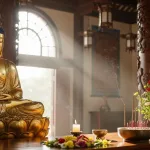
Is Angkor Wat involved with Buddhism and Hinduism? (image: Abpray)
The interplay between Hinduism and Buddhism at Angkor Wat is not only evident in its architecture and carvings, but also in the rituals and spiritual significance that continue to define the site today. Exploring Angkor Wat provides a vivid lens into Cambodia’s historical devotion and the evolving religious landscape of Southeast Asia.
Angkor Wat’s history is closely tied to the Khmer Empire, which ruled large parts of Southeast Asia from the 9th to the 15th centuries. Built in the early 12th century under King Suryavarman II, Angkor Wat was originally a Hindu temple dedicated to Vishnu, the preserver in the Hindu pantheon. Its construction was a statement of both spiritual devotion and imperial power, reflecting the grandeur and influence of the Khmer dynasty.
Over the centuries, as Buddhism gained prominence in Cambodia, Angkor Wat gradually transitioned into a Buddhist site, illustrating the dynamic religious evolution of the region. Despite these changes, the temple retained much of its original Hindu architecture, creating a unique blend of religious symbolism that continues to captivate visitors today.
Architectural Features Reflecting Religious Symbolism
One of the most striking aspects of Angkor Wat is its architecture, which embodies both spiritual meaning and artistic mastery. The temple’s layout represents Mount Meru, the sacred mountain in Hindu cosmology considered the center of the universe. Its five central towers symbolize the five peaks of Mount Meru, while the surrounding moats represent the cosmic ocean.
Carvings throughout the temple reveal an extraordinary level of detail, with Hindu deities, mythological scenes, and celestial dancers intricately etched into stone. Lotus motifs, symbolic of purity and spiritual awakening, appear throughout Angkor Wat, bridging both Hindu and Buddhist iconography. This architectural harmony demonstrates the temple’s enduring spiritual significance and its capacity to merge different faith traditions.
Transition from Hinduism to Buddhism
Angkor Wat’s transformation from a Hindu temple to a Buddhist center reflects Cambodia’s broader spiritual shift. As Buddhism became more widely embraced by Khmer kings, they repurposed the temple for Buddhist worship, adding statues, murals, and symbols associated with the Buddha.
This transition highlights the adaptability of sacred spaces, showing how religious sites can evolve while retaining historical and cultural importance. Today, Angkor Wat serves as a living testament to this shift, preserving the rituals, artistry, and spiritual symbolism of both religions. Visitors can see the coexistence of Hindu and Buddhist motifs throughout the temple, offering insight into centuries of Cambodian spiritual life.
Iconography: A Blend of Two Faiths
The iconography of Angkor Wat is perhaps its most fascinating feature. Hindu deities, including Vishnu, Shiva, and Indra, share sacred space with Buddha statues and Buddhist symbols, creating a visual dialogue between two faiths.
Bas-reliefs depict scenes from Hindu epics like the Ramayana and Mahabharata, while Buddhist imagery reflects teachings on enlightenment and compassion. This integration of iconography demonstrates religious tolerance and artistic synthesis, illustrating how Angkor Wat became a spiritual bridge between Hinduism and Buddhism.
The harmonious blend of iconography at Angkor Wat also reflects a broader cultural philosophy: religion as a source of unity rather than division, emphasizing shared values of morality, devotion, and spiritual growth.
Angkor Wat’s Role in Modern Cambodian Spirituality
Today, Angkor Wat continues to play a vital role in Cambodian spirituality. The temple is not merely a historical site; it remains an active place for prayer, meditation, and religious ceremonies. Many Cambodians visit Angkor Wat to offer respect, perform rituals, and celebrate significant religious festivals, particularly during Vesak and Pchum Ben.
Angkor Wat also serves as a symbol of national pride and cultural identity. Its unique combination of Hindu and Buddhist influences represents the resilience and continuity of Cambodia’s spiritual heritage. Visitors, both local and international, often report a profound sense of reverence, recognizing Angkor Wat as a place where history, art, and spirituality converge.
Cultural and Educational Significance
Beyond its spiritual importance, Angkor Wat is a center for cultural learning and historical preservation. Scholars and tourists alike study the temple’s architecture, carvings, and inscriptions to understand the Khmer Empire, religious history, and the evolution of Southeast Asian art.
The temple’s inscriptions provide insight into the political, religious, and daily life of ancient Cambodia, while its design continues to inspire architects and artists around the world. By preserving Angkor Wat, Cambodia maintains a living connection to its past, offering lessons in religious coexistence, artistic excellence, and cultural heritage.
Visiting Angkor Wat Today
For travelers, visiting Angkor Wat is a spiritual and cultural journey. Walking through the grand corridors, observing the detailed bas-reliefs, and reflecting in the temple courtyards offers a unique opportunity to witness the integration of Hindu and Buddhist traditions.
Tour guides often explain the symbolism behind the temple’s spires, moats, and carvings, highlighting the religious narratives that have shaped Cambodia’s history. Whether you are a believer, history enthusiast, or cultural explorer, Angkor Wat provides an immersive experience that combines faith, art, and heritage.
Conclusion
Angkor Wat is much more than an architectural wonder, it is a living testament to the coexistence of Hinduism and Buddhism. From its origins as a Hindu temple dedicated to Vishnu to its role as a Buddhist spiritual center, Angkor Wat reflects Cambodia’s evolving religious landscape.
Its architecture, iconography, and carvings tell stories of devotion, spiritual growth, and cultural identity, making it a powerful symbol of religious harmony. Today, Angkor Wat continues to inspire spiritual reflection, cultural pride, and global admiration.
By exploring Angkor Wat, visitors gain insight into the intertwined history of Hinduism and Buddhism, the artistic brilliance of the Khmer Empire, and the enduring spiritual traditions that shape Cambodia’s identity. Angkor Wat stands as a timeless reminder of how faith, art, and history can come together to create a sacred space of both beauty and meaning.
José Lucas is a researcher driven by a lifelong fascination with the history of religions and how faith shapes the human experience. Specializing in the historical contexts of diverse traditions, José possesses a unique ability to translate ancient wisdom into practical, relevant insights for the modern seeker. At ABPray, his mission is to guide readers through the world’s vast spiritual heritage with both curiosity and reverence. He plays a crucial role in our Content Creation and Fact-Checking process, ensuring that all biblical, historical, and doctrinal references are grounded in legitimate sources and in-depth research. Through his articles and guides, José promotes understanding and compassion, connecting the facts of the past with the contemporary search for purpose. His work is essential in establishing ABPray as a global reference for interfaith content, nurturing the universal values that unite all of humanity.
To provide the best experiences, we use technologies like cookies to store and/or access device information. Consenting to these technologies will allow us to process data such as browsing behavior or unique IDs on this site. Not consenting or withdrawing consent, may adversely affect certain features and functions.
Functional
Always active
The technical storage or access is strictly necessary for the legitimate purpose of enabling the use of a specific service explicitly requested by the subscriber or user, or for the sole purpose of carrying out the transmission of a communication over an electronic communications network.
Preferences
The technical storage or access is necessary for the legitimate purpose of storing preferences that are not requested by the subscriber or user.
Statistics
The technical storage or access that is used exclusively for statistical purposes.The technical storage or access that is used exclusively for anonymous statistical purposes. Without a subpoena, voluntary compliance on the part of your Internet Service Provider, or additional records from a third party, information stored or retrieved for this purpose alone cannot usually be used to identify you.
Marketing
The technical storage or access is required to create user profiles to send advertising, or to track the user on a website or across several websites for similar marketing purposes.