Published on October 27, 2025 at 4:00 PMUpdated on October 27, 2025 at 4:00 PM
Thanksgiving is often seen as a time for gratitude, family gatherings, and shared meals, but beneath the celebrations lies a history that is far more complex. Many people don’t realize that Thanksgiving harms Indigenous communities in numerous, often overlooked ways. The holiday’s traditional stories, school plays, and popular imagery can reinforce harmful stereotypes and erase centuries of Indigenous history. When families gather around the table each year, the narrative that gets repeated frequently ignores the injustices, violence, and cultural loss experienced by Native peoples.
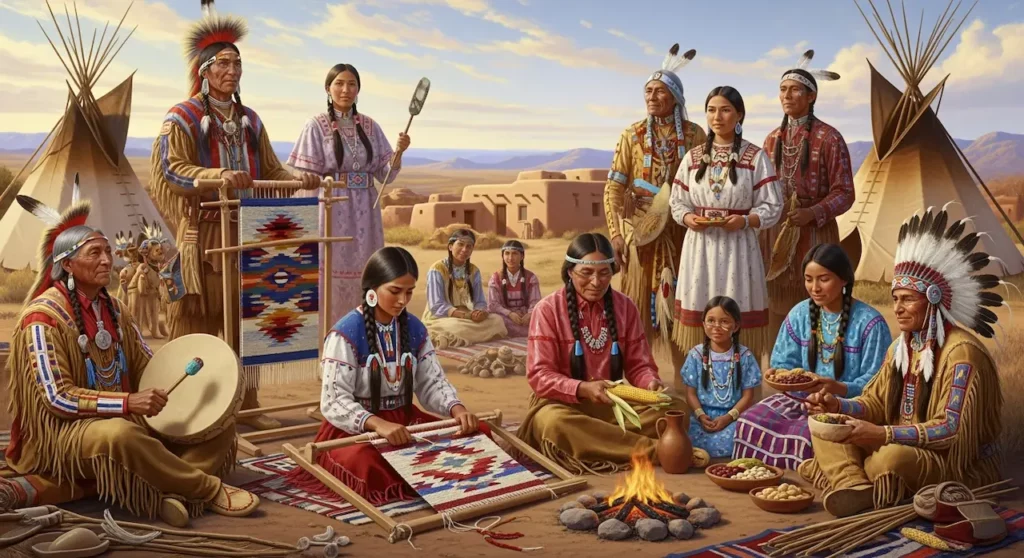
Thanksgivings impact on indigenous communities (image: Abpray)
Thanksgiving harms Indigenous communities not only through inaccurate retellings of the past but also through ongoing cultural appropriation, commercialization, and the glorification of a mythologized version of early American history. These impacts reveal why many Indigenous people do not view Thanksgiving as a day of celebration but rather as a reminder of trauma, survival, and resistance.
By examining how Thanksgiving harms Indigenous communities, we can begin to question the stories we’ve been taught and move toward more respectful, truthful, and inclusive ways of acknowledging the holiday.
Historical Misrepresentation of Indigenous Peoples
Thanksgiving is widely taught as a simple tale of friendship between Pilgrims and Native Americans, but this narrative is a major historical misrepresentation of Indigenous peoples. The popular story reduces complex cultures to a single moment and often portrays Native peoples as passive helpers rather than fully sovereign nations with their own systems of governance, spirituality, and traditions.
The historical misrepresentation of Indigenous peoples becomes particularly harmful when these simplified stories are repeated in classrooms, children’s books, and cultural celebrations. These narratives erase the realities of colonization, including:
land theft
forced removal
epidemics that devastated Native populations
cultural suppression and assimilation policies
By replacing harsh truths with a feel-good story, Thanksgiving contributes to ongoing misunderstanding and erasure. Recognizing the historical misrepresentation of Indigenous peoples is an essential step toward acknowledging the truth and honoring Indigenous resilience.
Cultural Appropriation and Stereotypes
One of the clearest ways Thanksgiving harms Indigenous communities is through cultural appropriation and stereotypes. For decades, schools and media have promoted inaccurate depictions of Native peoples, feathered headdresses, fringed clothing, “peace pipes,” and cartoonish portrayals that have nothing to do with specific tribal cultures.
Cultural appropriation occurs when elements of Indigenous culture, clothing, symbols, language, or sacred practices, are taken and used without permission or understanding. This often turns rich, diverse cultural traditions into props or costumes.
Stereotypes reinforced around Thanksgiving can include:
the idea that all Indigenous peoples share one culture
the myth that Native peoples “welcomed” colonizers without resistance
depictions that freeze Indigenous peoples in the past, ignoring their modern presence and contributions
These stereotypes shape public perceptions and obscure real Indigenous identities. By challenging cultural appropriation and stereotypes, we amplify authentic Indigenous voices and promote a more respectful, informed understanding of Indigenous cultures.
Economic Disparities and Exploitation
The discussion of Thanksgiving rarely acknowledges the deep economic disparities and exploitation that continue to harm Indigenous communities today. These inequities are rooted in centuries of discriminatory policies and broken treaties that stripped many Native nations of land, resources, and economic self-determination.
Economic disparities and exploitation within Indigenous communities can include:
limited access to quality schools and healthcare
underfunded tribal services
high rates of unemployment
resource extraction by corporations without proper compensation
Many Indigenous lands have been exploited for natural resources—oil, minerals, timber—often without the consent of the communities who hold ancestral ties to them. This economic exploitation leaves tribes with environmental damage and few benefits, while corporations profit.
These long-lasting disparities make it harder for Indigenous peoples to maintain their languages, cultural traditions, and community stability. Understanding this economic context is crucial for anyone working to support Indigenous rights and sovereignty.
Psychological Impact and Trauma
The psychological impact of colonization, forced assimilation, and historical violence continues to affect Indigenous communities today. The trauma is not only historical—it is intergenerational. Children are raised by families who carry memories of boarding schools, broken policies, forced separation, and discrimination.
The psychological impact of these experiences can appear as:
grief and loss
anxiety and depression
disrupted identity formation
substance misuse
internalized stereotypes
intergenerational trauma that shapes community dynamics
Thanksgiving, with its glorified narrative of peace and cooperation, can serve as a painful reminder of injustice. For some Indigenous people, the holiday is a day of mourning, encouraging reflection on ancestors lost and cultures threatened by colonization.
Understanding this psychological impact is essential to supporting healing, promoting cultural revitalization, and recognizing Indigenous resilience.
Environmental Degradation and Land Displacement
Indigenous peoples hold deep spiritual and cultural connections to the land, but environmental degradation and land displacement have threatened these relationships for generations. Industrial development, pollution, and climate change continue to impact Indigenous territories at alarming rates.
Environmental degradation includes:
contaminated water supplies
deforestation
oil pipeline construction on sacred lands
loss of hunting, fishing, and agricultural rights
Land displacement disrupts not only daily life but also the sacred traditions and cultural teachings rooted in the environment. Thanksgiving, which is often tied to the myth of settlers peacefully settling new lands, obscures the truth of land theft and displacement that still affects tribes today.
Recognizing this reality helps us acknowledge the enduring harm and advocate for environmental justice and Indigenous sovereignty.
Erasure of Indigenous Narratives
Perhaps one of the most damaging effects is the continued erasure of Indigenous narratives. Thanksgiving stories often center settlers, minimizing or ignoring the voices of the people who were most affected by colonization.
The erasure of Indigenous narratives means:
Indigenous perspectives are not taught in schools
Native peoples appear only in historical contexts, not in modern life
holiday celebrations overshadow painful realities
misinformation becomes normalized
When society continues to overlook Indigenous voices, it reinforces harmful myths and perpetuates misunderstanding. Restoring Indigenous narratives means centering Native voices, learning from tribal historians, and teaching accurate histories to future generations.
The Need for Cultural Sensitivity and Awareness
To build a more inclusive and truthful understanding of Thanksgiving, there is a strong need for cultural sensitivity and awareness. This involves learning from Indigenous voices, not from stereotypes, outdated textbooks, or myths.
Cultural sensitivity and awareness encourage us to:
learn the real history of Thanksgiving
honor tribal sovereignty
support Indigenous-led initiatives
respect sacred symbols and traditions
challenge stereotypes when we hear them
uplift Indigenous authors, artists, and educators
By practicing cultural sensitivity and awareness, we help create a culture of respect and understanding, ensuring that Indigenous narratives are honored rather than erased.
Conclusion
Thanksgiving harms Indigenous communities in ways that are often overlooked, from historical misrepresentation to cultural appropriation, economic exploitation, psychological trauma, and environmental degradation. The holiday’s myths erase Indigenous narratives and normalize false histories that continue to influence generations.
But learning these truths is not about erasing Thanksgiving, it’s about transforming how we understand it. By acknowledging how Thanksgiving harms Indigenous communities, we can choose to celebrate with greater awareness, empathy, and respect. We can uplift Indigenous voices, support tribal nations, and work toward a future that honors truth rather than myth.
In doing so, we not only challenge stereotypes but also help build a more inclusive, accurate, and respectful way to observe Thanksgiving, one that recognizes the strength, resilience, and living cultures of Indigenous peoples.
José Lucas is a researcher driven by a lifelong fascination with the history of religions and how faith shapes the human experience. Specializing in the historical contexts of diverse traditions, José possesses a unique ability to translate ancient wisdom into practical, relevant insights for the modern seeker. At ABPray, his mission is to guide readers through the world’s vast spiritual heritage with both curiosity and reverence. He plays a crucial role in our Content Creation and Fact-Checking process, ensuring that all biblical, historical, and doctrinal references are grounded in legitimate sources and in-depth research. Through his articles and guides, José promotes understanding and compassion, connecting the facts of the past with the contemporary search for purpose. His work is essential in establishing ABPray as a global reference for interfaith content, nurturing the universal values that unite all of humanity.
To provide the best experiences, we use technologies like cookies to store and/or access device information. Consenting to these technologies will allow us to process data such as browsing behavior or unique IDs on this site. Not consenting or withdrawing consent, may adversely affect certain features and functions.
Functional
Always active
The technical storage or access is strictly necessary for the legitimate purpose of enabling the use of a specific service explicitly requested by the subscriber or user, or for the sole purpose of carrying out the transmission of a communication over an electronic communications network.
Preferences
The technical storage or access is necessary for the legitimate purpose of storing preferences that are not requested by the subscriber or user.
Statistics
The technical storage or access that is used exclusively for statistical purposes.The technical storage or access that is used exclusively for anonymous statistical purposes. Without a subpoena, voluntary compliance on the part of your Internet Service Provider, or additional records from a third party, information stored or retrieved for this purpose alone cannot usually be used to identify you.
Marketing
The technical storage or access is required to create user profiles to send advertising, or to track the user on a website or across several websites for similar marketing purposes.