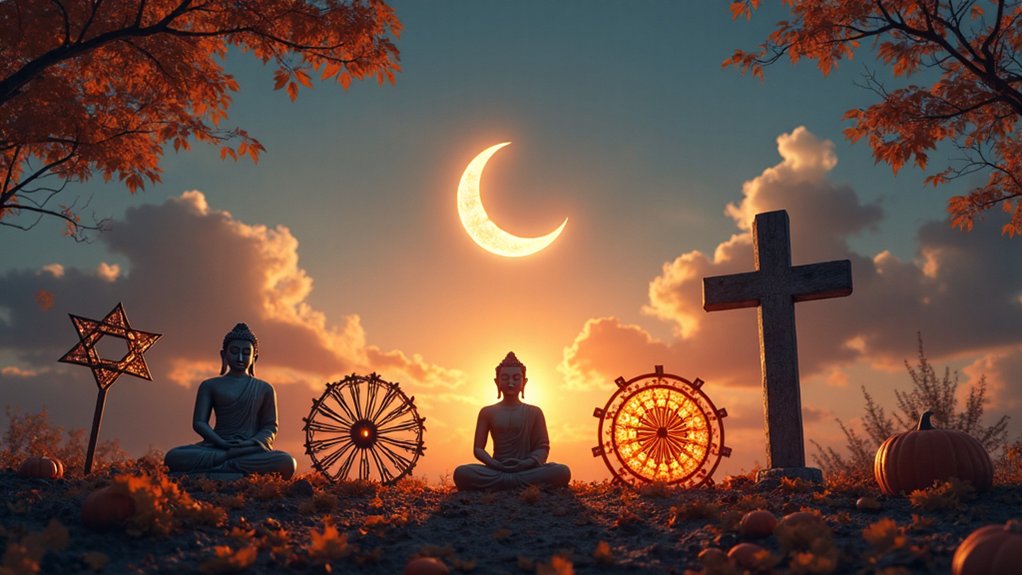
As Halloween approaches each year, many people become excited about costumes, decorations, haunted houses, and trick-or-treating. Yet, not everyone participates in this spooky celebration. Across the world, several religions don’t celebrate Halloween, each for its own reasons deeply rooted in spiritual beliefs, cultural practices, and historical traditions.
Some religions that don’t celebrate Halloween, such as Judaism, Islam, Hinduism, and Buddhism, have unique holiday calendars, values, and traditions that make Halloween unrelated or incompatible with their worldview. Even within Christianity, opinions about Halloween vary widely, with some Christians embracing the holiday for fun while others avoid it due to its pagan origins.
Whether you’re curious about why certain religious communities skip Halloween or simply want to understand the diverse beliefs behind these decisions, this overview offers a clear and respectful exploration of how different faiths approach the holiday.
Christianity
The relationship between Christianity and Halloween is one of the most complex. While many Christians participate in Halloween festivities—holding costume parties, carving pumpkins, or attending church-sponsored “harvest festivals”, others avoid Halloween altogether.
The reason for this difference lies in how Christians interpret the holiday’s origins. Historically, Halloween is connected to the Celtic festival of Samhain and later to the medieval Christian observances of All Saints’ Day and All Souls’ Day. Because of this blended past, Christian perspectives vary widely.
Why some Christians participate
Many Christians view Halloween as a harmless cultural celebration. For them, dressing up or trick-or-treating has no religious significance and is simply a fun activity for families and children. Some churches even organize “Trunk or Treat” events to provide a safe environment for community members.
Why some Christians avoid Halloween
Other Christians believe Halloween conflicts with biblical teachings, largely due to:
- its historical association with pagan rituals
- themes involving ghosts, witches, or the supernatural
- concerns about glorifying fear or darkness
These Christians prefer to center their celebrations around faith-based events, choosing to honor God while avoiding anything they perceive as spiritually contradictory.
Understanding these different viewpoints helps build respect among Christian communities and explains why attitudes toward Halloween vary so greatly from one church to another.
Judaism
When it comes to Judaism and Halloween, many Jewish families simply choose not to celebrate the holiday, not because of strong opposition, but because Halloween is not connected to Jewish culture or tradition.
Why many Jewish families don’t celebrate Halloween
Halloween is rooted in Christian and pagan history, making it irrelevant within Jewish religious life. Jewish communities already have their own festival calendar full of spiritually meaningful holidays such as:
- Passover (Pesach) – celebrating liberation
- Rosh Hashanah – the Jewish New Year
- Yom Kippur – the Day of Atonement
- Hanukkah – the Festival of Lights
- Purim – a joyful holiday involving costumes
Interestingly, Purim—a holiday where costumes, celebration, and fun are encouraged, is sometimes compared to Halloween. However, Purim has deep religious significance, unlike Halloween.
Cultural, not theological, reasons
For many Jewish families, the choice not to celebrate Halloween is less about opposition and more about focusing on their own traditions. Understanding the differences helps foster appreciation for the richness of Jewish culture.
Islam
For many Muslims, Halloween is not celebrated because its themes, symbolism, and historical origins do not align with Islamic teachings.
Why Muslims avoid Halloween
From an Islamic perspective, Halloween includes elements such as:
- supernatural beings (ghosts, spirits, witches)
- practices rooted in pagan or non-Islamic traditions
- activities that can be seen as encouraging fear or superstition
Islam encourages believers to avoid celebrations that conflict with its principles, especially those involving beliefs outside of monotheistic worship.
What Muslims celebrate instead
Rather than Halloween, Muslims observe spiritually meaningful holidays such as:
- Eid al-Fitr – celebrating the end of Ramadan
- Eid al-Adha – honoring sacrifice and devotion
These holidays focus on prayer, gratitude, charity, and community—values central to Islamic teachings.
Cultural experiences vary
It’s important to note that attitudes differ across cultures. Some Muslim families may participate in light-hearted Halloween activities, while others choose to abstain completely. The key foundation is always alignment with Islamic values.
Hinduism
In Hinduism, Halloween is generally not celebrated because it doesn’t fit into the religion’s cultural or spiritual framework.
Hindu worldview vs. Halloween values
Hindu teachings focus on:
- karma
- spiritual growth
- respect for ancestors
- the victory of light over darkness
These values contrast with Halloween’s themes of fear, horror, and the supernatural.
Major Hindu festivals
Instead of Halloween, Hindus celebrate vibrant and meaningful traditions such as:
- Diwali – the Festival of Lights
- Navratri – honoring the divine feminine
- Holi – the Festival of Colors
These celebrations emphasize joy, unity, and the triumph of good.
Cultural representation
For Hindu communities living in countries where Halloween is popular, participation varies. Some families enjoy the cultural aspects—like costumes or candy—while still placing greater importance on Hindu values and festivals.
Buddhism
Halloween is not traditionally celebrated in Buddhism, largely because its themes do not align with Buddhist teachings.
Why Buddhists don’t celebrate Halloween
Halloween focuses on supernatural imagery, fear, and external celebration, while Buddhism emphasizes:
- mindfulness
- compassion
- inner peace
- letting go of fear, not amplifying it
Because Halloween doesn’t have spiritual meaning within Buddhism, many Buddhists choose not to observe it.
Buddhist alternatives
Instead of Halloween, Buddhists may dedicate the time to:
- meditation
- acts of kindness
- rituals honoring ancestors
- reflection on impermanence and compassion
These practices reflect the heart of Buddhist philosophy, offering a different kind of spirituality than Halloween.
Cultural flexibility
Some Buddhists participate casually in Halloween, especially in Western countries, but their participation is cultural rather than religious.
Conclusion
Halloween may be one of the most widely recognized celebrations in many parts of the world today, but not everyone chooses to participate. There are several religions that don’t celebrate Halloween, each with deeply meaningful reasons rooted in history, culture, and spiritual tradition.
Religions such as Judaism, Islam, Hinduism, and Buddhism focus on observances that align with their own values, teachings, and sacred calendars. Even within Christianity, opinions differ, some Christians join the festivities, while others refrain for religious reasons.
By learning about the religions that don’t celebrate Halloween, you gain a richer understanding of global diversity. Respecting these beliefs helps create a more inclusive environment where everyone’s traditions are valued.
Whether you celebrate Halloween, skip it, or observe another holiday altogether, understanding these perspectives brings communities closer and fosters a spirit of respect and harmony.
Researcher of History and Spirituality:
José Lucas is a researcher driven by a lifelong fascination with the history of religions and how faith shapes the human experience. Specializing in the historical contexts of diverse traditions, José possesses a unique ability to translate ancient wisdom into practical, relevant insights for the modern seeker. At ABPray, his mission is to guide readers through the world’s vast spiritual heritage with both curiosity and reverence. He plays a crucial role in our Content Creation and Fact-Checking process, ensuring that all biblical, historical, and doctrinal references are grounded in legitimate sources and in-depth research. Through his articles and guides, José promotes understanding and compassion, connecting the facts of the past with the contemporary search for purpose. His work is essential in establishing ABPray as a global reference for interfaith content, nurturing the universal values that unite all of humanity.
Researcher of History and Spirituality:
José Lucas is a researcher driven by a lifelong fascination with the history of religions and how faith shapes the human experience. Specializing in the historical contexts of diverse traditions, José possesses a unique ability to translate ancient wisdom into practical, relevant insights for the modern seeker. At ABPray, his mission is to guide readers through the world’s vast spiritual heritage with both curiosity and reverence. He plays a crucial role in our Content Creation and Fact-Checking process, ensuring that all biblical, historical, and doctrinal references are grounded in legitimate sources and in-depth research. Through his articles and guides, José promotes understanding and compassion, connecting the facts of the past with the contemporary search for purpose. His work is essential in establishing ABPray as a global reference for interfaith content, nurturing the universal values that unite all of humanity.
Faith & Celebration
Yom Kippur: when tradition claims continuity while meaning completely transforms
When a modern Jewish family sits in synagogue on Yom Kippur, fasting, praying, confessing sins in communal voice, they believe they are practicing an unbroken tradition stretching back 3,400 years to Leviticus. But this belief contains a profound falsehood. Modern Yom Kippur is not the same as biblical Yom Kippur. Structurally, theologically, and practically, they […]
Holidays
When you’re Muslim and your coworkers want you at the Thanksgiving table: the hidden textual war over gratitude in Islam
Just what influences some Muslims to forgo festive celebrations, and how do these choices reflect their deeper values and beliefs? Discover the compelling reasons behind their decisions.
Holidays
The architecture of sacred time: how different countries calculate easter and why it reveals the machinery of religious authority
Uncover the reasons behind the varying dates of Easter celebrations worldwide and discover how calendars influence this cherished holiday. What secrets lie in these differences?
Holidays
Saint Patrick’s Day beyond the green: how religion, nationalism, and diaspora turned a christian feast into a global political symbol
Saint Patrick’s Day is often perceived as one of the most accessible cultural celebrations in the world. It appears lighthearted, colorful, and deliberately uncomplicated. Green clothing, parades, shamrocks, music, and alcohol dominate the imagery. Participation requires no explanation, no commitment, and no prior knowledge. For many, it is simply a festive day loosely associated with […]
Holidays
Why Abraham Lincoln made Thanksgiving a national holiday?
To understand why Abraham Lincoln declared Thanksgiving a national holiday, one must delve into the turbulent era of the Civil War and its deeper meanings.
Holidays
Historical origins of Halloween celebration
Curious about Halloween’s ancient origins? Discover the Celtic, Roman, and Christian influences that shaped this spooky celebration and what they reveal today.