Published on October 14, 2025 at 4:00 PMUpdated on October 14, 2025 at 4:00 PM
Have you ever wondered why there are so many Christian denominations? For many people, Christianity appears as one religion with a single message, yet when you look closer, you’ll find hundreds of distinct Christian denominations around the world. Each one has its own traditions, beliefs, and worship styles. The reason for this incredible diversity is rooted in a complex mix of history, culture, language, political events, and different interpretations of the Bible.
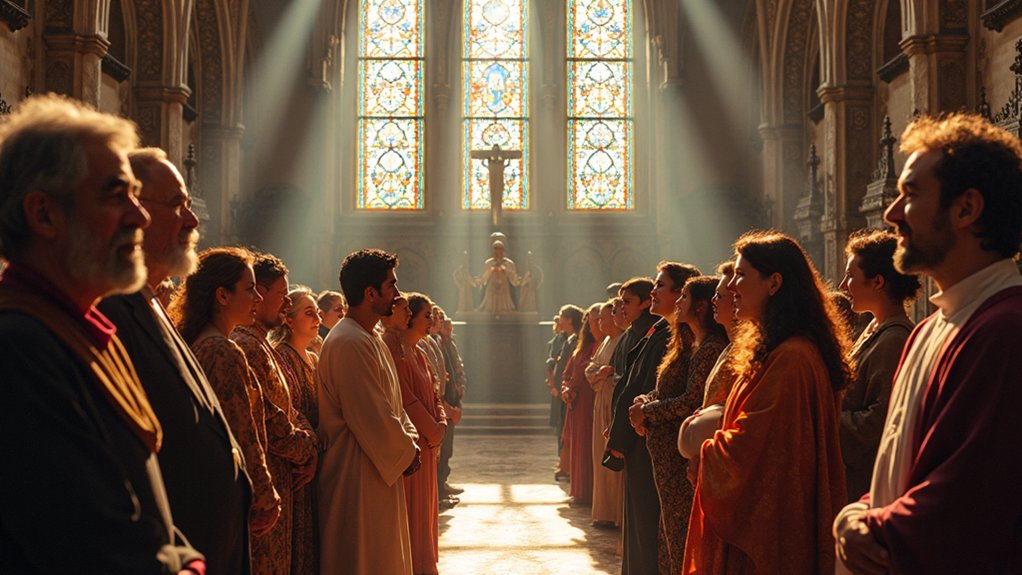
Why are there so many Christian denominations (image: Abpray)
Understanding why there are so many Christian denominations helps you appreciate the richness of Christian history and the many ways people have expressed their faith over the centuries. From ancient divisions to modern movements, the story of Christian denominations reflects how adaptable and dynamic Christianity has been throughout its global journey.
To understand why Christianity developed into so many denominations, you need to look at the historical roots of Christian divisions, which go back nearly 2,000 years. When Christianity first emerged in the Middle East during the 1st century CE, followers of Jesus were united under a shared message. However, as Christianity spread across Europe, Africa, and Asia, the historical roots of Christian denominations began to take shape.
One major turning point in Christian history was the Great Schism of 1054, which split Christianity into two major branches:
The Eastern Orthodox Church, centered in Constantinople
The Roman Catholic Church, centered in Rome
This division happened because of disagreements over theology, church leadership, and cultural differences between East and West. Over time, these differences solidified into two separate Christian traditions, marking the first major division in Christian history.
Another critical moment in the historical roots of Christian denominations came during the Protestant Reformation in the 16th century. Figures like Martin Luther, John Calvin, and Huldrych Zwingli challenged certain teachings and practices of the Catholic Church. Their reform movements led to the creation of new Christian groups such as:
Lutherans
Calvinists (Reformed traditions)
Anglicans
Presbyterians
Baptists
As the Reformation grew, more Christian denominations emerged, each with different beliefs about salvation, church authority, and how to interpret the Bible.
Over time, social and political changes, like the Enlightenment, colonization, and migration—further shaped the historical roots of Christian denominations, leading to the vast diversity we see today.
The Role of Scripture Interpretation in Shaping Christian Denominations
One of the biggest reasons there are so many Christian denominations is the interpretation of scripture. Christians believe the Bible is sacred, but not all Christians read the Bible in the same way. Differences in scripture interpretation have had a major influence on theology, worship, and church structure.
Some Christians take a literal approach, believing every word of the Bible should be understood exactly as written. Others prefer a symbolic or metaphorical approach, viewing certain passages as stories meant to convey deeper truths rather than historical facts.
These differences in scripture interpretation impact:
Beliefs about baptism
Understandings of communion
Views on church leadership
Ideas about salvation and grace
Social teachings and moral issues
For example, Pentecostal denominations emphasize passages about the Holy Spirit and spiritual gifts, while Reformed denominations focus on scriptures that highlight God’s sovereignty and doctrine.
Because scripture interpretation varies widely, different Christian communities naturally develop their own unique identity, which leads to the formation of new denominations.
Cultural and Geographic Influences on Christian Denominations
Another major factor behind the diversity of Christian denominations is culture and geography. As Christianity spread to different regions, local customs, languages, and cultural values shaped how people practiced their faith.
In Africa, Christianity blended with community-centered traditions and strong oral storytelling practices. In Latin America, Christianity merged with indigenous customs and Spanish Catholic influences. In Europe and North America, political systems, social movements, and philosophical trends shaped how churches formed and operated.
These cultural and geographic influences affect:
Worship style (music, dress, rituals)
Leadership structure (pastors, elders, bishops)
The role of women in the church
Approaches to mission work and community outreach
As a result, Christianity naturally evolved into different denominations that reflect the cultural identity of the regions where they developed.
The Impact of Reformation Movements on Denominational Diversity
The Reformation movements of the 16th century had a powerful and lasting influence on Christianity. These movements began as a response to concerns about corruption, theological disagreements, and the desire to return to earlier Christian practices.
The impact of Reformation movements cannot be overstated. They challenged long-established religious authority and encouraged believers to read the Bible for themselves. This emphasis on personal interpretation led to an explosion of new Christian groups.
Over time, the impact of Reformation movements expanded as these ideas spread around the world. Each new denomination added its own insights and practices, contributing to the rich variety of Christian traditions today.
Examples of denominations that emerged from Reformation movements include:
Methodists
Anabaptists
Quakers
Adventists
Pentecostals
Each of these groups reflects a particular emphasis, whether personal holiness, spiritual revival, or social justice, demonstrating the ongoing impact of Reformation movements on Christian diversity.
Modern Trends in Denominational Growth
Christian denominations continue to grow and evolve today. Modern trends in religion show that people seek churches that reflect their values, community needs, and spiritual questions.
Some major modern trends in denominational growth include:
1. Digital Transformation
Livestreamed services, online Bible studies, and digital outreach allow churches to reach people worldwide.
2. Emphasis on Inclusivity
Many denominations attract members by embracing diversity, promoting equality, and supporting social justice initiatives.
3. Contemporary Worship Styles
Music, technology, and informal gatherings appeal to younger generations.
4. Non-Denominational Churches
A significant trend is the rise of non-denominational churches, which do not belong to a traditional denomination but combine teachings from multiple Christian traditions.
These modern trends show how Christian denominations continue to adapt in order to remain relevant in a rapidly changing world.
Conclusion
So why are there so many Christian denominations? The answer lies in centuries of history, cultural exchange, scripture interpretation, and spiritual reform. Christianity has always been a dynamic religion, capable of adapting to new environments and responding to the needs of different communities.
The result is a beautifully diverse landscape of Christian denominations, each offering its own way of worshiping, interpreting the Bible, and expressing faith. This variety allows individuals to find a spiritual community that aligns with their beliefs, values, and personal experiences.
By understanding the origins of Christian denominations, you gain a clearer picture of how Christianity has evolved and why it remains one of the most diverse and widespread religions in the world today.
José Lucas is a researcher driven by a lifelong fascination with the history of religions and how faith shapes the human experience. Specializing in the historical contexts of diverse traditions, José possesses a unique ability to translate ancient wisdom into practical, relevant insights for the modern seeker. At ABPray, his mission is to guide readers through the world’s vast spiritual heritage with both curiosity and reverence. He plays a crucial role in our Content Creation and Fact-Checking process, ensuring that all biblical, historical, and doctrinal references are grounded in legitimate sources and in-depth research. Through his articles and guides, José promotes understanding and compassion, connecting the facts of the past with the contemporary search for purpose. His work is essential in establishing ABPray as a global reference for interfaith content, nurturing the universal values that unite all of humanity.
To provide the best experiences, we use technologies like cookies to store and/or access device information. Consenting to these technologies will allow us to process data such as browsing behavior or unique IDs on this site. Not consenting or withdrawing consent, may adversely affect certain features and functions.
Functional
Always active
The technical storage or access is strictly necessary for the legitimate purpose of enabling the use of a specific service explicitly requested by the subscriber or user, or for the sole purpose of carrying out the transmission of a communication over an electronic communications network.
Preferences
The technical storage or access is necessary for the legitimate purpose of storing preferences that are not requested by the subscriber or user.
Statistics
The technical storage or access that is used exclusively for statistical purposes.The technical storage or access that is used exclusively for anonymous statistical purposes. Without a subpoena, voluntary compliance on the part of your Internet Service Provider, or additional records from a third party, information stored or retrieved for this purpose alone cannot usually be used to identify you.
Marketing
The technical storage or access is required to create user profiles to send advertising, or to track the user on a website or across several websites for similar marketing purposes.