Published on October 12, 2025 at 4:00 PMUpdated on October 12, 2025 at 4:00 PM
When you examine the timeline of Roman Catholicism’s historical origins, you discover a rich and compelling story of growth and transformation. The timeline of Roman Catholicism’s historical origins highlights how early Christian communities gradually evolved into one of the world’s most influential religious institutions. Key milestones, such as the Edict of Milan and the Council of Nicaea, played pivotal roles in shaping the beliefs and organizational structure of the Church. By understanding the timeline of Roman Catholicism’s historical origins, you can see how the Church’s authority expanded across centuries. The timeline also sheds light on major events like the Great Schism, which redefined Christianity and left a lasting impact on the faith. Exploring the timeline of Roman Catholicism’s historical origins offers valuable insights into how this global faith developed and adapted through history.
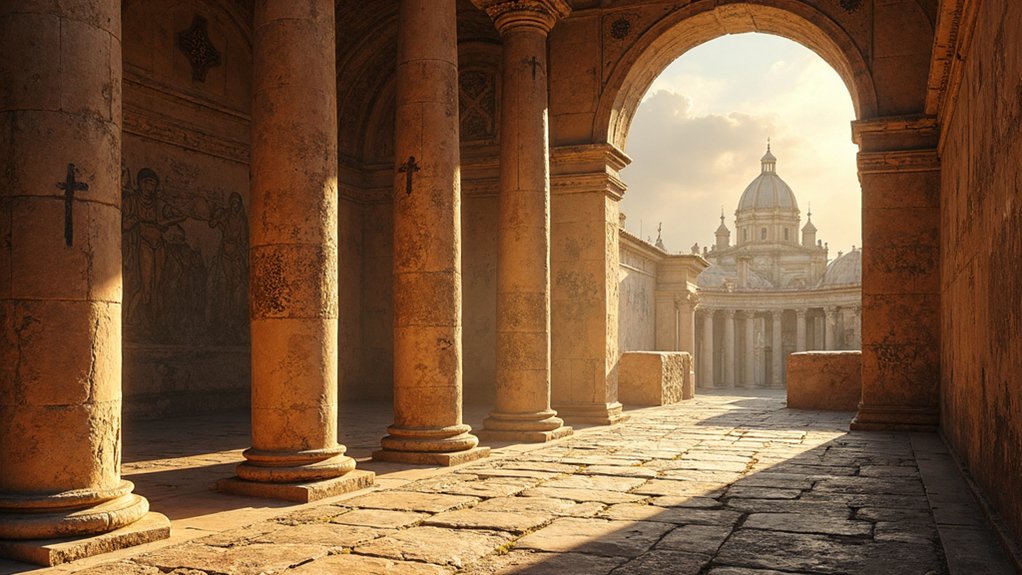
Roman Catholicism's historical origins (Image: Abpray)
Early Christian communities in the 1st century AD played a crucial role in shaping the future of Christianity.
These early Christian communities were centered around the teachings of Jesus and the apostles, bringing people together in private homes for worship, prayer, and fellowship.
Within these early Christian communities, believers shared meals, supported one another, and focused on values like love, unity, and charity.
The strong sense of belonging and mutual support found in early Christian communities laid the foundation for a movement that would eventually transform the entire Roman world.
The establishment of church hierarchy (2nd-3rd Century AD)
The establishment of church hierarchy in the 2nd and 3rd centuries AD marked a major turning point in early Christianity.
During this period, the church hierarchy began to take shape, with bishops gaining authority and overseeing local congregations. This new church hierarchy brought a clear leadership structure, helping to unify various Christian communities and ensuring consistency in doctrine and communication.
As the church hierarchy became more defined, the Christian church grew stronger and more influential within the Roman Empire, laying the foundation for its future as a powerful institution.
The edict of Milan and legalization of Christianity (313 AD)
The Edict of Milan and the Legalization of Christianity (313 AD)
The Edict of Milan and the legalization of Christianity in 313 AD marked a turning point in Roman history.
When emperors Constantine and Licinius introduced the Edict of Milan, the legalization of Christianity became official, ending centuries of persecution.
With the legalization of Christianity, believers were finally free to practice their faith openly, and the Church regained property that had been taken during earlier crackdowns.
The Edict of Milan and the legalization of Christianity not only protected Christians but also set the stage for Christianity to grow and thrive throughout the Roman Empire.
The council of Nicaea and Nicene Creed (325 AD)
The Council of Nicaea and the Nicene Creed (325 AD)
The Council of Nicaea played a crucial role in shaping early Christianity. As Christianity became legalized and rapidly spread across the Roman Empire, leaders saw the need for unity among believers.
In 325 AD, the Council of Nicaea brought together bishops from different regions to resolve major theological disputes, especially about the nature of Christ.
The most important outcome was the Nicene Creed, a clear statement of core Christian beliefs. The Nicene Creed helped unify Christians by providing a shared foundation for their faith.
Thanks to the Council of Nicaea and the Nicene Creed, Christianity gained a stronger, more unified identity that supported its growth throughout the empire.
The rise of Papal authority (4th-5th Century AD)
The Rise of Papal Authority in the 4th and 5th Centuries
The rise of papal authority in the 4th and 5th centuries marked a turning point for Christianity. As the faith spread and gained influence, the Bishop of Rome—later known as the Pope—emerged as a central leader in the Church.
The rise of papal authority during this era was evident as the Pope took on a decisive role in resolving theological disputes and guiding church governance. Through active participation in church councils and important doctrinal decisions, the rise of papal authority established the papacy as a powerful force in shaping Christian beliefs and practices.
This period laid the foundation for the enduring influence of the papacy throughout history.
The great schism and its impact (1054 AD)
The Great Schism of 1054 was a turning point in Christian history, marking the official split between the Eastern Orthodox Church and the Roman Catholic Church.
This historic event, known as the Great Schism, resulted from growing disagreements over papal authority and key theological beliefs.
The impact of the Great Schism can still be felt today, as it shaped the development of two distinct branches of Christianity and continues to influence Christian unity and interdenominational relationships around the world.
Understanding the Great Schism helps us appreciate the unique traditions of both the Eastern Orthodox and Roman Catholic Churches and their lasting roles in global Christianity.
Conclusion
Understanding the timeline of Roman Catholicism’s historical origins is key to appreciating its profound legacy. The timeline of Roman Catholicism’s historical origins begins with early Christian communities, who set the stage for a more organized church structure. As you explore the timeline of Roman Catholicism’s historical origins, you’ll notice that important milestones—like the legalization of Christianity and the definition of core doctrines—helped unify believers under a common faith. The growing power of the papacy and significant events such as the Great Schism further shaped the Church’s development. By tracing the timeline of Roman Catholicism’s historical origins, you gain valuable insight into the faith’s evolution, its lasting influence on Western civilization, and its ongoing impact on millions around the world.