Published on September 25, 2025 at 11:00 AMUpdated on September 25, 2025 at 11:00 AM
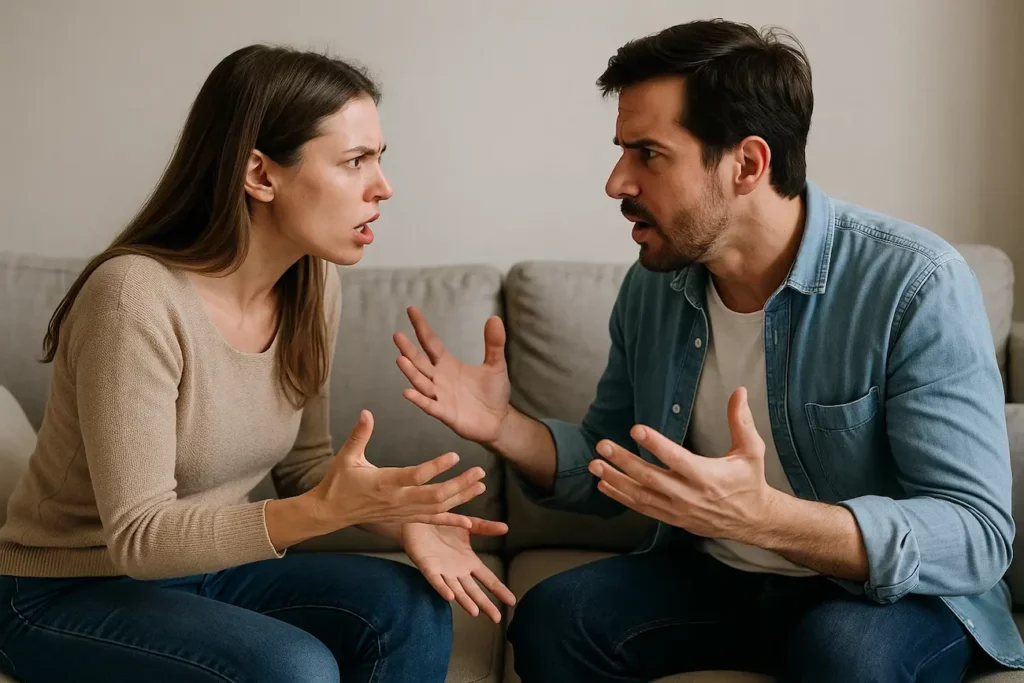
Marriage rarely collapses in a dramatic moment. It erodes quietly, through misunderstood seasons, misread signals, and expectations no one ever named out loud. When people ask, “What are the hardest years in marriage?” they are rarely asking out of curiosity. More often, they are asking for reassurance that what they are living through is normal—or for confirmation that something is fundamentally broken. The honest answer is both more stabilizing and more demanding: the hardest years in marriage are not random, and they are not a verdict on love. They are structural pressure points built into the timeline of a shared life.
Most couples do not struggle because they married the wrong person. They struggle because they did not understand how marriage behaves under sustained load. Life applies pressure in waves—financial, emotional, spiritual, logistical, relational—and each wave requires a different form of maturity. Couples who mistake pressure for failure tend to panic, personalize, or withdraw. Couples who understand pressure as seasonal learn to adapt, recalibrate, and respond intentionally.
This text unifies a full, end-to-end analysis of the hardest years in marriage into a single coherent map. It explains why these years appear with such consistency across different cultures and belief systems, what is actually breaking beneath the surface when marriages feel strained, and how couples who endure learn to interpret difficulty accurately instead of turning it into a personal indictment of love, faith, or compatibility.
The 30-second verdict: what you actually need to know about the hardest Years in Marriage
The hardest years in marriage do not align neatly with anniversaries on a calendar. They cluster around transitions. The first year tests adjustment and expectation. Years two and three test systems and sustainability. The five-to-seven-year window tests identity, direction, and unspoken disappointment. Parenting years test endurance, teamwork, and emotional generosity. Midlife and empty-nest years test meaning, intimacy, and reconnection.
What determines whether these seasons weaken or strengthen a marriage is not chemistry, shared values, or even faith. It is interpretation. Couples who last do not experience less stress; they simply understand what the stress is doing. They respond deliberately rather than reactively. They frame difficulty structurally instead of morally.
How this analysis was built: reality, not romantic theory
This framework is drawn from three intersecting sources. First, long-term marriage pattern research that tracks relational satisfaction and dissolution across decades. Second, faith-based and secular counseling experience observing recurring stress patterns in real couples. Third, repeated behavioral dynamics seen across hundreds of marriages with different incomes, personalities, belief systems, and life trajectories.
The remarkable finding is not how different marriages are—but how similar their pressure points tend to be. The language changes. The context shifts. The stressors evolve. Yet the same questions surface again and again. The goal of this analysis is not inspiration or reassurance. It is clarity. When couples can accurately name the season they are in, they stop blaming each other for what the season itself demands.
The core problem most couples never name
Most people prepare extensively for a wedding and almost not at all for a marriage timeline.
They plan the celebration. They do not plan for resentment.
They plan the honeymoon. They do not plan for exhaustion, routine, or disappointment.
Marriage is long. Preparation is short. Even faith, while powerful, does not remove friction. In many cases, it exposes it. Spiritual language can raise expectations without teaching mechanics—how to communicate under fatigue, how to forgive repeatedly without eroding dignity, how to renegotiate roles without triggering power struggles or shame.
The hardest years in marriage are hard because they demand growth before couples feel ready. They force maturity ahead of comfort. They surface gaps between ideals and lived reality.
Year one: adjustment shock, not incompatibility
The first year of marriage is difficult because it removes buffers. Before marriage, conflict has exits: separate homes, emotional distance, time apart that does not threaten the relationship’s structure. Marriage eliminates those exits. Every habit, assumption, preference, and blind spot becomes daily and unavoidable.
What feels like deep personality conflict is usually assumption collision. Questions that were once abstract become concrete and unavoidable. How clean is “clean”? How often do we discuss money? Who initiates intimacy? How are decisions actually made inside the home?
For couples of faith, this year can feel particularly disorienting. Many expect spiritual unity to emerge effortlessly. Instead, prayer reveals impatience. Shared routines expose selfishness. Forgiveness shifts from symbolic language to daily practice. The danger of year one is not conflict itself, but the pattern that forms around conflict. Couples either learn to address issues early and imperfectly, or they learn to store resentment quietly. That choice echoes for decades.
Years two to three: when reality replaces momentum
By the second and third years, novelty no longer masks weak systems. Chemistry cannot compensate for poor communication. Energy cannot substitute for boundaries. This is the stage where marriages either stabilize or begin drifting without obvious drama.
Several pressures converge simultaneously. Financial decisions start carrying real consequences. Career paths demand trade-offs that affect time, identity, and power dynamics. Intimacy requires intention rather than spontaneity. Communication habits harden into defaults.
Spiritually, disappointment often emerges—not necessarily with God, but with expectations. Many couples assumed faith would make marriage easier. Instead, it makes avoidance harder. Silence becomes heavier. Unspoken needs grow louder. This phase is frequently misdiagnosed. Fatigue is mistaken for loss of love. Conflict is labeled incompatibility. Emotional quiet is confused with peace.
In reality, this is a systems test. Marriage is asking a simple but demanding question: can you build rhythms that work when life is no longer exciting? Emotional drift often begins here—not through betrayal, but through disengagement.
The five-Year mark: the quiet evaluation
Around the five-year mark, many couples pause internally and ask questions they rarely voice out loud. Is this working? Are we growing or merely surviving? Is this the life we intended to build together?
This is not inherently a crisis. It is a checkpoint. Careers stabilize or stall. Children may arrive or be delayed. Faith practices either deepen or slide into routine. Couples begin to realize that marriage is not only about love or commitment; it is about direction.
When couples avoid these questions, dissatisfaction grows silently. When they face them honestly, this season becomes an opportunity for recalibration. Alignment around values, purpose, and priorities matters more here than romance ever did. Couples who can talk about direction without panic often emerge stronger and more unified.
Year Seven: why the “Seven-Year itch” is misread
The so-called seven-year itch is rarely about boredom. It is about identity tension. By this point, both partners have changed. Roles have solidified. Some dreams progressed; others quietly expired. Restlessness is often grief for lives not chosen rather than dissatisfaction with the marriage itself.
For faith-oriented couples, this phase can feel particularly confusing. Many expected peace and clarity by now. Instead, they feel unsettled, distracted, or vaguely discontent. The common mistake is assuming discomfort means something is broken. In reality, it often means growth has been postponed.
Couples who interpret this phase as a threat withdraw or fantasize about escape. Couples who interpret it as an invitation renew intentionally. They renegotiate identity, expectations, and shared goals instead of clinging to outdated versions of themselves or each other.
Parenthood: When love is replaced by logistics
The transition to parenthood is one of the most underestimated stressors in marriage. Children do not create new problems; they amplify existing ones. Sleep deprivation, constant responsibility, and unequal labor distribution expose fault lines rapidly.
Communication shrinks to logistics. Intimacy becomes optional or transactional. Appreciation disappears under exhaustion. Many couples mistakenly interpret lack of energy as lack of affection. Faith can either anchor this season or complicate it, depending on how it is practiced. Shared spiritual rhythms can foster unity. Moral pressure without empathy can breed resentment.
Couples who navigate this stage successfully redefine success. Romance is no longer the primary metric; teamwork is. Presence matters more than passion. This phase does not last forever, but the patterns formed here often do.
The teen years: pressure without control
Adolescence introduces a different kind of strain. Parenting becomes emotionally complex. Authority is tested. Anxiety rises. The sense of control parents once had dissolves. Couples must adapt together or fragment under stress.
Disagreements about boundaries, discipline, technology, and values surface quickly. Communication between spouses often suffers because emotional energy is consumed elsewhere. Faith-based practices can stabilize this season when they emphasize patience, humility, and shared purpose rather than fear or control.
Couples who remain united during these years do so by actively protecting their partnership instead of sacrificing it entirely for parenting. They understand that stability between spouses is not a luxury—it is a foundation.
Midlife: the meaning question beneath the stress
Midlife is not simply about age. It is about reassessment. Roles shift. Bodies change. Careers peak or plateau. Parents age. Children move toward independence. The question beneath the surface is heavy and unavoidable: what are we building now?
Financial pressure, health concerns, and identity shifts converge. Faith practices can restore perspective and intimacy, or they can expose long-ignored disconnects. Couples who navigate this season well do so by practicing gratitude without denial, forgiveness without minimizing pain, and honest communication without panic.
Midlife is less about crisis than clarity. It forces couples to confront whether their marriage has meaning beyond survival and obligation.
Empty nest and later years: redefinition, not decline
When children leave home, couples face each other without the buffer of constant responsibility. Some rediscover a deep friendship. Others realize they never rebuilt intimacy after years of logistics and sacrifice.
This season is not inherently a loss. It is a reckoning. Couples who invested earlier often experience renewal, freedom, and rediscovery. Couples who avoided emotional work encounter distance that feels sudden but was built slowly.
Later years demand patience, adaptability, and shared meaning. Health changes, retirement decisions, and caregiving roles require teamwork grounded in trust. These years reward couples who learned long ago how to interpret seasons rather than fight them.
Why the hardest years hurt so much: the real insight
Here is the truth most content avoids: the hardest years in marriage are not the most stressful. They are the years couples misinterpret stress as personal failure.
Marriages rarely break in moments of conflict. They fracture when one partner stops trying to be understood. When expectations remain unspoken. When growth becomes unilateral. When silence replaces curiosity.
Couples who endure do one uncommon thing consistently. They adjust expectations before demanding behavior. They frame problems structurally rather than morally. They ask, “What is this season asking of us?” instead of “Why aren’t you better?”
How couples who last actually respond to hard seasons
Couples who survive long-term do not rely on motivation, constant closeness, or perpetual harmony. They rely on interpretation and discipline. They identify the season instead of labeling everything a crisis. They redefine success temporarily instead of chasing an idealized version of marriage.
They build minimal rituals that do not depend on mood. They treat conflict as data rather than attack. They seek help early—before resentment fossilizes and before narratives harden.
None of this is glamorous. All of it is effective.
Final conclusion: what the hardest years in marriage really mean
The hardest years in marriage are not a sign you chose wrong. They are evidence that marriage is doing what it was designed to do: expose, refine, and mature two imperfect people over time.
Couples who fail aren’t weaker. They’re uninformed. They assume difficulty means danger. Couples who endure learn that difficulty means transition.
Marriage doesn’t ask you to feel deeply forever. It asks you to interpret wisely, respond deliberately, and grow honestly.
Ultimately, what separates marriages that fracture from those that mature is not endurance alone, but literacy. Couples who last become literate in seasons. They learn to read emotional weather, relational cycles, and internal shifts without immediately assigning blame.
They recognize that frustration often signals misalignment, not absence of love, and that distance is frequently a cue for renegotiation rather than abandonment. Over time, this literacy produces humility: the understanding that no single season defines the marriage, and no single feeling tells the whole truth. Love, in this sense, is not sustained by intensity but by interpretation.
The couples who remain standing are not those who avoided the hardest years, but those who refused to let those years define the meaning of their bond. They learned to stay curious when it would have been easier to condemn, and patient when it would have been tempting to escape.
The hardest years don’t destroy strong marriages. They reveal whether a couple is willing to become one.
Linguist and Interfaith Dialogue Researcher: Amanda Torati is a linguist and postgraduate researcher dedicated to the study of interfaith dialogue and cultural expressions of faith. With a strong academic background in Languages and Linguistics, Amanda specializes in analyzing spiritual texts and universal values, seeking to build bridges between ancient traditions and modern reflection. At ABPray, Amanda applies her academic rigor and ethical sensitivity to ensure that every article fulfills our mission of promoting harmony and mutual respect. Her role is fundamental to our Human and Ethical Review process, where she uses her expertise to ensure doctrinal and historical fidelity while maintaining an inclusive and accessible tone. By combining her passion for research with a mindful approach, Amanda transforms complex themes into practical reflections for daily life, helping seekers from all backgrounds find meaning and inner peace. Her commitment to authenticity ensures that ABPray remains a reliable source of inspiration and knowledge within the global spiritual landscape.
To provide the best experiences, we use technologies like cookies to store and/or access device information. Consenting to these technologies will allow us to process data such as browsing behavior or unique IDs on this site. Not consenting or withdrawing consent, may adversely affect certain features and functions.
Functional
Always active
The technical storage or access is strictly necessary for the legitimate purpose of enabling the use of a specific service explicitly requested by the subscriber or user, or for the sole purpose of carrying out the transmission of a communication over an electronic communications network.
Preferences
The technical storage or access is necessary for the legitimate purpose of storing preferences that are not requested by the subscriber or user.
Statistics
The technical storage or access that is used exclusively for statistical purposes.The technical storage or access that is used exclusively for anonymous statistical purposes. Without a subpoena, voluntary compliance on the part of your Internet Service Provider, or additional records from a third party, information stored or retrieved for this purpose alone cannot usually be used to identify you.
Marketing
The technical storage or access is required to create user profiles to send advertising, or to track the user on a website or across several websites for similar marketing purposes.