Published on September 2, 2025 at 2:00 PMUpdated on September 2, 2025 at 2:00 PM
Meditation for spiritual growth is far more than a simple relaxation technique, it’s a powerful pathway to deeper awareness, inner transformation, and meaningful spiritual development. Across traditions, meditation has been used to cultivate clarity, strengthen intuition, and expand consciousness. Through accessible practices such as mindful breathing, loving-kindness meditation, body scan meditation, and visualization for inner peace, you can open space for healing, insight, and a stronger connection to your inner self.
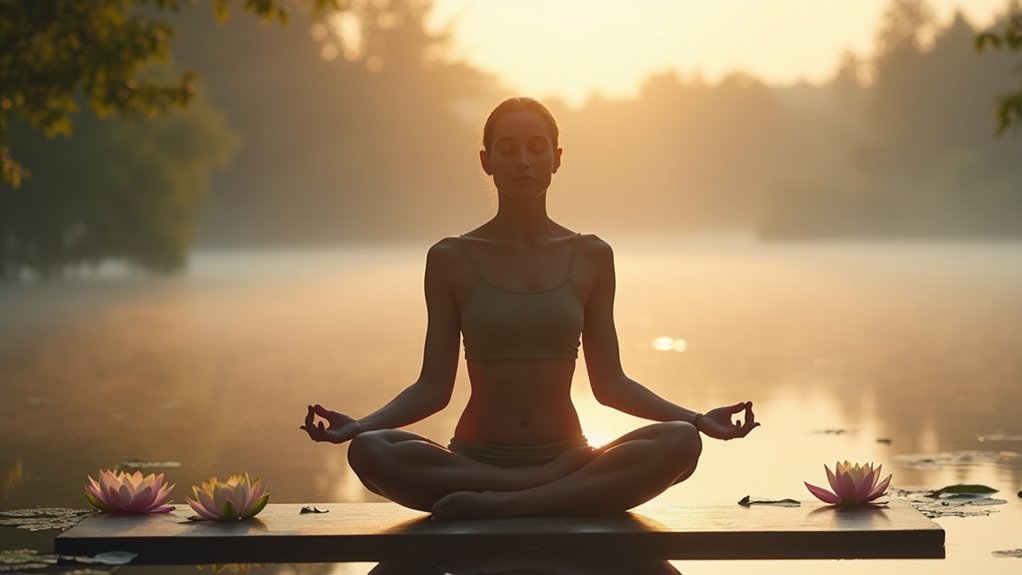
Techniques for spiritual growth through meditation. (Image: AbPray)
As you explore meditation for spiritual growth, you may begin noticing subtle yet profound shifts: greater patience, emotional balance, clarity of thought, and an inner peace that steadies you through challenges. These gentle transformations accumulate over time, enriching your daily life and deepening your relationship with the sacred. Whether you follow a religious path, a spiritual tradition, or a personal journey of self-awareness, meditation becomes a trustworthy guide that supports you at every stage.
Below, we explore key meditation practices designed to enhance spiritual growth and elevate your inner experience.
Cultivating present moment awareness is one of the most essential foundations of meditation for spiritual growth. When you develop the ability to stay fully present, you create a stable ground where deeper spiritual practices can take root.
Present moment awareness means observing your experience, thoughts, emotions, physical sensations, sounds, without judgment or attachment. Instead of reacting automatically, you learn to witness your inner landscape with openness and clarity.
How Present Moment Awareness Supports Spiritual Growth
It quiets mental noise, making space for spiritual insight.
It deepens your connection with your body and breath.
It encourages inner calm and emotional balance.
It strengthens your capacity for patience, compassion, and understanding.
By focusing on simple sensory details—such as the flow of your breath or the feeling of your feet on the ground—you anchor your attention in the here and now. Over time, returning to present moment awareness throughout your day helps integrate spiritual practice into daily life, making your path more grounded, stable, and transformative.
Developing Loving-Kindness Meditation
Once you build a foundation of awareness, loving-kindness meditation (also known as metta) helps expand compassion and goodwill toward yourself and others. This practice is a cornerstone in many spiritual traditions, offering a gentle and effective way to strengthen emotional resilience and deepen empathy.
How Loving-Kindness Meditation Works
In loving-kindness meditation, you silently repeat phrases of goodwill such as:
May I be safe.
May I be healthy.
May I be peaceful.
May all beings be free from suffering.
These intentions gradually soften the heart, reducing self-criticism, resentment, and emotional tension. They help you meet challenges with compassion rather than judgment and support a more harmonious connection with yourself, your faith, and the broader world.
Benefits for Spiritual Growth
Cultivates compassion and unconditional love
Reduces emotional reactivity
Encourages forgiveness and connection
Aligns with spiritual values of kindness and empathy
Loving-kindness meditation not only transforms your inner world but also strengthens your ability to extend kindness outward, making it a powerful tool for spiritual development.
Practicing Mindful Breathing Techniques
Mindful breathing techniques are some of the simplest and most effective methods for calming the mind and deepening meditation for spiritual growth. By gently focusing on your inhale and exhale, you invite quiet, steady your thoughts, and create mental space for deeper spiritual reflection.
Effective Mindful Breathing Techniques
Breath counting: counting each inhale and exhale to stay focused
4–6 breathing: inhaling for four counts, exhaling for six to calm the nervous system
Anchor breathing: choosing a single point of focus (such as the nose or belly)
Mindful breathing techniques help you return to yourself whenever the mind wanders. Over time, this builds concentration, enhances awareness, and supports a peaceful, grounded spiritual practice.
Why Mindful Breathing Supports Spiritual Growth
Reduces stress and anxiety
Strengthens concentration for deeper meditation
Helps create space between thought and reaction
Encourages a calm, receptive spiritual state
By practicing mindful breathing regularly, you develop a quieter mind and a more centered approach to daily challenges.
Exploring Visualization for Inner Peace
Visualization for inner peace is a gentle yet powerful way to guide the mind toward calmness, clarity, and spiritual alignment. This practice involves creating soothing mental images—such as peaceful forests, flowing rivers, or glowing light, to shift your emotional state and nurture your inner world.
How Visualization for Inner Peace Enhances Spiritual Growth
Encourages deep relaxation and emotional release
Helps shift negative thought patterns
Strengthens inner resilience
Supports intention-setting and spiritual clarity
Visualization can be used on its own or combined with other meditation techniques. With regular practice, imagining peaceful or spiritually significant scenes helps you cultivate emotional balance, self-awareness, and a sense of sacred inner sanctuary.
Integrating Body Scan Meditation
Body scan meditation is another essential tool in meditation for spiritual growth, especially for grounding your awareness in the present moment. In this practice, you slowly guide your attention through different parts of the body, noticing sensations without judgment.
Benefits of Body Scan Meditation
Releases physical tension
Enhances mind-body connection
Supports emotional healing
Encourages deep relaxation
Builds awareness of subtle sensations and spiritual intuition
Body scan meditation teaches you how to observe your inner experience with curiosity and compassion. Over time, this practice fosters a stronger connection between mind, body, and spirit—an important foundation for ongoing spiritual development.
Conclusion
Meditation for spiritual growth offers a meaningful and accessible path toward inner peace, clarity, and compassion. Through practices like mindful breathing techniques, body scan meditation, loving-kindness meditation, and visualization for inner peace, you learn to cultivate awareness, nurture emotional balance, and deepen your spiritual connection.
These meditation practices are more than techniques, they are tools for transformation. When practiced consistently, they help you build resilience, soften stress, and develop a balanced, compassionate outlook that supports your spiritual journey. Over time, meditation for spiritual growth guides you toward a deeper sense of purpose, a clear mind, and a steady heart.
Whether you’re just beginning or seeking to deepen your practice, meditation remains a powerful, dependable companion on the spiritual path.
Linguist and Interfaith Dialogue Researcher: Amanda Torati is a linguist and postgraduate researcher dedicated to the study of interfaith dialogue and cultural expressions of faith. With a strong academic background in Languages and Linguistics, Amanda specializes in analyzing spiritual texts and universal values, seeking to build bridges between ancient traditions and modern reflection. At ABPray, Amanda applies her academic rigor and ethical sensitivity to ensure that every article fulfills our mission of promoting harmony and mutual respect. Her role is fundamental to our Human and Ethical Review process, where she uses her expertise to ensure doctrinal and historical fidelity while maintaining an inclusive and accessible tone. By combining her passion for research with a mindful approach, Amanda transforms complex themes into practical reflections for daily life, helping seekers from all backgrounds find meaning and inner peace. Her commitment to authenticity ensures that ABPray remains a reliable source of inspiration and knowledge within the global spiritual landscape.
To provide the best experiences, we use technologies like cookies to store and/or access device information. Consenting to these technologies will allow us to process data such as browsing behavior or unique IDs on this site. Not consenting or withdrawing consent, may adversely affect certain features and functions.
Functional
Always active
The technical storage or access is strictly necessary for the legitimate purpose of enabling the use of a specific service explicitly requested by the subscriber or user, or for the sole purpose of carrying out the transmission of a communication over an electronic communications network.
Preferences
The technical storage or access is necessary for the legitimate purpose of storing preferences that are not requested by the subscriber or user.
Statistics
The technical storage or access that is used exclusively for statistical purposes.The technical storage or access that is used exclusively for anonymous statistical purposes. Without a subpoena, voluntary compliance on the part of your Internet Service Provider, or additional records from a third party, information stored or retrieved for this purpose alone cannot usually be used to identify you.
Marketing
The technical storage or access is required to create user profiles to send advertising, or to track the user on a website or across several websites for similar marketing purposes.